
Verdict: Surprisingly delightful
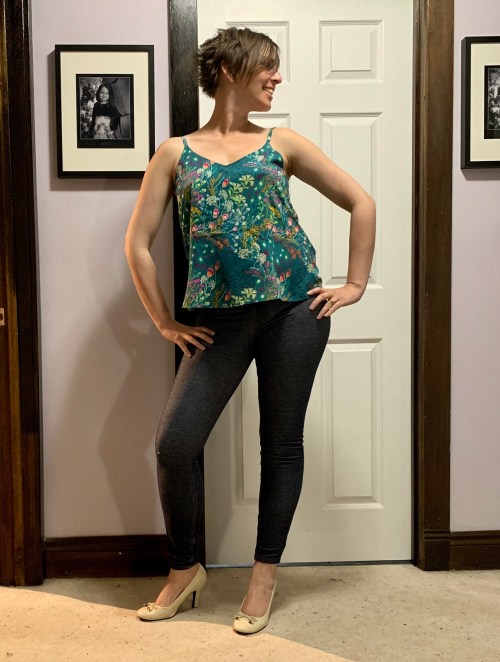
So the Ogden Cami, by True Bias, has to be about as well known as the Grainline Archer, as an indie pattern archetype. It’s simple, elegant, and seems to always look amazing. On the other hand, it’s SO simple, I always figured I had something (probably several somethings) with very similar lines. And I probably do, but I highly doubt they have the subtle bust shaping in the side seams it turns out this pattern has. And the gentle V neckline really is basically perfect.
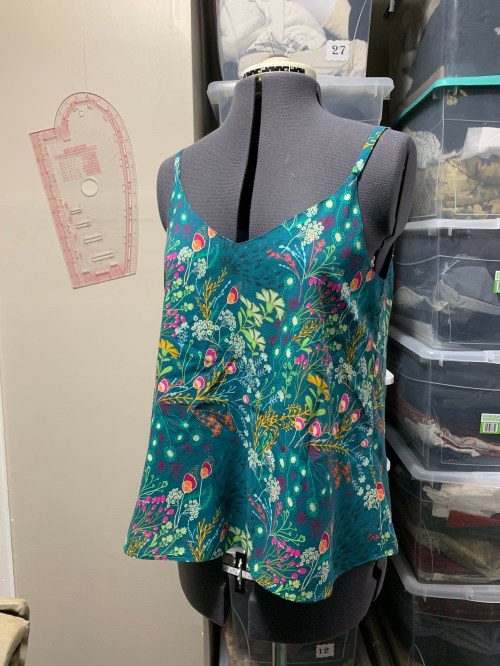 Apparently I should’ve pressed a little better, but it’s rayon. It’s going to wrinkle.
 Can you see my French seam at the side? No? Oh well. They turned out very nice indeed. In fact, the only thing I used the serger for on this make was the bottom of the half-lining.
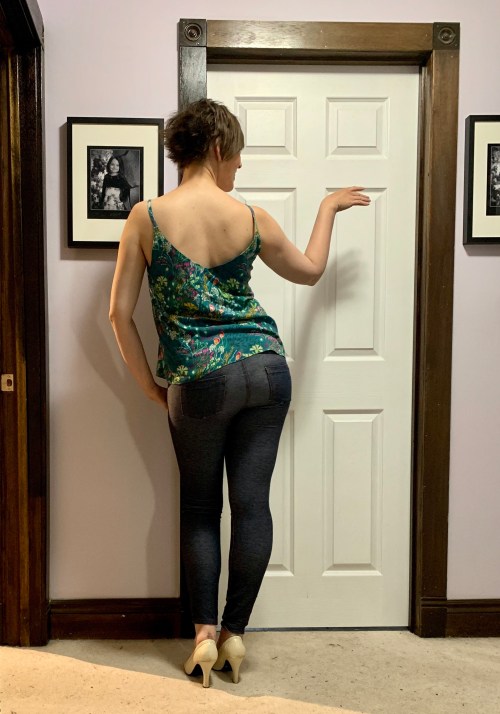 I made a straight size 8, which accommodates both my current bust and my current belly surprisingly well. I didn’t even have to shorten the shoulder straps.
 I did experiment with cutting out the pattern with my rotary cutter, basically my first attempt at such a feat. I am not particularly adept at it, so I don’t think I was really any better off than cutting with scissors, but it’s definitely something I’m willing to play around more with, at least for things that are small enough to fit on my cutting mat. I used a ruler to help me cut out the rectangles for the shoulder straps, and that was definitely a win.

You can barely even see my sixteen-week-pregnant belly!
I can actually see making this again, and even again and again. It’s small and simple enough to make as a gift, and it’s a great way to use a tiny amount of an exquisite fabric. Also simple enough that the annoyance of working with a slippery or shifty fabric doesn’t become totally overwhelming. And while I know some people find the half-lining odd, I like it as a compromise between a full lining, which could be hot and bulky in a summery top, and no lining, which can have show-through issues in some light-weight fabrics.
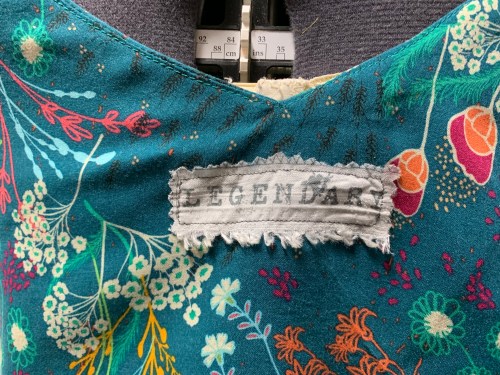 Because it’s virtually impossible to tell the front from the back of this pattern (either in construction or once it’s finished), I hunted along the printed selvedge of this Art Gallery Fabrics rayon for a good chunk, and cut out the bit that said “Legendary” to make a tag. My pinking shears are terrible and kind of made a mess of the edges, but I’m sure after a wash it’ll all be much the same anyway.
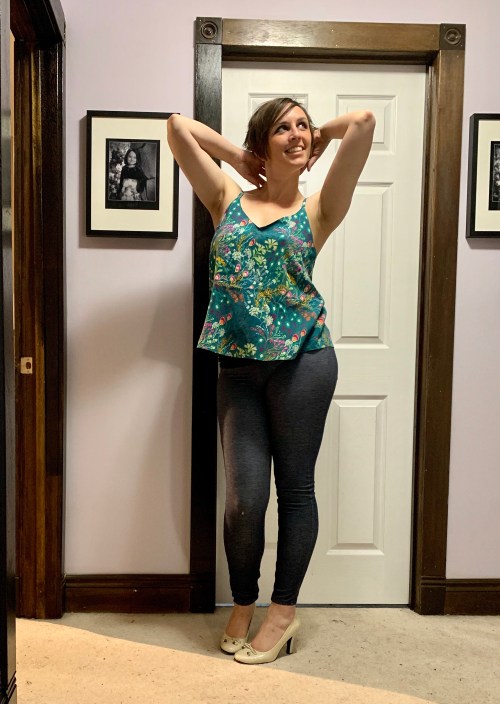 Anyway, I’m definitely charmed by this pattern, and excited to be teaching a class on it this summer. It’s simple enough for a beginner, but also a great opportunity to level up your skills working with fine finishes or a trickier fabric. I’m very tempted to go digging through my seldom-touched “fine fabrics” for the next version….
 I gotta tell ya, there’s a level at which I REALLY enjoy the few moments of life when that isn’t a relevant question. Because quite a few of my favourite styles of clothing, um, make me look pregnant. Even when I’m not. I love empire-waisted dresses, including ones with gathered skirts. So, while pregnant seemed like the perfect chance to indulge that love.
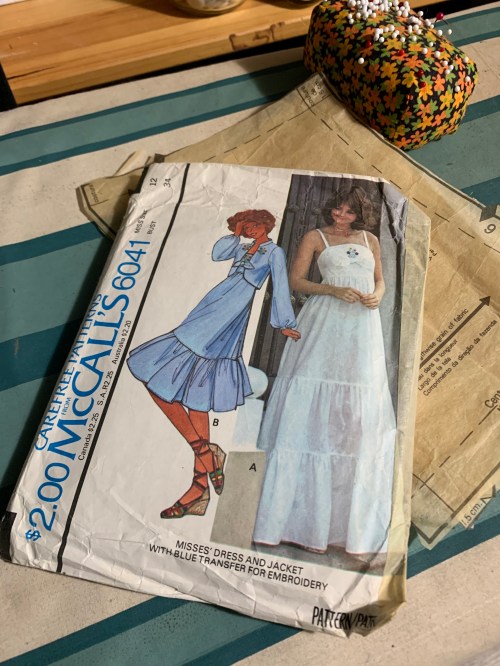 This pattern was a recent donation(among many, many others) from a friend of my mother’s. Thank you, Bernie! We all know I’m a sucker for 70s dresses, and I have a bad case of sundress-on-the-brain, so this was an easy thing to gravitate towards. I have had NO energy for the last several months, but finally just in the last week or so I’ve had a tiny bit of extra jam in the evenings, enough to very, very slowly piece this dress together over the course of the last couple of weeks.
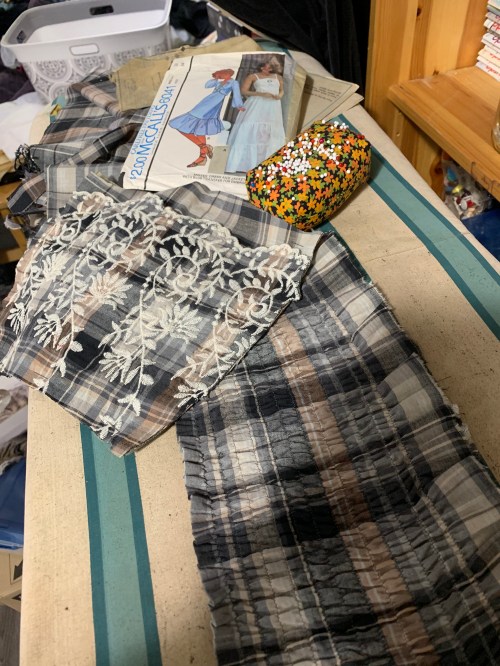 The pattern is in a size 12, which WAS my size, but is now a good three or four inches small. At its core it’s a simple princess seam empire bodice with a lightly gathered tiered skirt; there are some cute ties across the bust, though I almost skipped them. I made quite a few mods on this first version to be more maternity friendly—I prepped a shirred panel to cut the back piece from, and after some measuring made a small FBA on the front.
 For this particular dress I just used a simple gathered rectangle for the skirt, to take advantage of the border embroidery of my fabric. And it’s probably more full than it needs to be, or would need to be if it weren’t going to be going over twins.
 I thought that the front tie provided an opportunity to try out some kind of a nursing access point for the sundress. I never had any nursing-specific clothing with my first two pregnancies, and I did plenty of nursing, so I’m a bit sceptical about the value of such mods, but I thought I’d give it a try, at least.
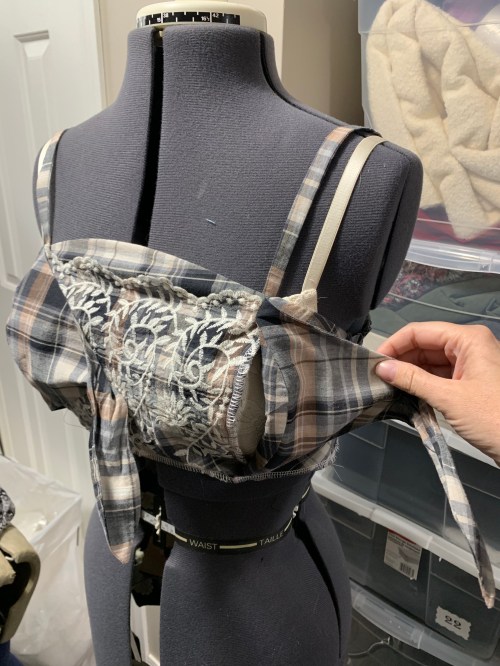 I basically just sewed the CF panel separately from the side front panels + ties, and then lapped the pieces and tacked them at top and bottom. If the ties are tied everything stays securely in place, and if you untie, you can fold it back and access the slit. In theory the other side will stay closed, though if it becomes an issue I can see adding some kind of a belt-loop in the middle to keep the non-nursing side in place. As I said, we’ll see. That particular feature isn’t likely to be tested until next summer, anyway.
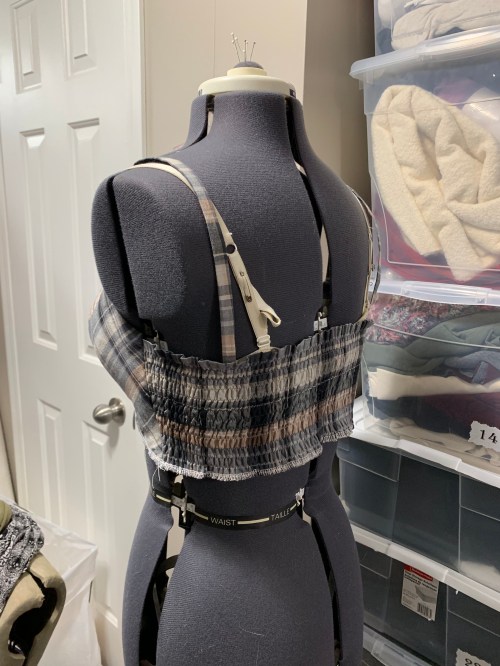 So between the FBA and the little bit I added at the side seam and then the stretchy back, I actually had to take in the side seams, an inch at the under-arm tapering to more like 1 cm at the bottom of the bodice (tricky to do because I made the whole thing very clean-finished inside, pretty to look at but not exactly easy to alter, especially when one of your layers is on the bias. It’s not super pretty up close. I’m very curious to make this without the stretchy back at some point just to see how it would compare. The (2 cm) FBA gave a LOT of projection in the boob area, rather more than I currently need, but it’s somewhat adjustable by tightening the ties, so it seems to work. I’m not sure if I’d do it again, though. And my boobs are likely to get bigger before they get smaller again.
 I used my favourite gathering-with-dental-floss method, using a cording foot from a set I bought last summer to keep the dental floss snug in the middle while I zig-zagged over it. This definitely makes it a more foolproof method. I finished the bottom of the bodice and the top of the skirt separately so I can take the skirt off and re-adjust if I want fewer gathers later, though attaching the gathered skirt to the shirred back was kinda hell so I’m not sure I’ll wanna try that again.
 All in all I think it’s a pretty cute experiment. I feel like the proportions might be better if the bodice was slightly longer, but on the other hand since my belly starts right below my boobs, I don’t think that would really work very well right now. So it is what it is; i may try styling with an elastic belt below the bust to see how that looks. But for maternity wear, I think I’m pretty happy with it.
 I wanted to teach a basic tee shirt class this summer, and Jalie seemed the obvious choice. Their basic fitted tee pattern,
  Speaking of V necks, I’m pretty happy with how it turned out.
 I did the twin needling on the Rocketeer, where I had to relearn the “always test!” lesson again… for only the millionth time. Ah well. After some unpicking and careful testing of stitch length (longer), presser foot pressure (light but not too light or the fabric doesn’t advance well), and tension, I finally got good results. And yes, I used Steam-a-Seam in the hems.
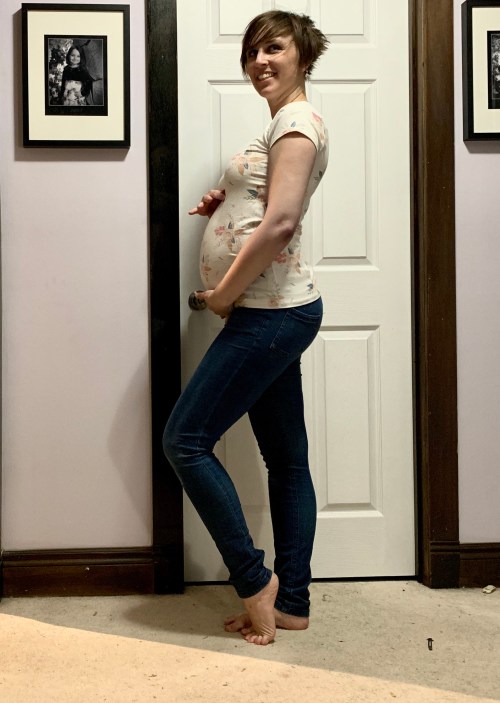
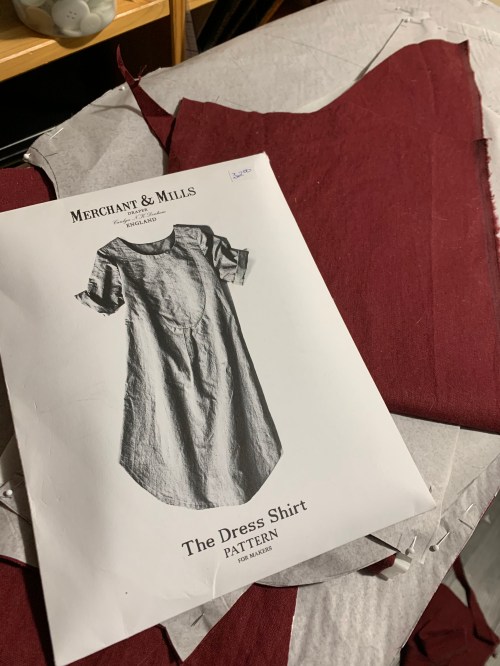 A very eager student asked about a class using this pattern. Curious, I was happy enough to oblige.
 The Dress Shirt is a simple, pared-down take on a shirtdress, and I actually really enjoyed the sewing process, particularly the front bib and how the neckline was finished. Things went a bit awry at the sleeves—my first inclination was to set them in flat, shirt-style, but there’s way too much ease in the sleeve cap for this method—lots of gathers that are difficult to control. So I did the second sleeve in the round, but still didn’t do a great job on the easing. Next time I would pare down the sleeve cap a wee bit.
 On the other hand, the pockets I added worked out fine.
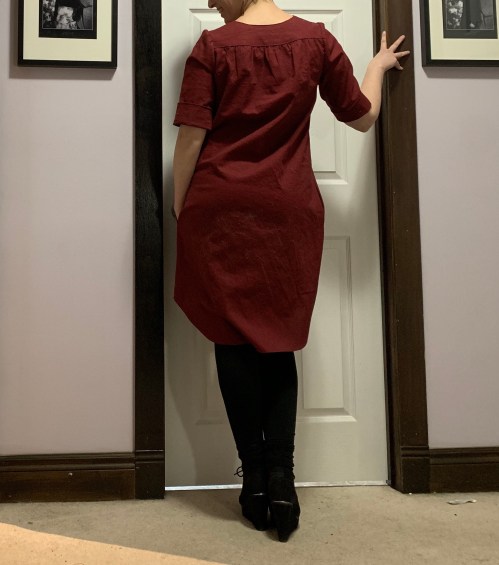 The back view is surprisingly attractive in this picture, at least (these are terrible photos but I had about three minutes to take them in, so it is what it is.)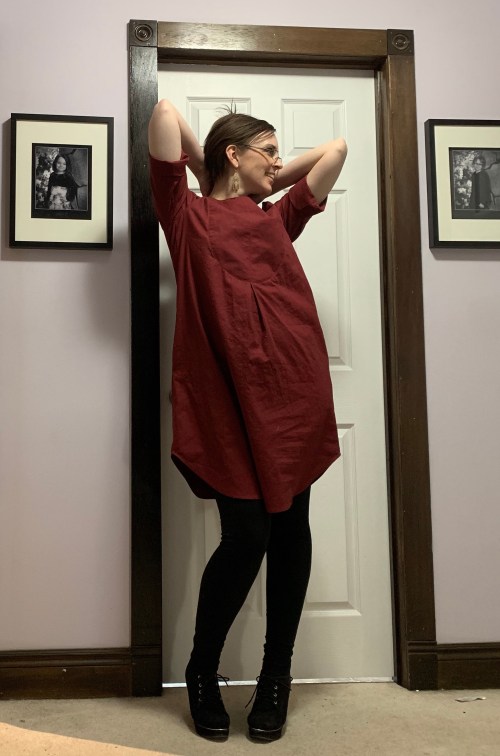
 It’s a bit sweet. And a bit snug right through the bust—I really need to come to terms with my new measurements. But I knew from scouring Instagram that I preferred the “fitted” versions of this dress, so I was at least somewhat intentional in sizing down.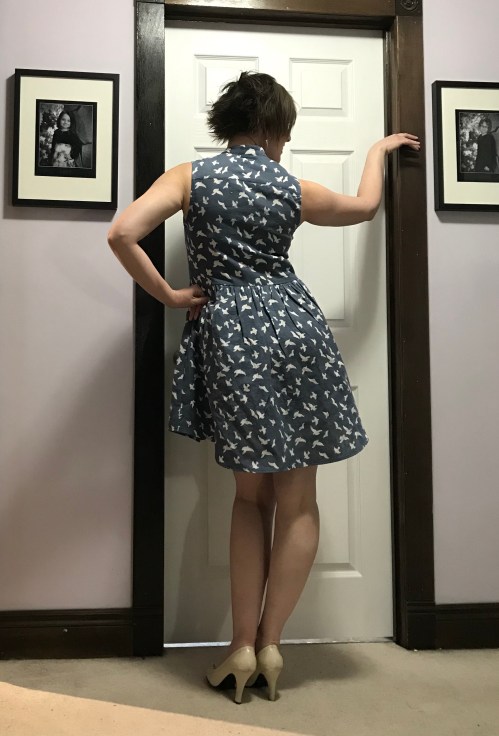
 I went with a mandarin version of the collar. Partly I like them better, partly I’m hoping if I lead some students in that direction it will save some class time. This is only scheduled as a 6 hour class and I’m a little scared. Once it’s don’t being a class sample, I might even cut the neck down to a bound scoop. I’ve seen some hacks like that that I really like. I’m just not really a shirt-collar person, I guess.
 The front patch pockets are teeny weeny. I was a good sample maker and resisted the urge to skip them, but I did add some side-seam pockets, suspended from the gathered skirt seam at the top. This holds them in place a little more nicely than just side pockets.
 The construction went pretty smoothly, without any major and unfixable snafus. Unlike my
  What I completely failed to take was progress and detail shots, except for the one lone pic of the pockets underway. It’s too bad, because I like how the side pockets went together, and I actually managed some very nice inset corners, if I do say so myself. And the hem turned out really nice, too, if I do say so myself. I guess you’ll have to take my word for it…
 I have a complicated relationship with distressed denim. Like most teens in the 90s, one of my main goals in life was to shred my jeans—or at least bust through the knees. However, the romance of the tattered denim faded pretty abruptly when I had to start buying my own jeans—I wanted those to last as long as possible! So I avoided the pre-tattered distressed looks as much as I could. I’ll put my own holes in them, thanks.
 Fast forward to about a month ago, just after making the
 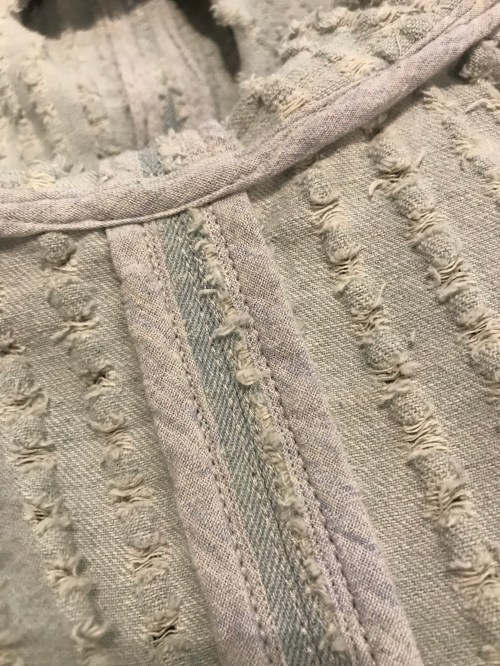 For construction, I used the same method as my
 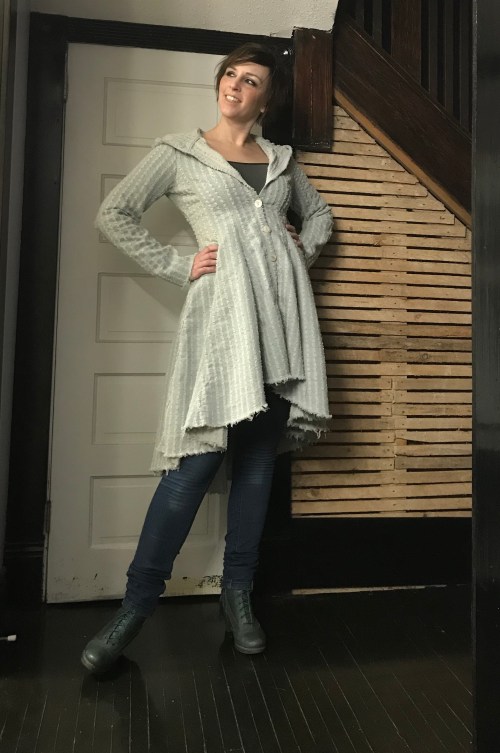 However, Hong Kong binding plus double topstitching does not make for a quick project. I also didn’t go full bore, and had to occasionally interrupt… anyway. It developed slowly.
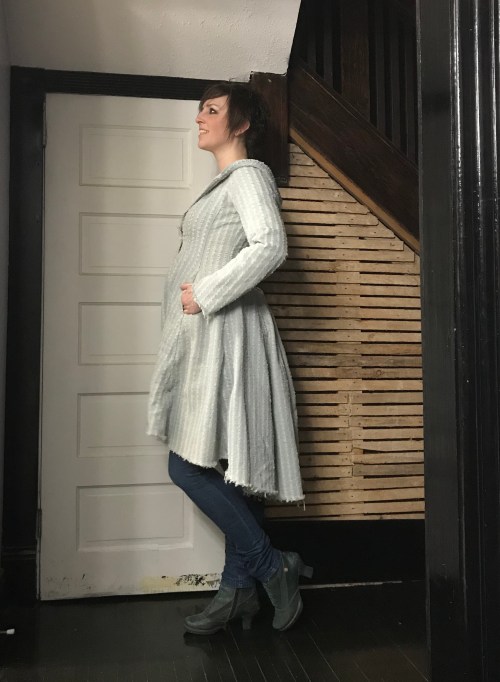 But, it’s finally finished. Or, maybe finished isn’t quite the right word. In temporary equilibrium? Because this piece calls out for distressing. I’m almost tempted to go at it theatre-style, get some patina going. Failing that, the shredded fabric is more-or-less guaranteed to begin failing sooner rather than later.
 I’m already planning visible mending, layering, patching. I don’t really think this jacket is done.
 I think maybe it’s ready to start becoming. Obsolescence is a part of the plan.
 If you read any of my posts from January, you probably noticed me whining about this jacket in the background. Well, it’s done! And you can read the full whinge over on
  In March I’m teaching a class on the
 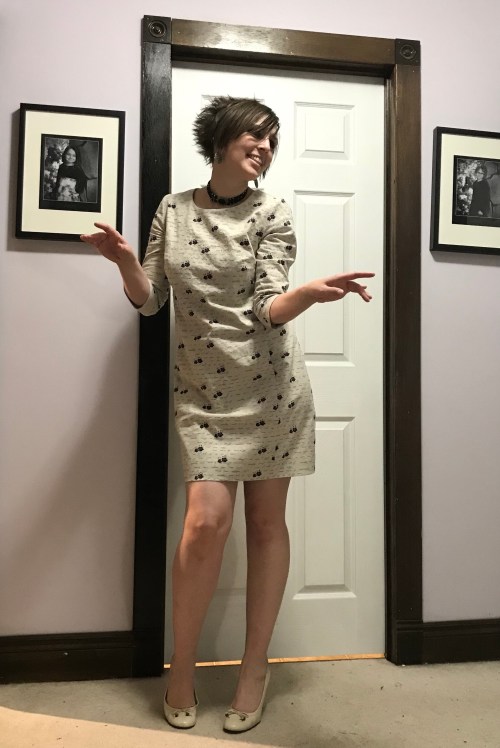 I’m generally a big proponent of tracing when it comes to expensive indie patterns, but I find the SOI patterns really hard to trace. The Betty didn’t have different line styles for the different sizes, which made it hard to pick out the right size, and this one had different line styles, but some of them were really faint, with tiny and spaced out dots, including the size 12 I was tracing for the lower half. Also there’s more notches than you can shake a stick at, and I always miss notches when I trace. So I cut. Based on the Betty, I cut a size 10 for the shoulders and bust and a size 12 for the waist and hip. I didn’t do a petite alteration, but I did add a small swayback adjustment, by shortening the back piece at the waistline and taking a wedge out of the side piece, since the pattern has princess seams but no side seams.
 I tend to like a lot of ease in the hips, so I kinda wish I had gone up another size there. As is, I let out the side back princess seams as much as possible–you can’t adjust the front princess seams because there are pockets in this area (yay pockets), but the back is where I really need the room anyway.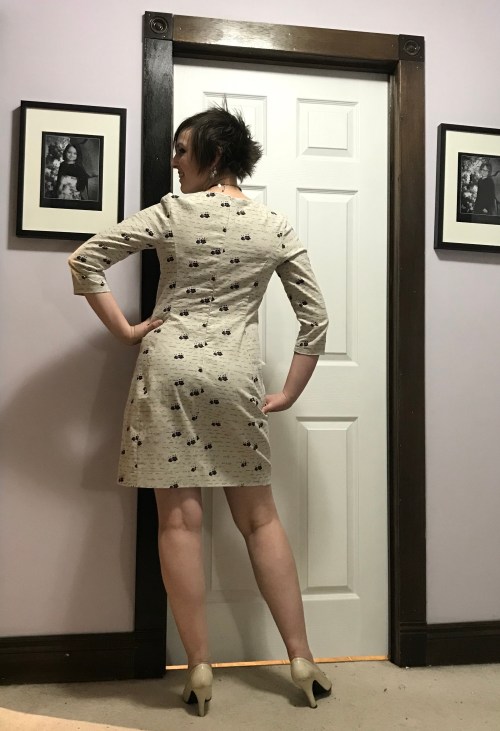
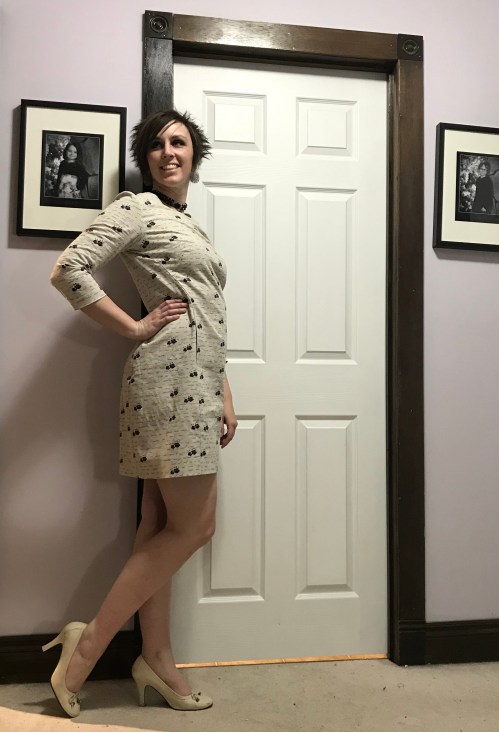 But something is off with the back armscye. The sleeve cap is tall and narrow, which alarmed me a bit, and it definitely works well if I keep my arms down but doesn’t allow a lot of motion. And moving my arms to the front the littlest bit pulls mightily across the back. Fortunately this cotton has quite a bit of give, but it feels like I need a bit of a forward-shoulder adjustment—it’s tight across the back if I try to move my arms forward, but roomy across the chest. Weird because that’s not something I’ve ever needed. Possibly I could let out the seam at the back armscye a wee bit…
 I did raise the underarm a tiny bit, which I almost always do, and that helps with the mobility a bit, but I’m just not totally sold on that armscye. And I’ll definitely be checking back measurements when we do the class.
 All in all, though, it’s pretty cute.
 There. There it is. Do you see? How in the HELL did I not check, when I went to cut it out, which way the print was facing? Of all the STUPID… anyway, I can’t go on or this blog will descend into a string of profanity I’ll probably regret releasing onto the internet.
 On a happier note, the invisible zipper and the facing attachment fully by machine went smooth as butter. After all these years I still think of
 After the protracted trauma of the suit jacket (post still to come), I needed something fast and satisfying. And fortunately (?) I had another deadline just around the corner—a baby shower for one of my old Fabricland colleagues.
 And when I figured out the scrap of fabric left over from my
  A hunt through the thread stash didn’t turn up any topstitching thread a good colour, but apparently I do have a 500-m spool of dusty pink regular thread. Don’t ask me why. (It’s not even one of the many spools of dodgy ancient inherited thread!) So I fiddled with my Elna and managed to slightly lengthen the triple-stitch setting, and voila! This is when the Elna’s ridiculous speed really comes in handy—even doing triple-stitch, it moves along at a great clip and doesn’t make me want to stab something. The only downside is the limited needle position control, which makes fine-tuning your topstitching distances tricky. I did all the topstitching with a 1/4″ foot, which was not bad but my edgestitching is a little more wobbly than I’d like. All in all, though, everything went well, except that every once in a while the Elna bobbin seems to start catching on something and then everything snarls up and you have to rethread the whole damn thing.
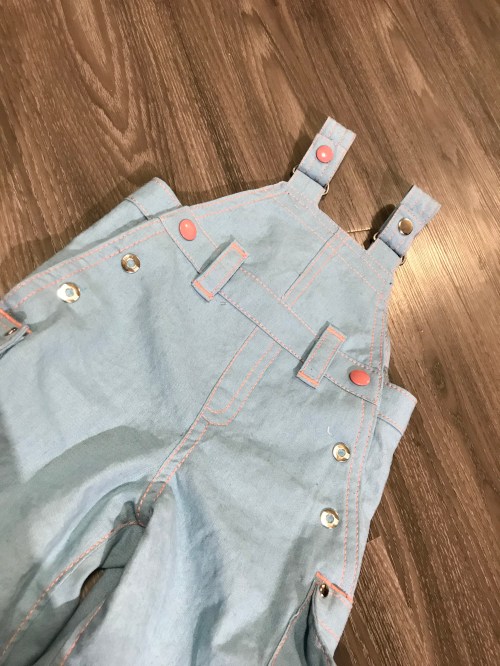 I haven’t made a lot of overalls. Actually, this might be the first time I’ve ever made overalls. Anyway, I found myself a lot more reliant on the sketchy Burda instructions than I like to be. There’s some weird stuff around the hip closures. In particular, some of the pattern pieces didn’t have their names marked on them, just numbers, and the instructions didn’t always reference the number. And there are quite a few little rectangles and almost-rectangles that were tricky to differentiate. And I would’ve liked some indication of when to finish seams, from time to time. But on the whole it all went together fairly well.
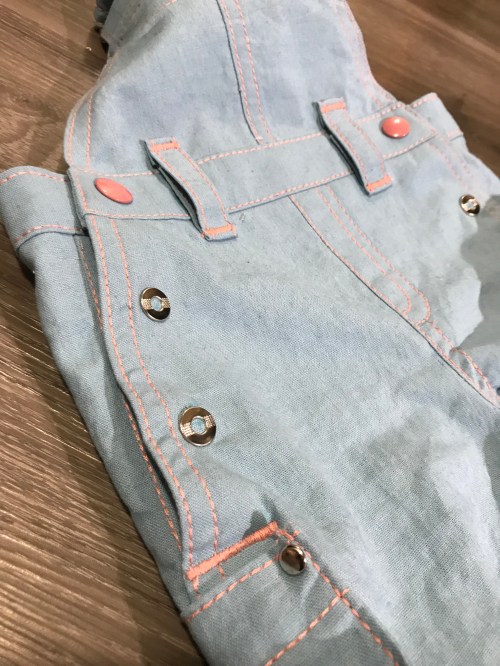 Things got a bit more off-road when it came to the hardware. My hardware stash is not nearly as vast as my fabric stash, and it’s actually getting a bit depleted at this point. I wanted heavy-duty snaps for the waistband and lighter ones for the rest of the closure. The pattern called for some cute little alligator-type clips for the straps, which I did not have, nor was I willing to venture out into our current blizzard to see what I could obtain locally. So I opted for D-rings and more snaps. Sturdy, but maybe a bit bulky, especially since I wanted the straps to be adjustable so I included extra back-snaps.
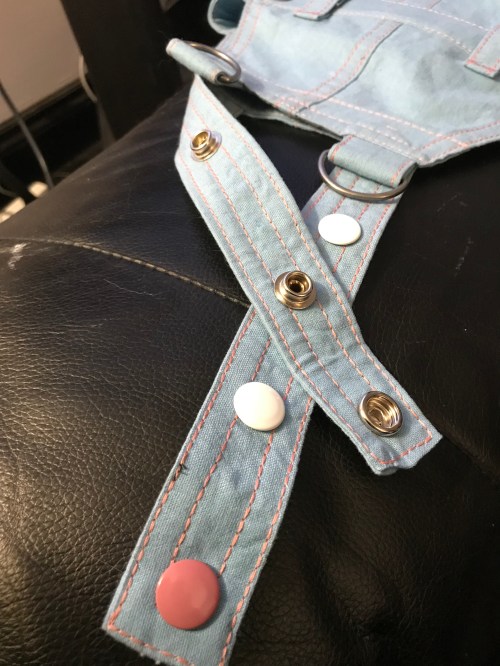 My stash of heavy-duty snaps came mostly from a thrift store acquisition of vintage snaps that have some cool colours—including three with a dusty pink finish that was perfect with my topstitching! Except that I only had three. And this vintage set was missing the back most pieces, which means I have to use extra snap fronts on the backs, too. Probably nice against baby skin, but it means I’m going to have a lot of extra snap middles when I’m done. I used lighter-weight snaps for the rest of the side closures, and added rivets at the pocket corners. That was probably the most annoying part, as there was something like 12 layers of fabric at the pocket corners. My silver rivet posts actually weren’t long enough, and I had to swap them out for longer black ones on the inside. Not visible, happily, unlike the mishmash of snap colours. I’m mostly just happy I managed to use those pink snaps, though.
 There are a couple of other little details I meant to add but didn’t. I had some pink grosgrain to make a little tab sticking out of a pocket, and a teeny D-ring hanging from below one of the useless belt-loops would’ve been adorable… but I didn’t remember, and the cute factor is pretty high, anyway. So we’ll call it good, and hopefully baby Tessa (or at least, her mother) will find them as adorable as I do. I’m really excited about this baby shower, as I’m pretty sure most every gift will be hand-made. It should be great!
 Back around Christmas, Jalie patterns released a free, boxy sweater pattern, the
 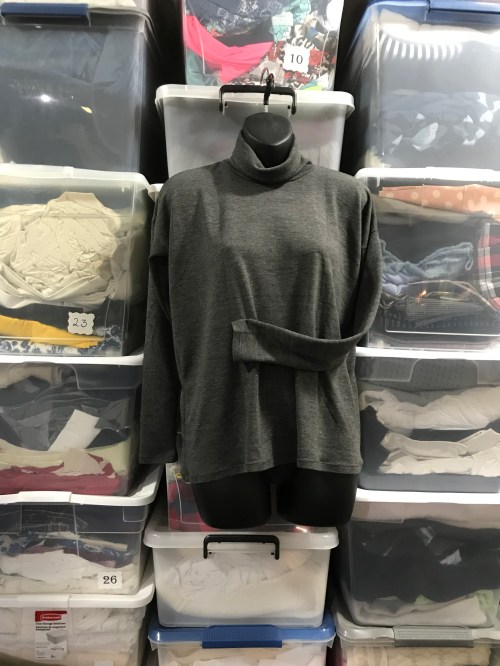 I thought that a soft, grey, drapey version of Yoko might be perfect for an almost-young-lady, a little sophisticated and a lot comfy. Assuming, anyway, that she didn’t hate turtlenecks.
 It was super simple to sew, once I figured out that half the sleeve wasn’t missing (the sleeve “cap” isn’t—it’s completely flat!)
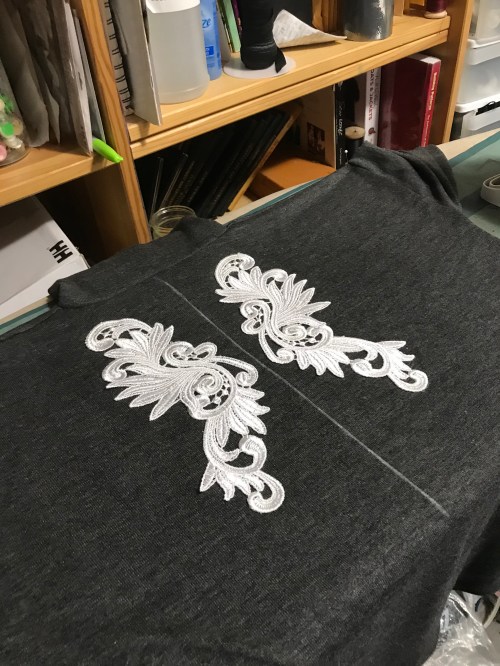
 And it was just as drapey and suave as I had hoped, but maybe a bit plain. So I sacrificed one of my precious hoarded lace appliqués, picked up during the last, desperate discount days at Fabricland, and stitched them on the back as angel-wings. That little act of hand-sewing approximately tripled the time it took to make the sweater, but I think it was well worth it. Fyon loves the sweater (or at least that’s what she said), and I think it’s adorable on her, except I didn’t manage to get a picture. But, y’know. You can trust me.


