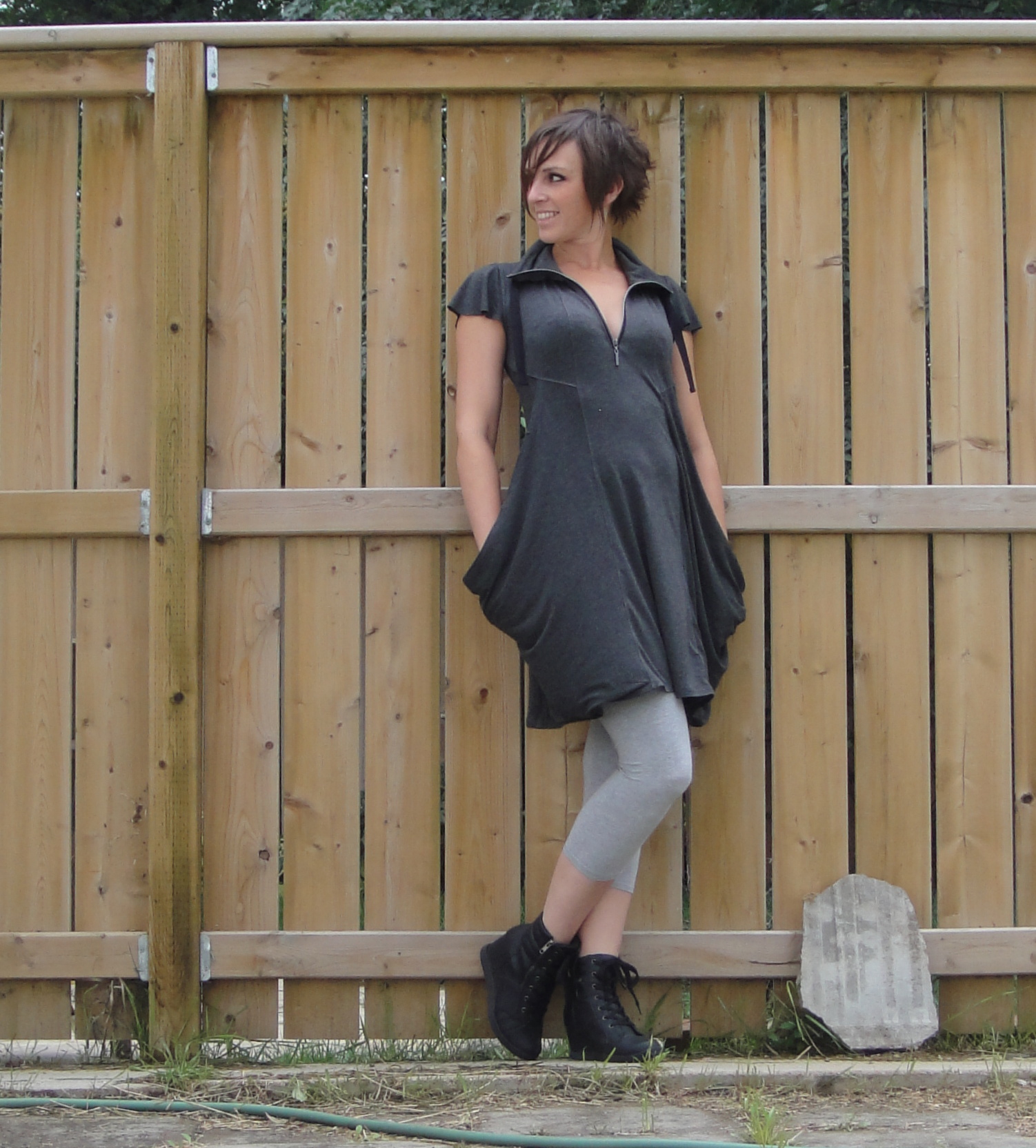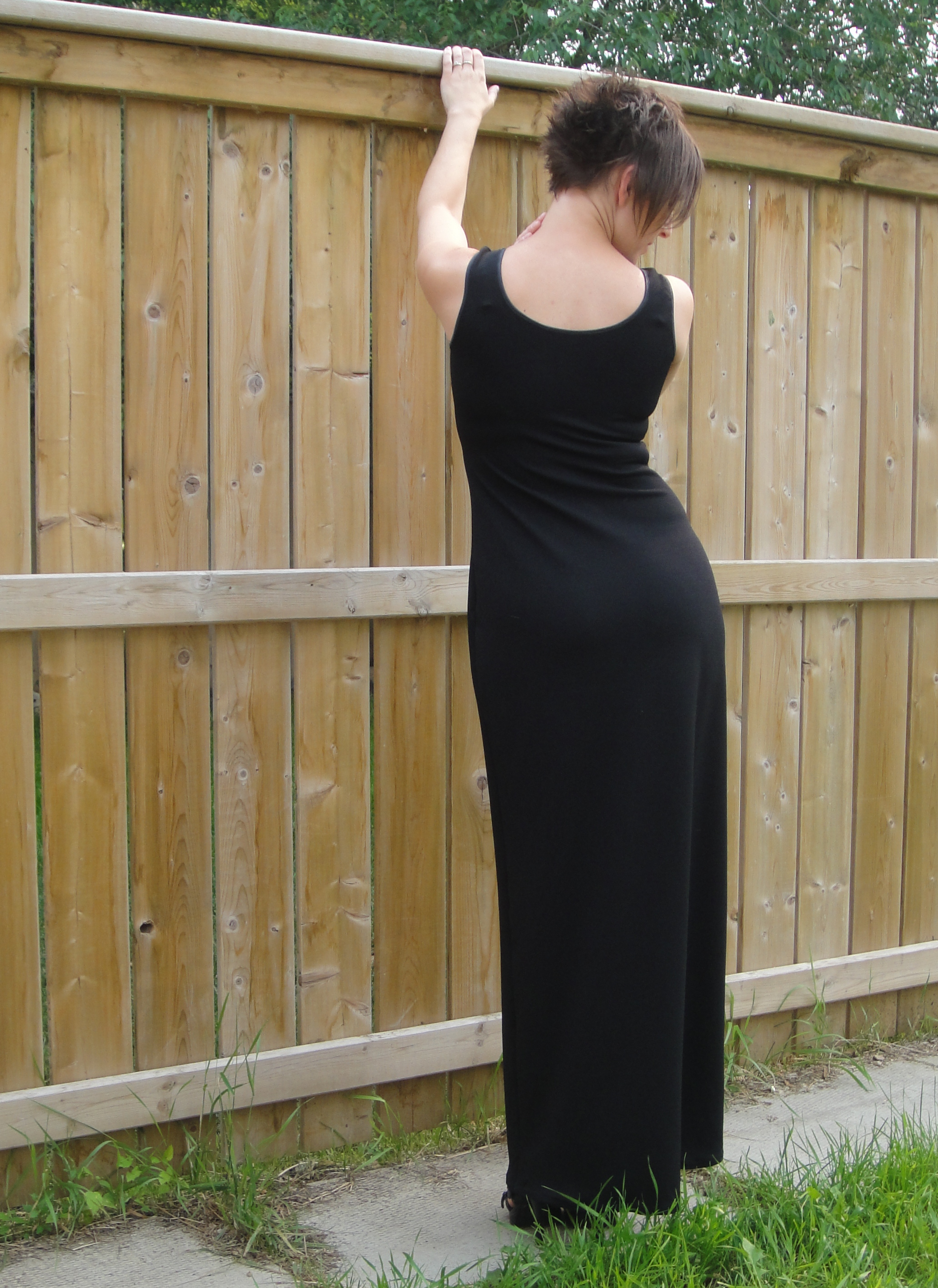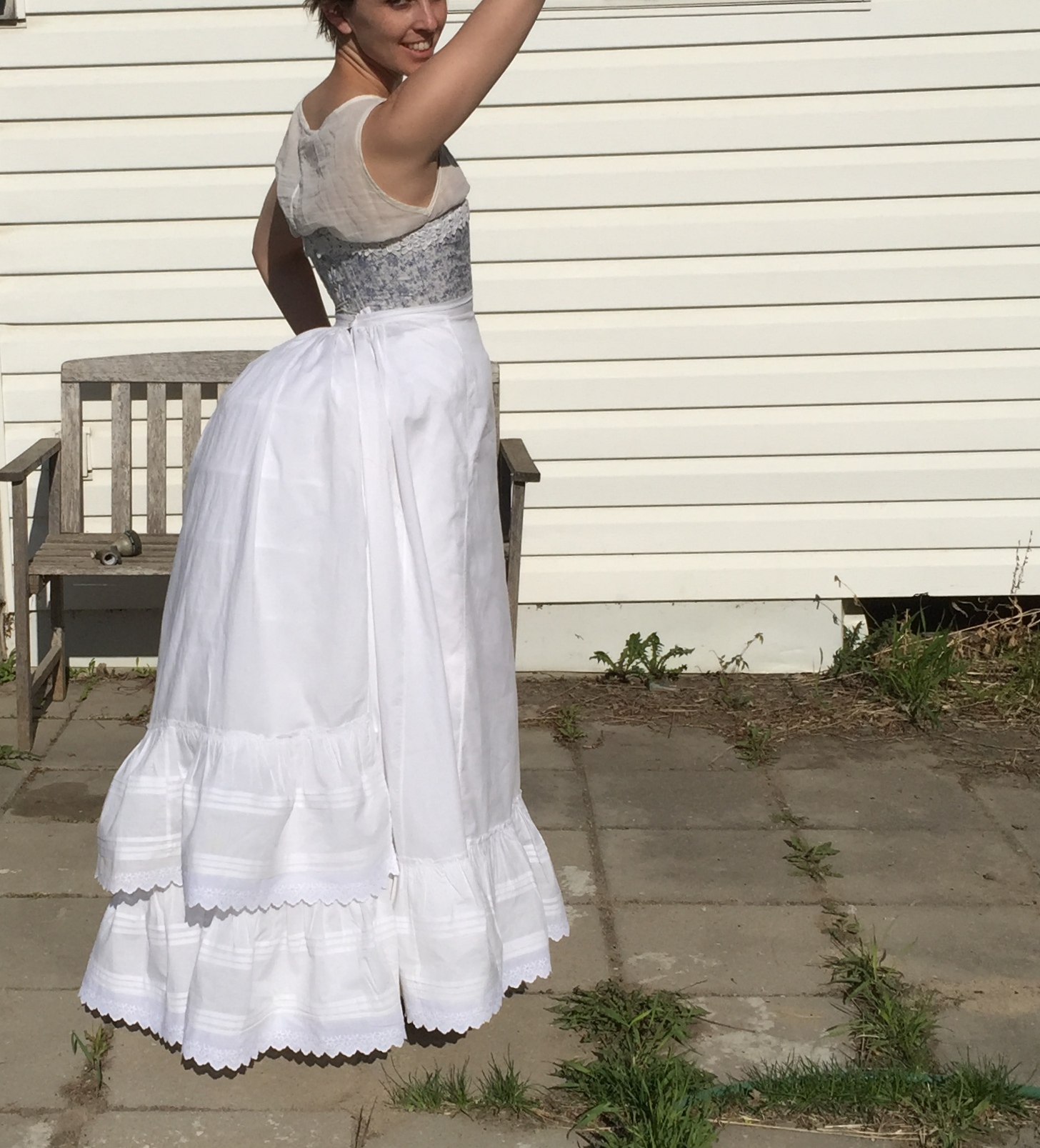
Ok, I confess I’m really enjoying this outfit.

McCall’s 6955 and Quick Sew 535. And stripey socks.
The dress is McCall’s 6955, and while I confess I was a little bit disappointed when I put it on and it didn’t instantly transform me into the voluptuous bombshell I was hoping for, it is pretty fun.
I’ve been experimenting with making fewer alterations, seeing what I can get away without. I didn’t do a swayback adjustment, as the skirt was full. I only shortened the bodice below the armscye, as I think I maybe don’t need to petite McCall’s quite as much as I did Simplicity. I think I should still have done the swayback to the bodice, though, and probably added a bit of length at the bodice CF as well (the flip side of the swayback alteration, I guess… my back is shorter and my front is longer. Silly body.) I always think this after, but somehow I never actually act on it.
I picked the racerback option because the standard version just seemed a little TOO boring. (Yes, apparently I thought crazy kindergarten polkadots were boring. /headshake.) And of course, black piping at the neckline and armholes. #pipeallthethings

Not my best photo face ever. 😛
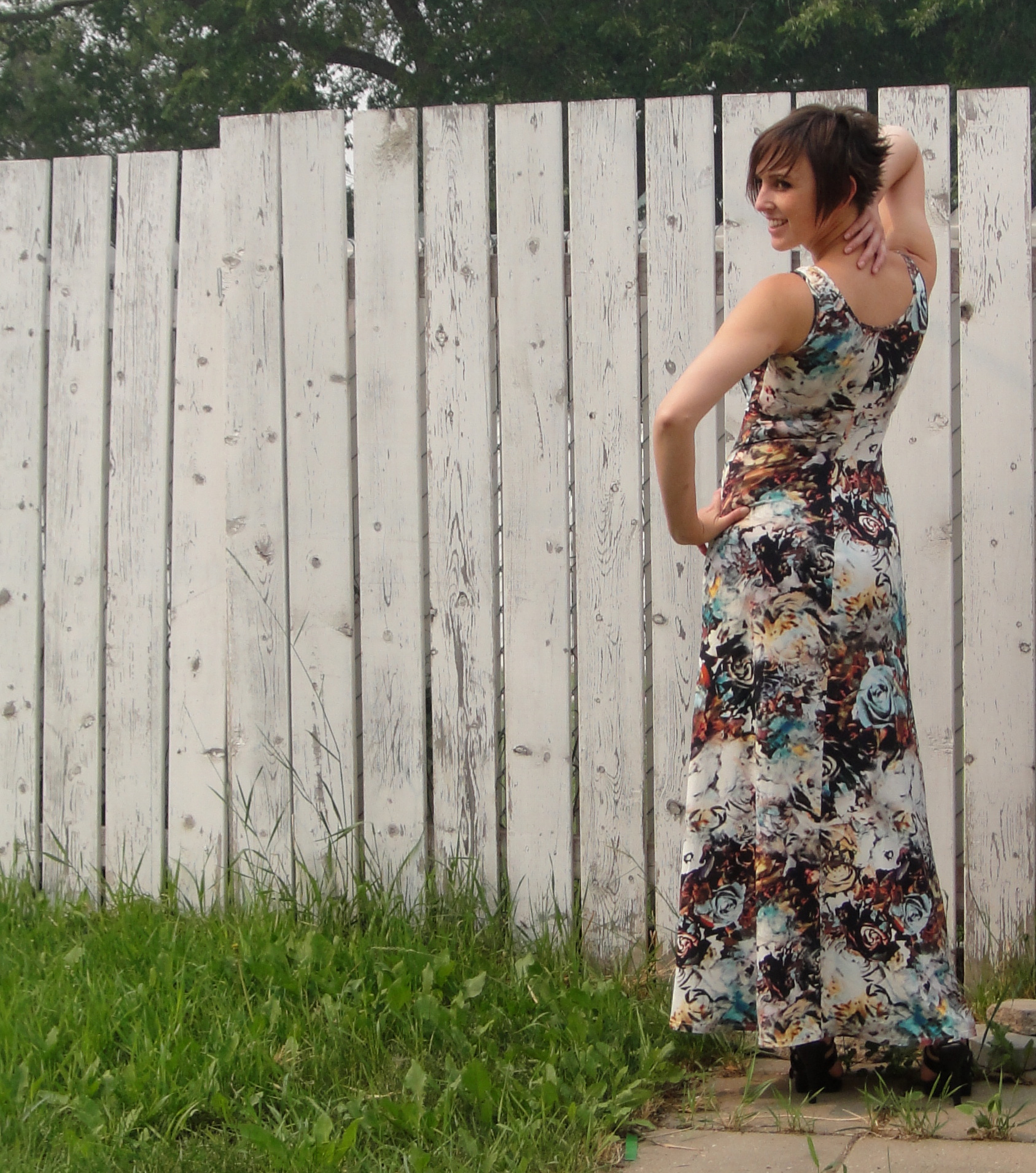
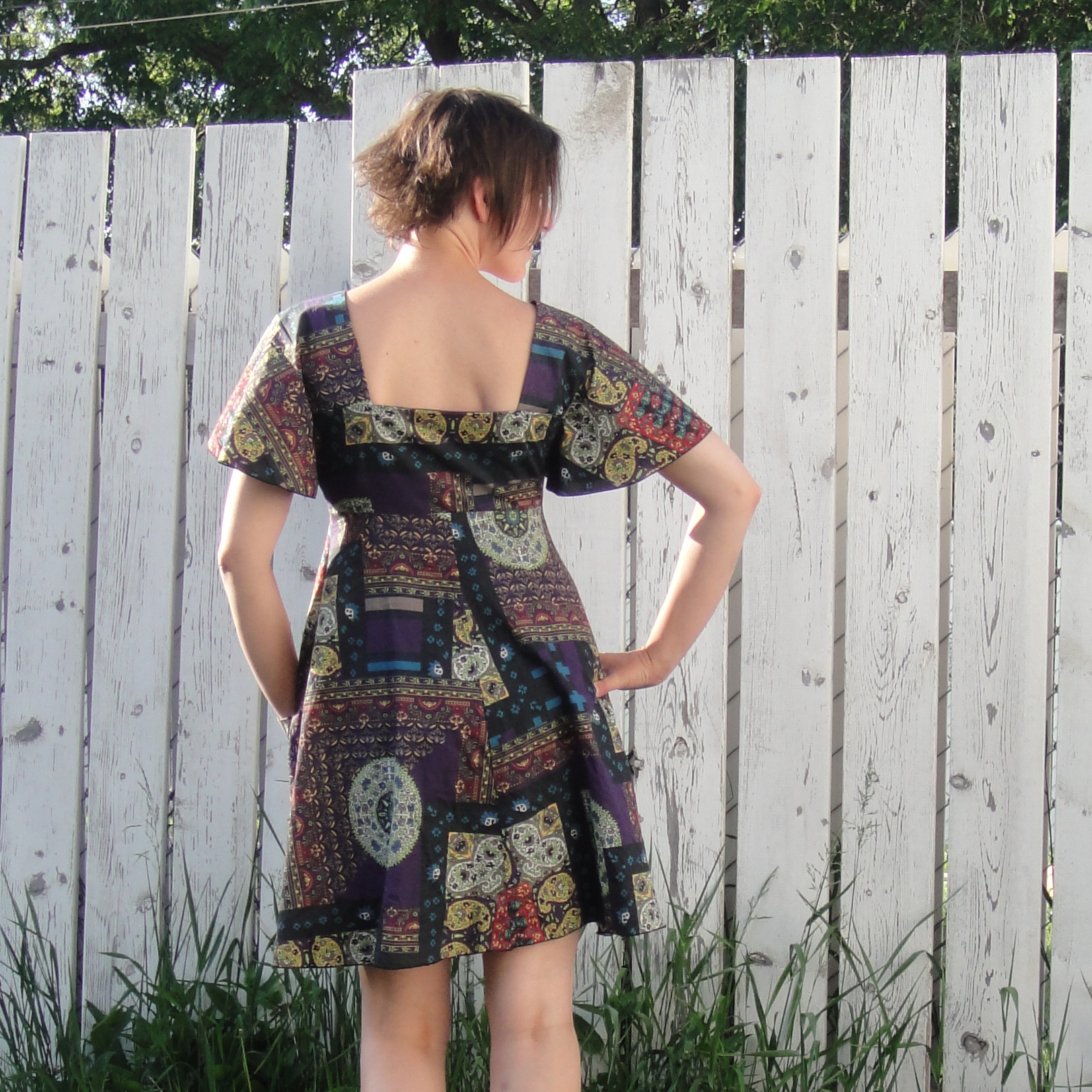
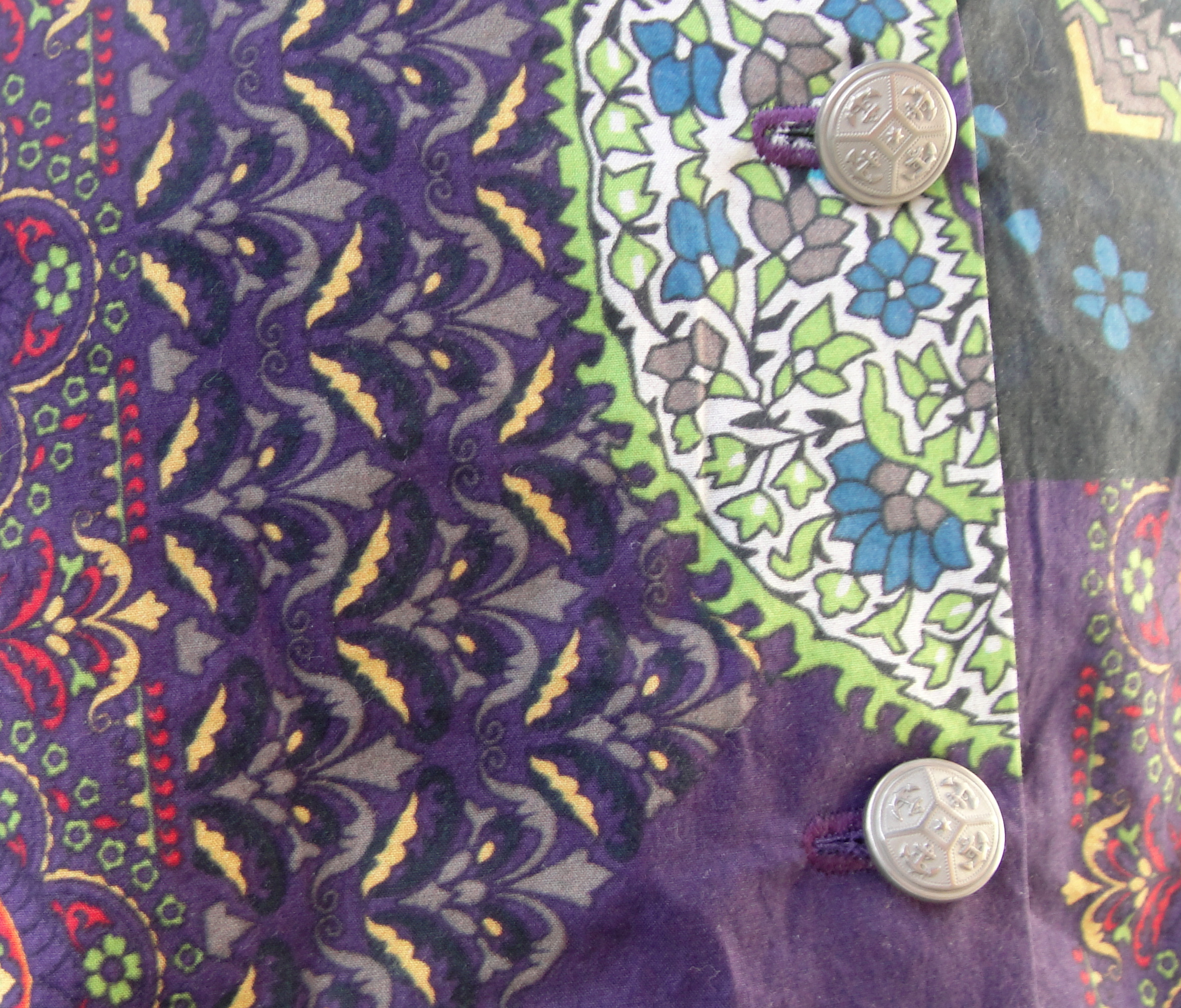
I made this as a Fabricland project back in the summer, mostly as an excuse to use some of this gorgeous “cotton satin” they got in. Man, I petted that fabric every day for weeks… The print is a bit out of my comfort zone, but it is fun. You can see that I didn’t even try to match it. Mostly this doesn’t bother me, although now that I look at these photos it would’ve been nice to match at least the bodice across the zipper in the back.
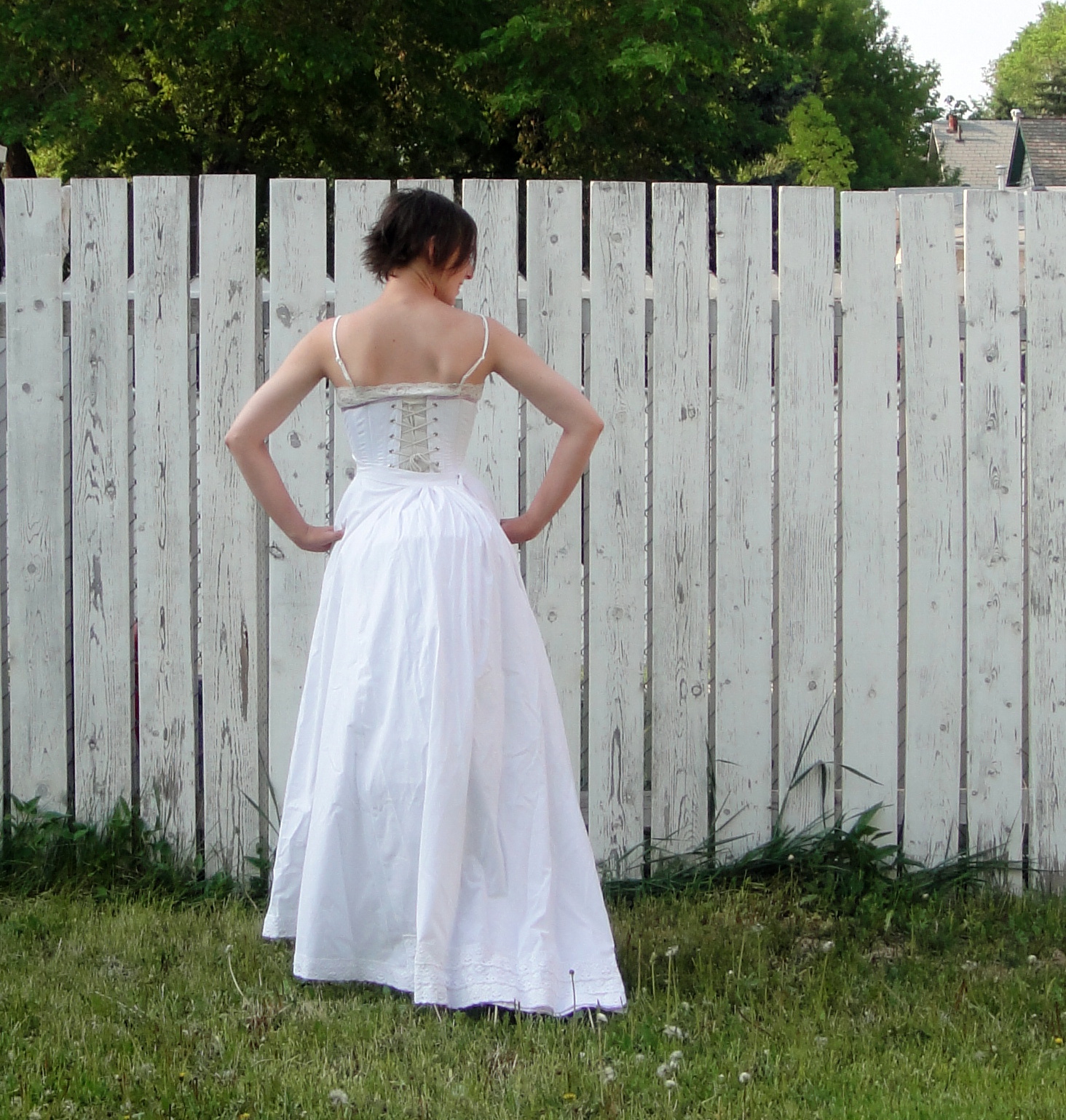
I made my proper size (size 12) as the fabric didn’t have stretch, but I wish I had made the 10. I took out the extra width in the side bodice, but I feel like the shoulders are just a bit too big. Some of that might be that I didn’t shorten the bodice through the armscye, either. And yeah, I didn’t really think that sleeveless, narrow shoulders, barely more than straps, like these could actually FEEL too big or too small, but they do. If I hadn’t done all that crazy piping, I’d take them in half an inch, but I’m not quite willing to break up the piping. The skirt is quite short; I did a faced hem (is there any other way to hem a circle skirt?) so only took it up a 1/4″ and it’s still three or four inches above my knees. Not bad, but something to be aware of. And it shows off the lace on my petticoat. Totally intentional, I swear. 😉

Back view. Not compatible with the slip I am wearing, nor with bra straps. I will just have to channel Tyo and not give a fuck about them showing.
I added pockets because all circle skirts should have pockets. It’s fully lined in cotton batiste (one of my other perennial fave fabrics).
I do have one quibble that I THINK is with the pattern (although it’s possible I got my markings wrong, because lord knows I’m bad with notches, but I was using the side notches to line up my pocket pieces so I’d swear I actually got it right because I was paying attention to them for once) Anyway, when I cut it the grainline of the back skirt is rotated 90º from the front. I noticed this vaguely when I was cutting out, but as it’s a circle skirt so one edge is going to be on the cross grain anyway, I didn’t think anything of it. It wasn’t until I was sewing up my side seams that I realized that my polkadots are actually arranged in subtle stripes, and they are perpendicular to each other, running horizontally across the back of the skirt and vertically on the front. HEADDESK. Also, if I’d realized those stripes were there I could totally have added a front seam and gone to town with polkadot chevroning! As for the mis-matching stripes, I could totally have fixed that by just unpicking the side-seams and switching the back pieces around, since they are 1/4 circle each, but I already had the pockets all sewn in, so I didn’t. Apparently I was not into self-improvement when I made this dress. #badsewcialist
Anyway, despite all my quibbling it’s still really fun to wear, especially with a little sweater to cover the less-than-optimal bodice. Which brings us to part II of this post:

Kwik Sew 535
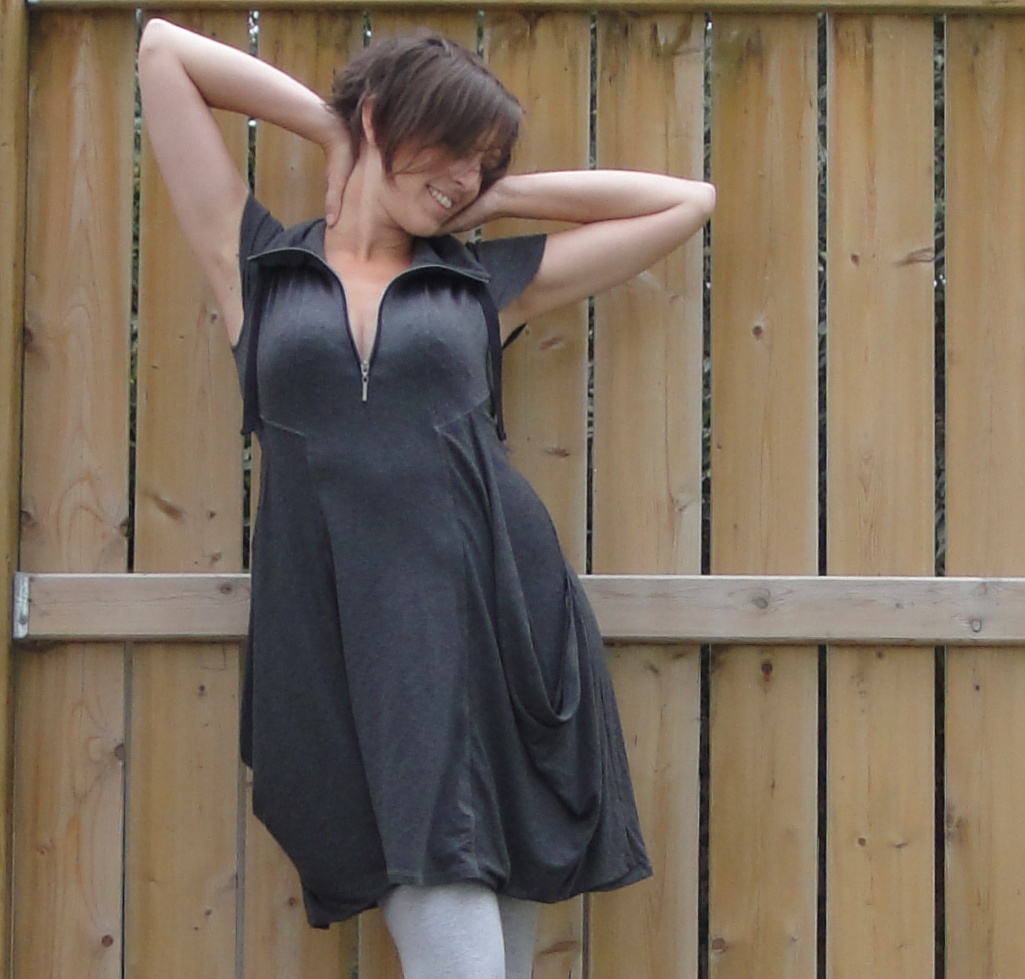
While the dress was a spur-of-the-moment impulse kind of project, this sweaterette has been percolating through my brain for AGES (OK, like a year). I can’t even remember when I got this pattern, but it is weirdly cute, and it has grown on me as my fascination with teensy shrunken sweaters blossomed over the last couple of winters. Except that obviously it needs to be shortened, because a fitted bottom band that starts right at your waist (or just below it) as the picture seems to indicate… well, that’s just going to ride up anyway.

Front view
I overdid the cropping a little bit. Another inch, even two, all around would just relax everything. I do have enough of both these fabrics to make another version, should I decide to. We’ll see. There were some hairy moments in the construction I don’t know if I want to revisit.

It looks cute lying on the bed, anyway!
I got both of these fabrics last winter sometime. The main fabric is a scratchy sweater-knit/burnout kinda thing that was one of those random end pieces Fabricland often gets, which seem to have been collected from the trash behind some apparel factory. The fabrics are unusual, sometimes even spectacular, and often grievously flawed. This was a flawed piece, being both badly stained at one end and varying wildly in width as one selvedge has a crazy yaw going on. A long soak in Oxy-Clean minimized the staining, but there’s no saving that weird shape. It’s ok for itty bitty things like this, though.

This seems like the best view of the sweater. Or maybe it’s just my best angle. 😉
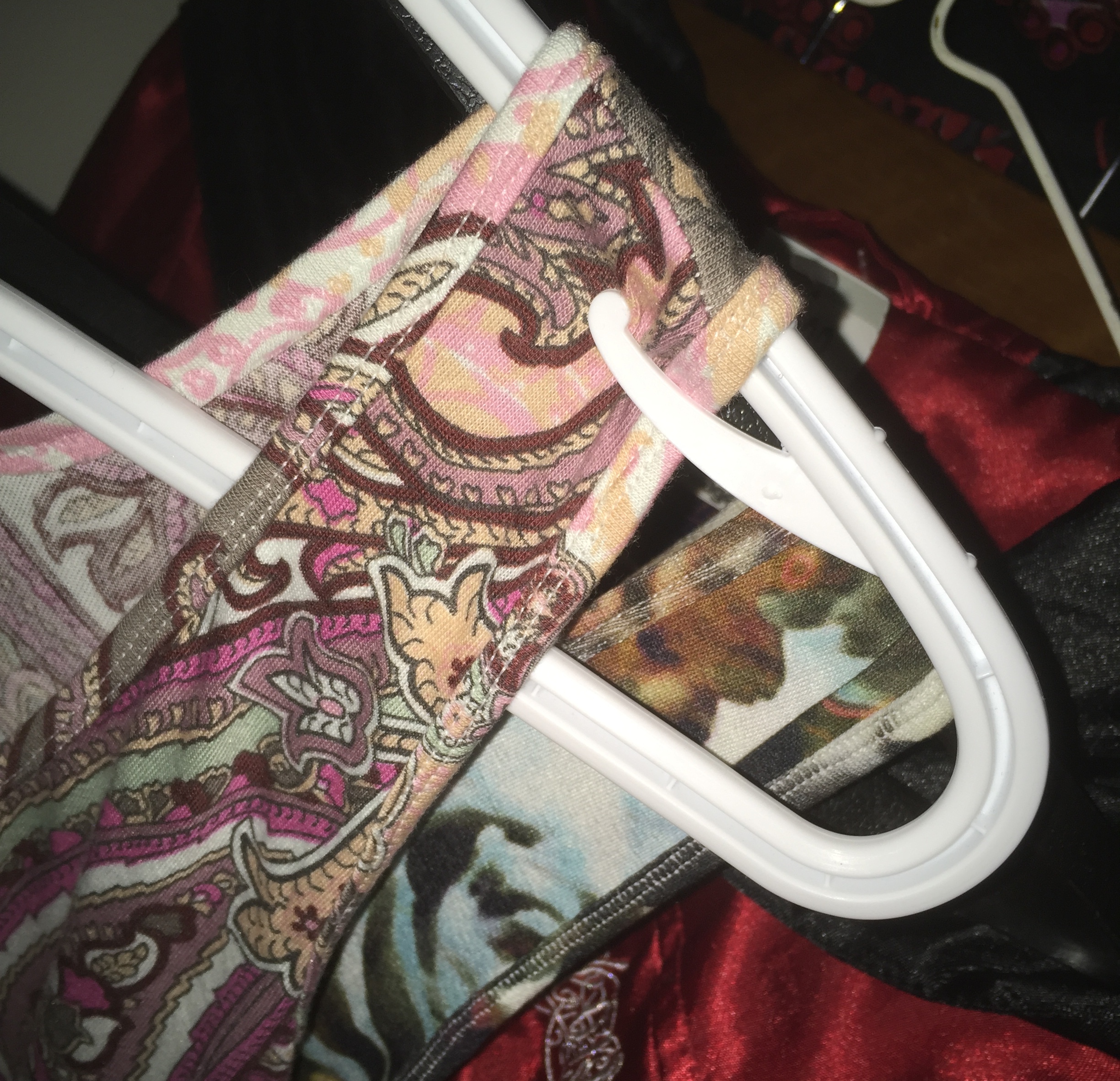
For the ribbing, I used this luxuriously soft rib-knit (almost more of a sweater-knit, except I hate hate hate rib-knit sweaters). Based on the way it changes texture in the wash, I think it’s largely rayon, and unlike almost every other rib-knit I’ve ever met, it feels great. It’s got more stretch than Elastigirl, though, and was the main cause of all the hairy construction moments I mentioned above.
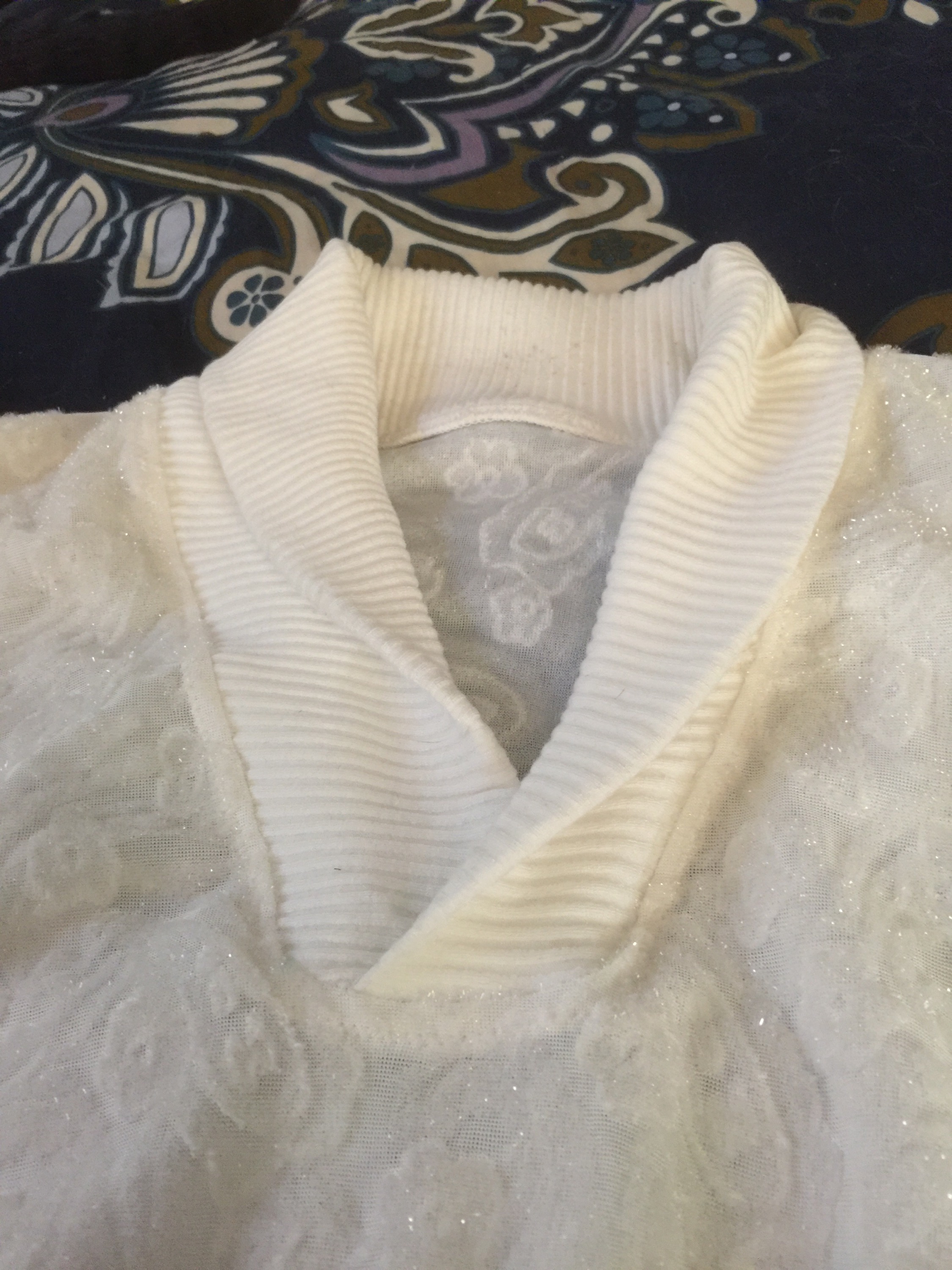
This was my first attempt at this kind of a neckline; it was a little nerve-wracking, and I should have stabilized more, but I am content with the result.
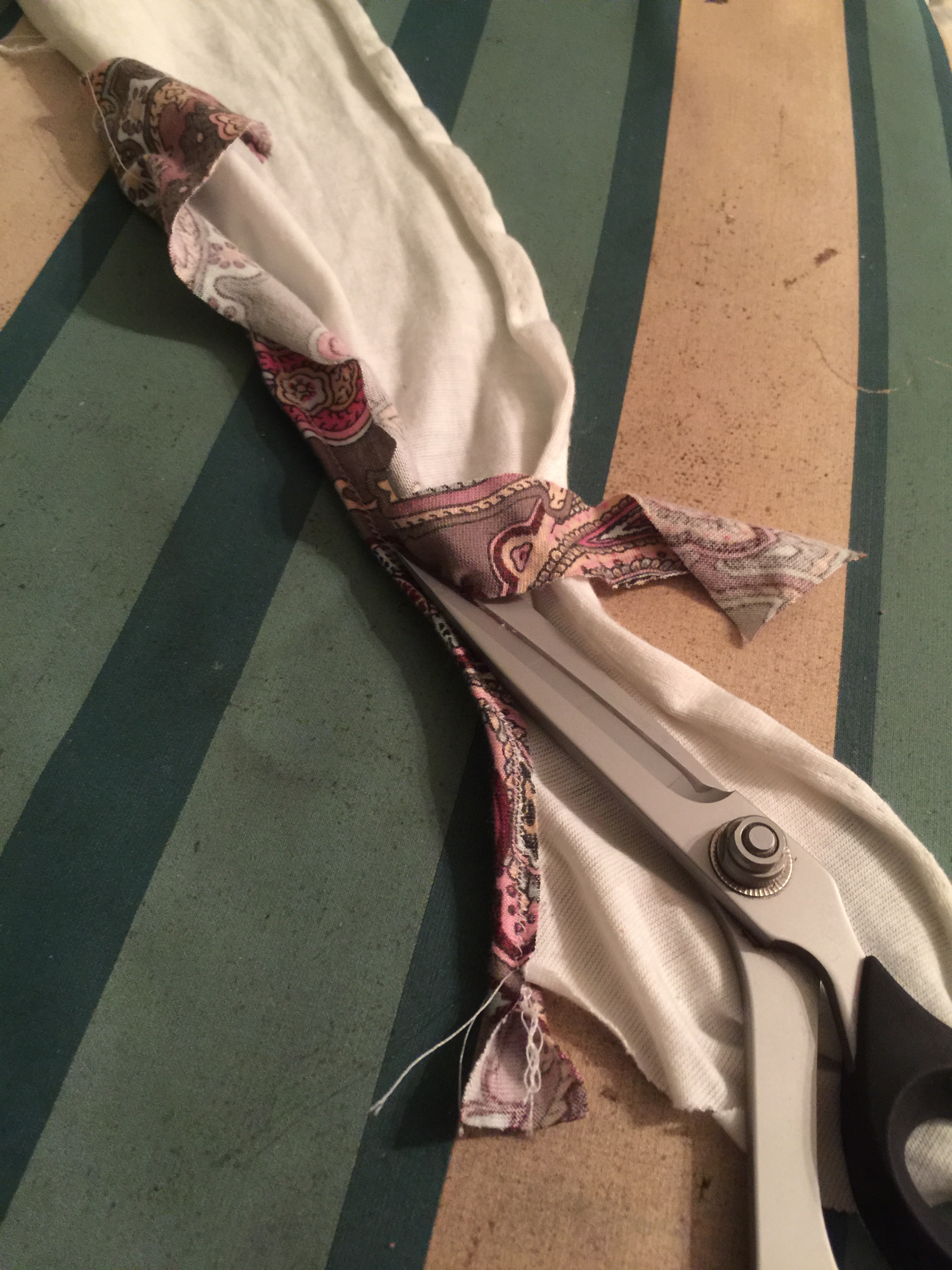
I was pretty darn excited that the Kwik Sew pattern had separate cutting lines/pattern pieces for the bands and collar depending on whether you were using ribbing or the self fabric. Obviously I was using ribbing, so I went with those. Um, did I mention this ribbing is really, really stretchy? I actually had to go back, iron the ribbing to flatten it as much as possible, re-cut my pieces with it flattened, and then shorten some more. And I still could’ve made the bottom band a couple of inches shorter—it kinda flaps out at the bottom. I did stabilize the seams with 1/4″ clear elastic where I could (neckline and bottom, if I recall.)
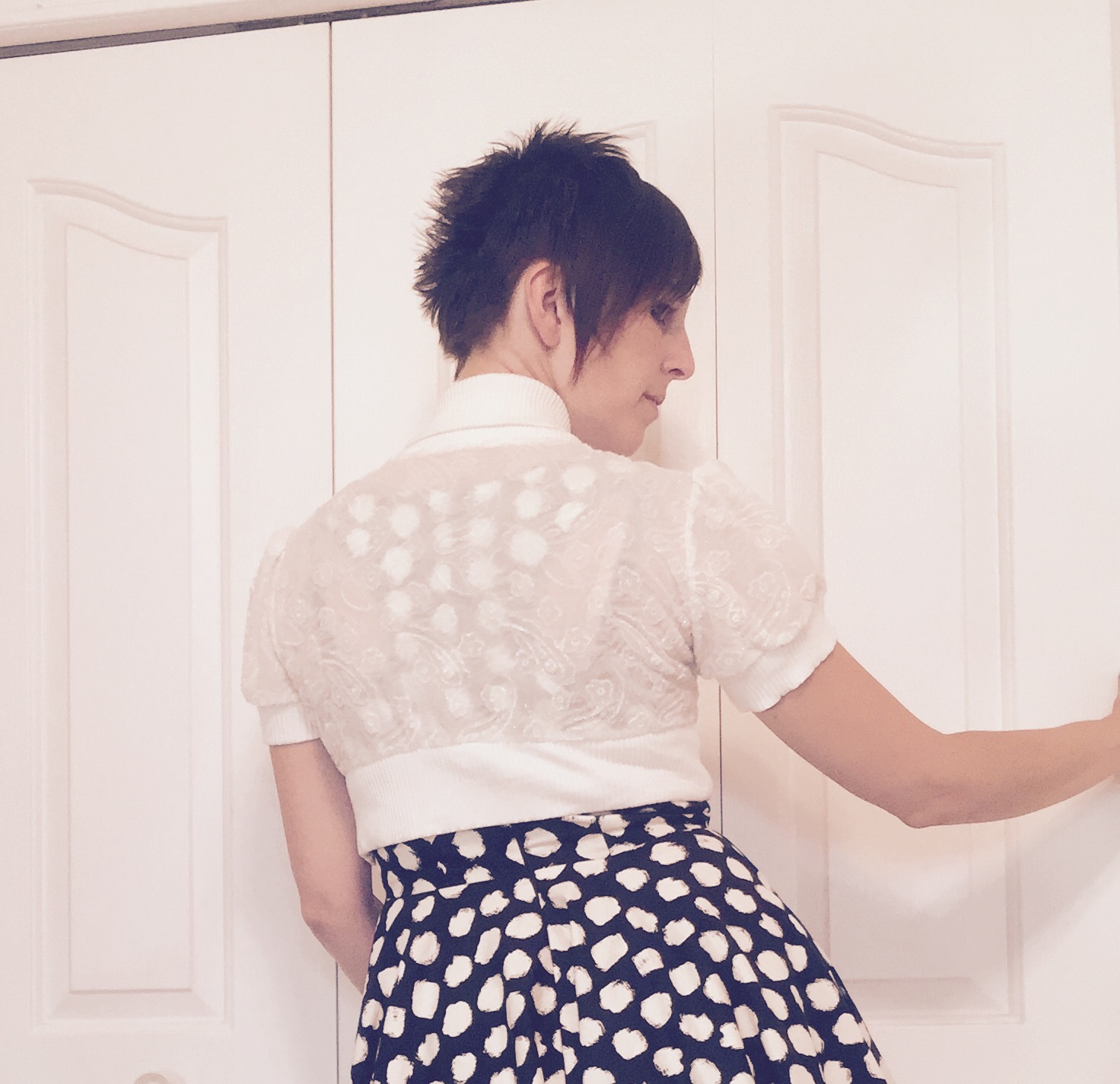
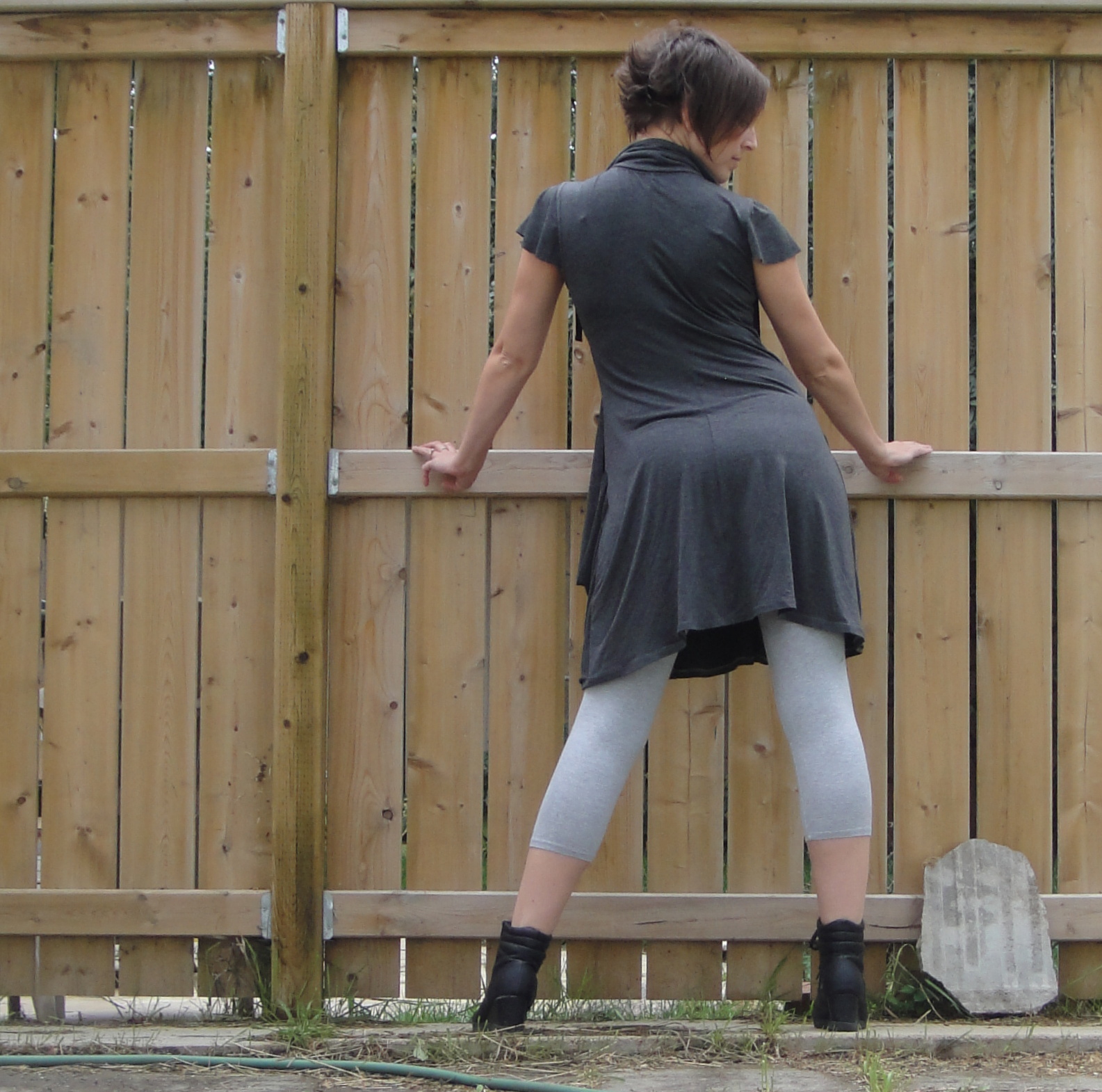
Back view. Shoulders a little wide.
I hadn’t even looked at the pattern size when I picked KS 535 up (one mustn’t be too fussy with vintage patterns, after all), but this particular envelope only went down to size 14! Oops. So I started off by grading down a size, not as easy as it might be as the nesting was not particularly regular—not sure if that’s a quirk of how the grading was done or just of pre-CAD drafting days, when you couldn’t just instantly nudge everything into perfect alignment. But it worked well enough, though the shoulders are still a tad wide for my taste (I like my little sweaters LITTLE. Like the sweater version of the shrunken hipster suit. Especially if you’re going to add puff sleeves. These have just the perfect amount of puff, by the way, enough to be pretty without nudging into linebacker territory.) I did my other usual changes as well, of course, petite-ing the bodice and squaring the shoulders. If only I’d left just a little more length on the bodice below the bust…
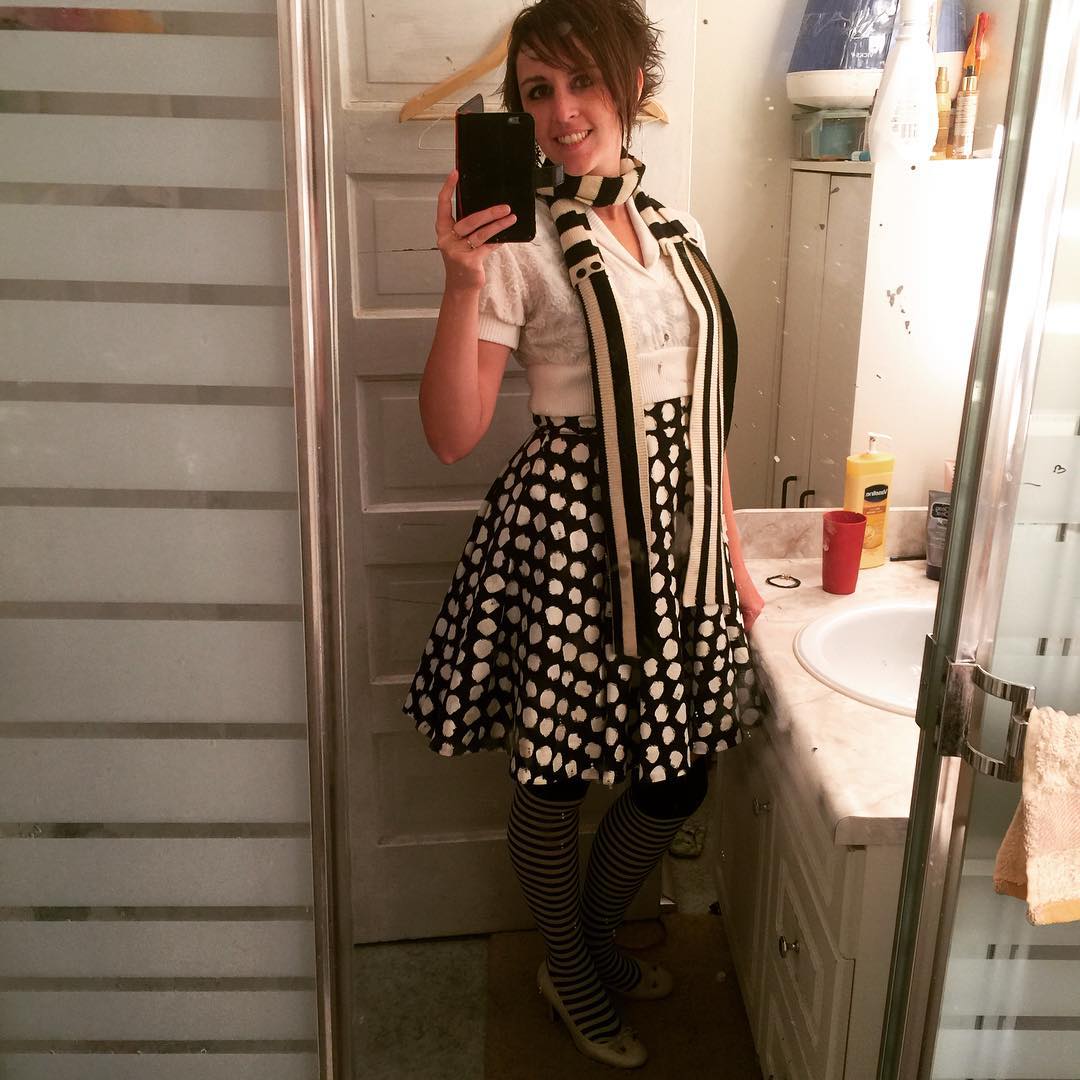
Especially good with a stripey scarf. And my Springy Coat, but I didn’t get a good photo of that.
I didn’t actually plan these pieces to go together, nor were any of the accessories acquired with them in mind—but somewhere around the time I started this blog I picked a bit of a mental “palette” and have come back to ivory/off white again and again, and I guess it does pay off eventually, because I have the most luscious array of black and ivory things to pair with either of these pieces. To the point where the pleasure of constructing the outfit, and then wearing it, far outweighs my little nit-picks at the individual items. So that was actually a neat thing, too—I don’t do a lot of wardrobe planning, but stumbling into some by accident is pretty darn awesome.