
In the universe of nerd-dom, as I’m sure you all know, there is a great divide: Wars, or Trek. I confess I am Wars all the way, though I suspect this represents a bit of a moral and philosophical failing on my part. So how could I resist when my work got this schematic print in:
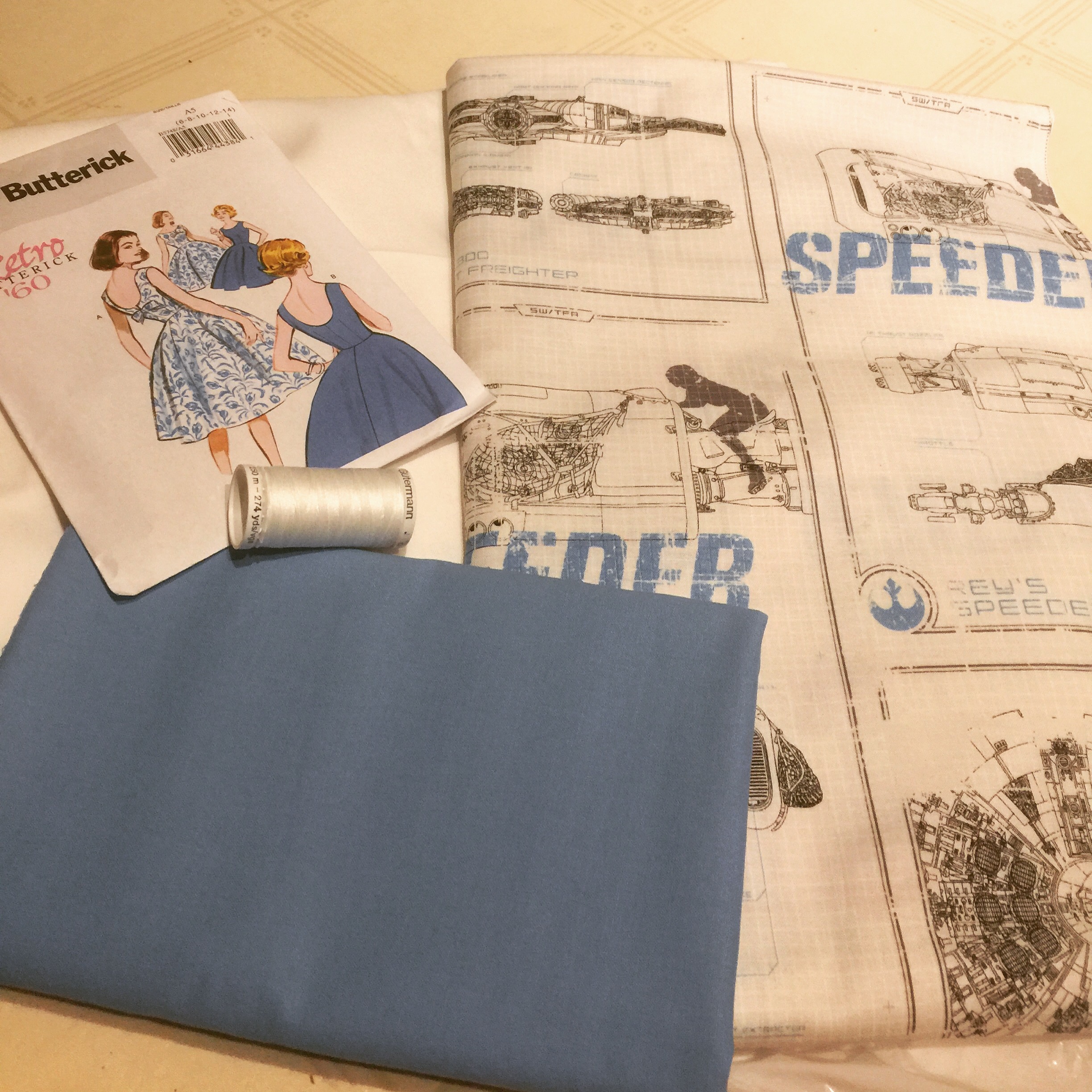 After waffling and considering more creative options, I had to ask myself: what kind of Star Wars dress do you WANT to wear? And it came back to something cute and simple with a circle skirt.
In other words, it was a perfect opportunity to finally try Butterick 5748. It’s like the ultimate fit and flare dress, and nothing else.
Now, at this stage I rarely make muslins of Big 4 patterns. I know my basic adjustments and, especially for work projects where there’s a time limitation, I really just want to finish it. But given the simplicity of this project (and the epicness of the fabric) I wanted to try it out first, so this post is actually not about the Star Wars dress at all. It’s about my “wearable muslin.”
I re-measured my back length just to be sure (yes, it’s still 1″ shorter than Butterick standard). I also checked bust height, and determined that I should probably take the height out between bust and waist, not through the armscye. This handily meant I could just use the petiting line. 😁 Then, on holding the pattern piece up to me, I decided to add back 1/2″ to the front at the bottom, tapering to nothing at the side seam. This is basically the same as a swayback adjustment, except done backwards—having already shortened the back to fit, I tend to need a wee bit more length in the centre front to keep my waist seam level.
Then there’s the neckline. It doesn’t look alarmingly high in the drawing, but looking at the pattern piece I knew it would be way higher than I typically enjoy.
Anyway, because I wanted the Millennium Falcon dress to be Perfect, not just wearable, I wanted to do a practice version first. Fortunately (?) I have several other lengths of quilting cotton in stash purchased with novelty dresses in mind—it was just a matter of picking the right one.
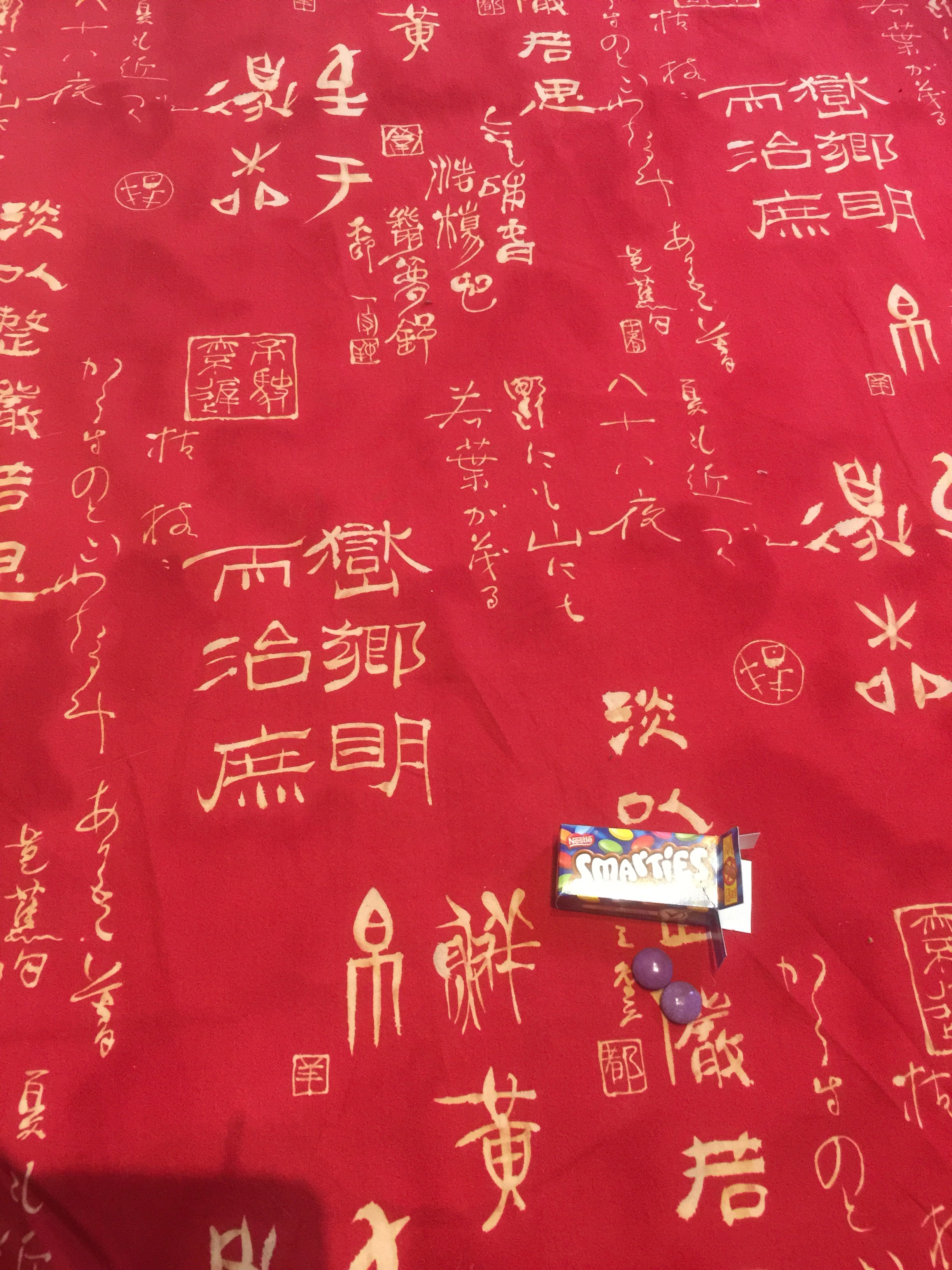 In the end I settled on this kanji print. It was a present or giveaway prize, years ago, from Kristin of Quiet & Small Adventures. It almost became curtains for my daughter’s room, but that never quite happened. I’m sure Kristin would be happier with this outcome anyway. 😉
 So, having selected fabric for a quick wearable muslin, I promptly spent hours agonizing over which way was up—heaven forbid I put my kanji upside down! (Never mind what it may or may not actually say… 😂) Google translate and similar sites did, in the end, convince me that the way I thought was up probably was, so I put on my big girl panties and went for it.
Then there comes the issue of cutting out a circle skirt this long from a 45″ wide fabric. The cutting layout would have you do it on the cross grain. Having just spent forever figuring out the right way up, I was NOT going to do that. (Nor would I on the Star Wars dress, so this was still good practice.) I would have to add a CF seam.
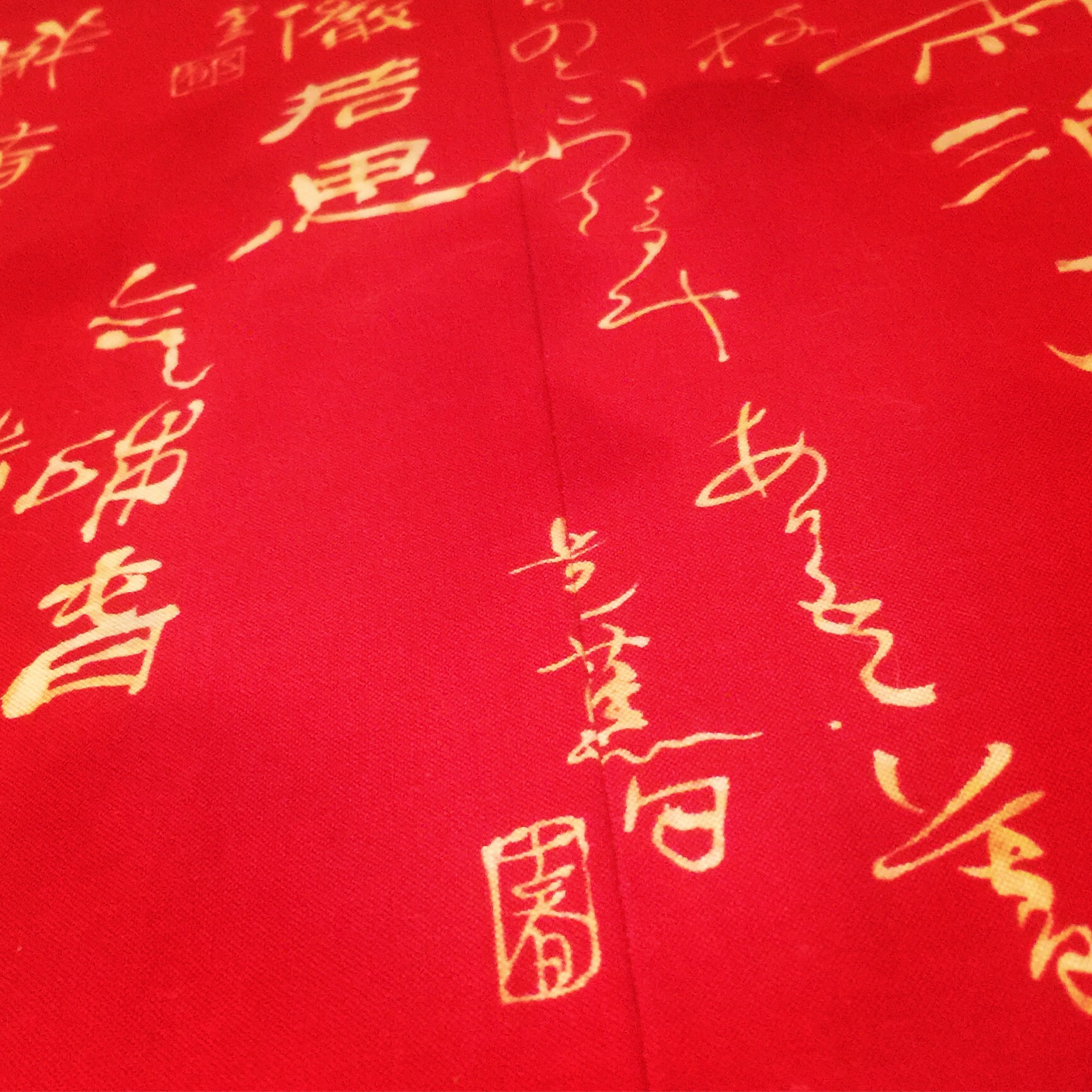 I carefully positioned my pattern piece so that the front aligned mostly with blank space; after I cut it, I ironed my seam allowance back, and miraculously found the point where it mirrored. I wish I’d taken more photos for my own reference, but I wasn’t actually sure it was going to work until after I’d done if all. Anyway, it DID work, although since the section was mostly red it doesn’t show too much. I ended up with both pieces creased right at the seamline, then slipped those two folds together and stitched along it, which I think helped.
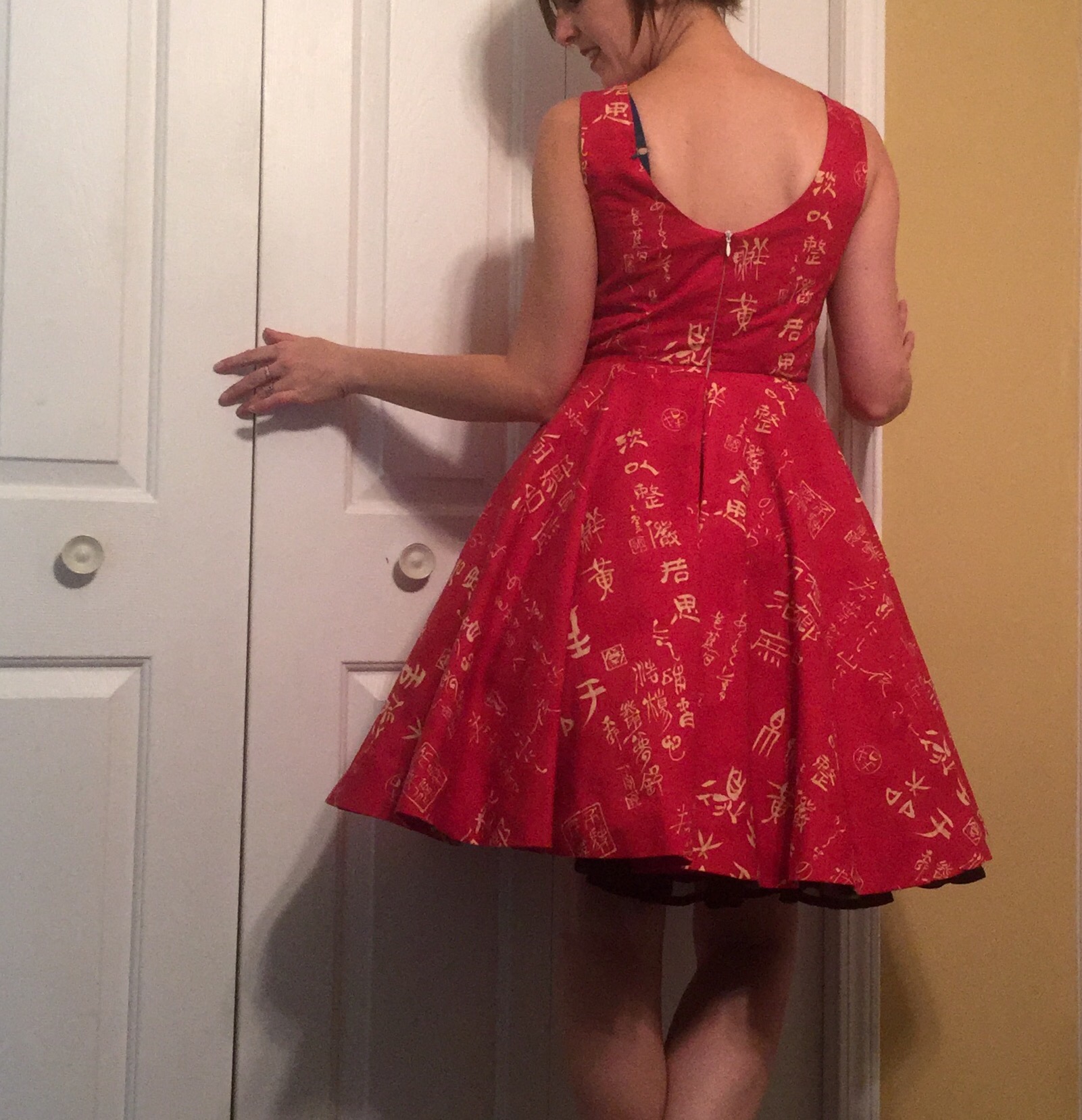 Everything else was quite simple. The pattern calls for my favourite clean-finish technique for sleeveless lining, so that’s a yay. 🙂
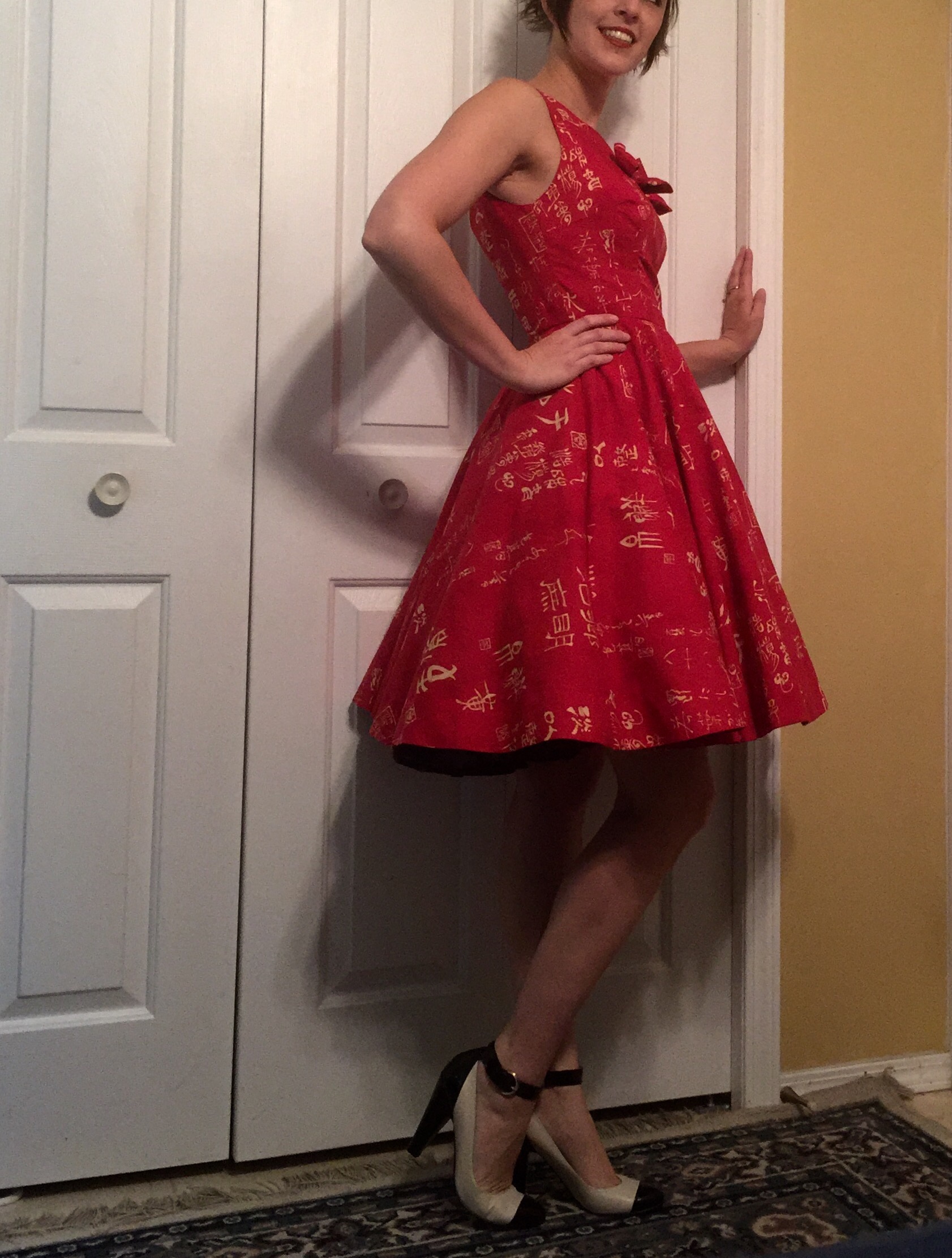
I was happy with most of my alterations but did have a few minor tweaks to the bodice, so it wasn’t a wasted test run. I added pockets to the side seams (yay!) of the skirt but they’re a little low (boo!) so I’ll fix that next time.
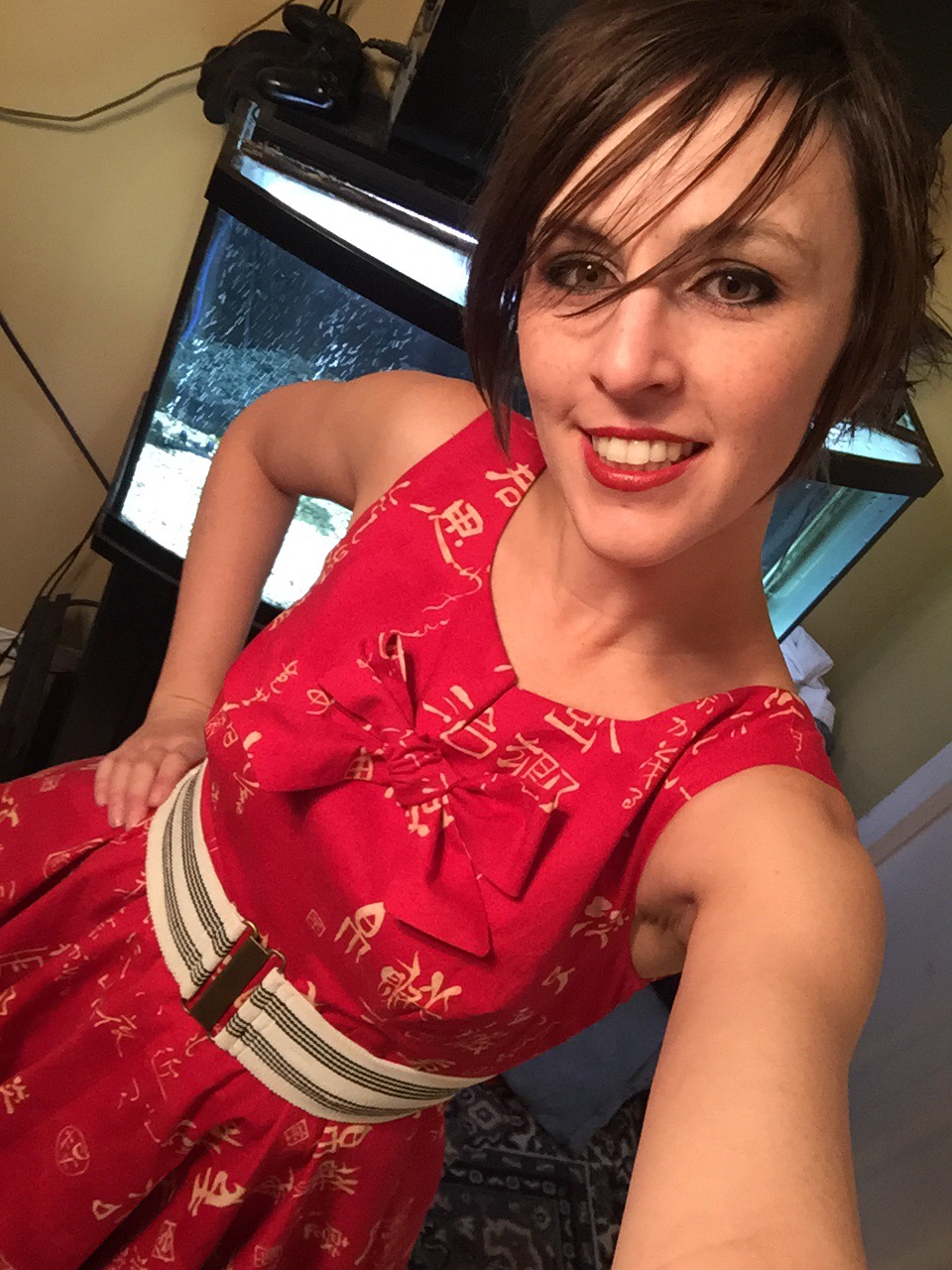 I gave the higher neckline a chance, even with the bow. Don’t like it. (Though the bow does help, and I like it more in these pictures than I thought). I’m thinking I may make it square in the final dress, to go with the square print.
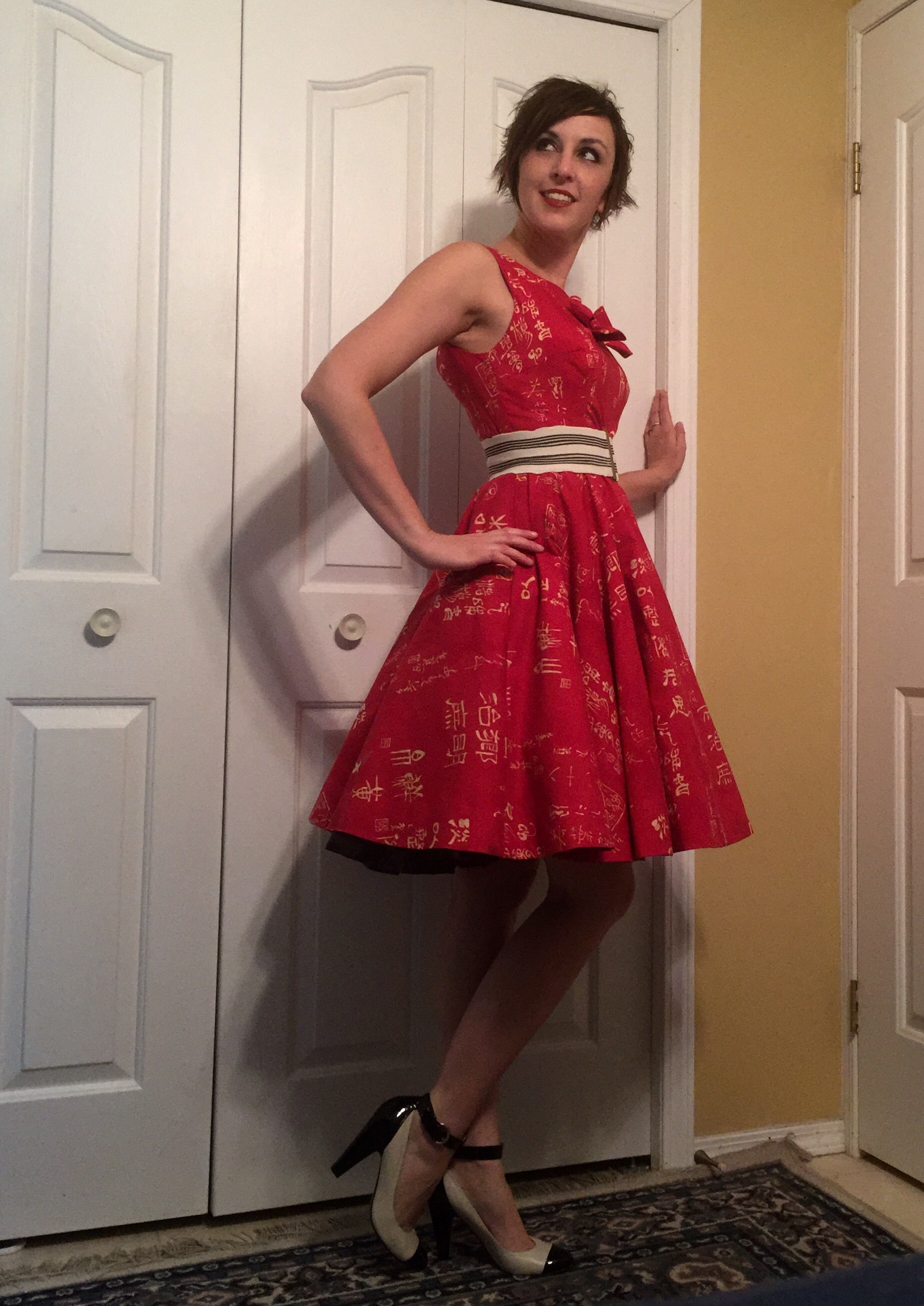 Of course, sewing in quilting cotton is just dreamy. Everything presses nicely and stays where you put it. The invisible zipper? Cinch! I did hem it quite short—I turned the differential feed up on my serger and managed to get about a 2.5″ hem, which is a little insane on a circle. The shorter length is fun, but I might leave it maybe one inch longer for the next one?
I do like it better with a wide belt to give a bit of relief from all the crazy kanji. I think a solid black belt might be better than this stripey one, but this is what I had on hand.
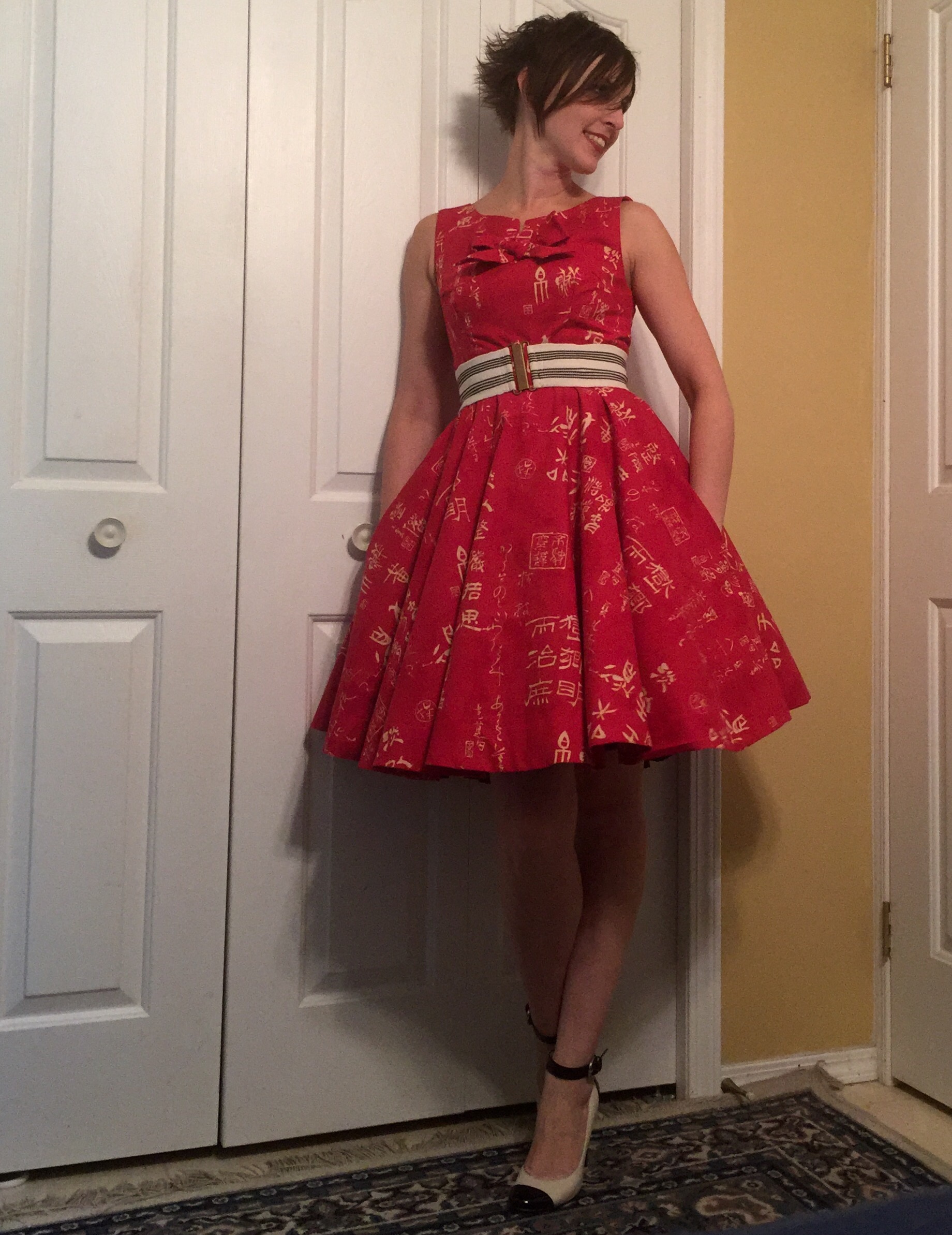
Pockets!
As you can see, the season of boring back-yard photos has passed, to be replaced by the even-more-boring season of indoor-in-front-of-the-closet pics. Look, I put on makeup on a Sunday for these pictures. Take what you can get.
So now that I’m all dolled up like a 50s housewife I may even make a real breakfast… And then start on the REAL Star Wars dress!


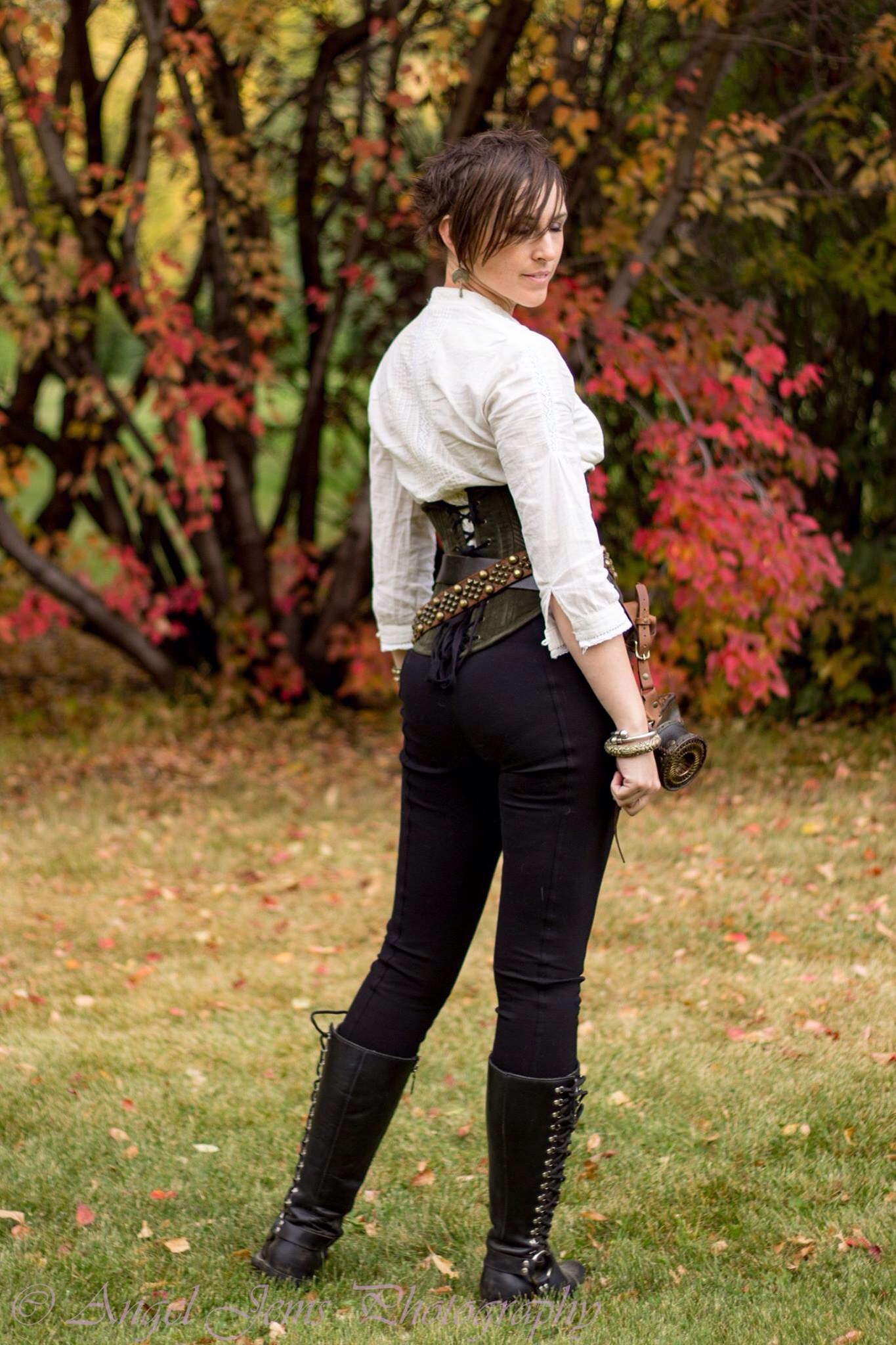
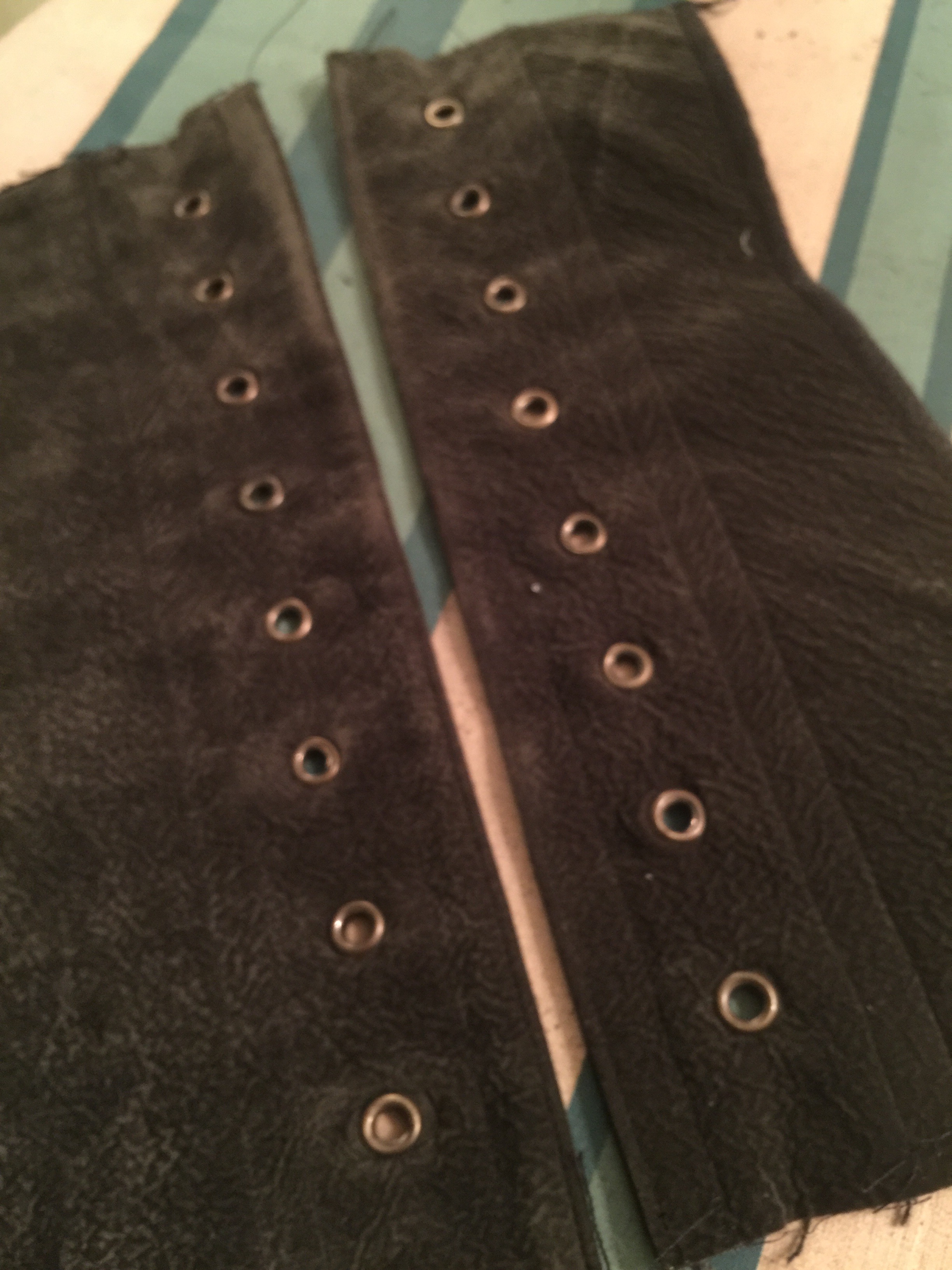
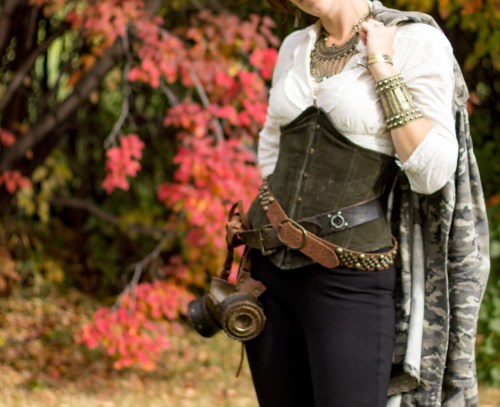 It’s the method described in “The Basics of Corset Bulding” by Linda Sparks (mainly used because that’s the book I have. 😉 for making an alterable corset. You construct the front piece with the busk and the back pieces with the grommets, first. Then the other pieces are sewn together, and the seam allowances stitched open to make bone casings. But this time, I put in the bones around the grommets in the back, and then tweaked the fit—finalized some seams and added bones, and tweaked a little more—and so on until everything was just right. This let me get the fit I like, the shape I like, AND end up with a super comfy corset, so I’m pretty stoked.
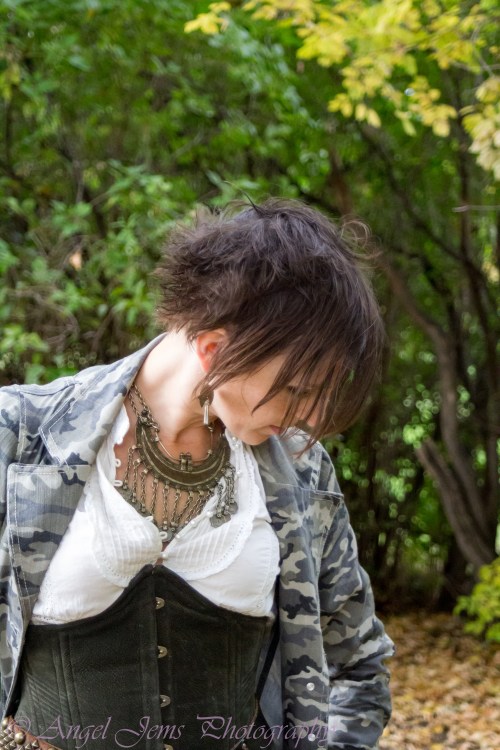 For fun, I added small sections of cording in the front. I think a bigger or firmer cord would’ve been a good idea, but they were fun.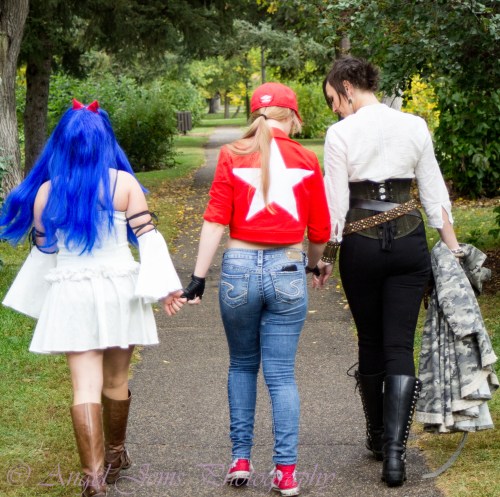
 My sister-in-law shot us amidst gorgeous autumn leaves, which are lovely and natural and not really suited to an outfit that demands wrought iron and gaslight, but I wasn’t willing to go further than the next-door park on that particular morning, so I’ll take it.
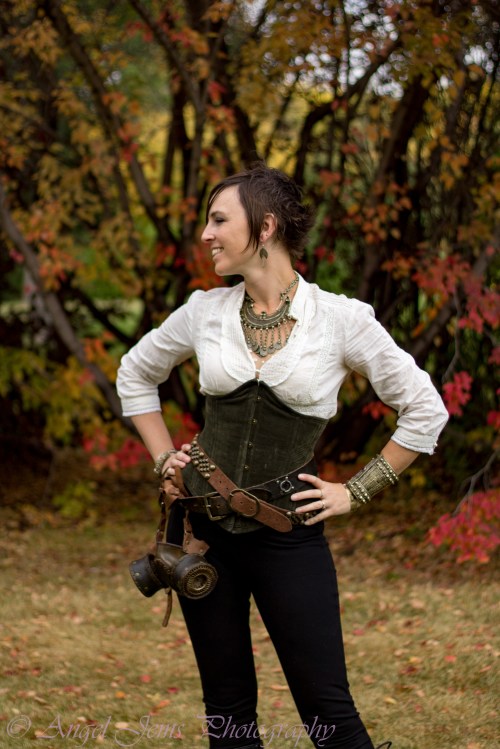 That’s the same white pintucked (not made by me) blouse I wore
 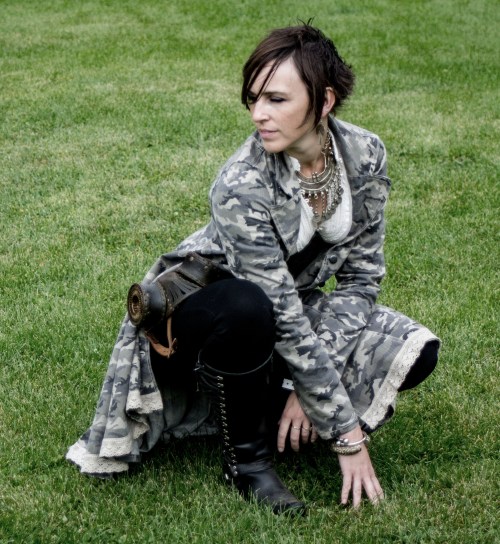 The camo coat wasn’t actually the best topper for the outfit—it kinda swamped the corset & hip decor, though it looked cool from certain angles. I have enough of the faux suede left to make a matching jacket; I’m thinking something cropped and faux-military would be fun. Maybe in another year?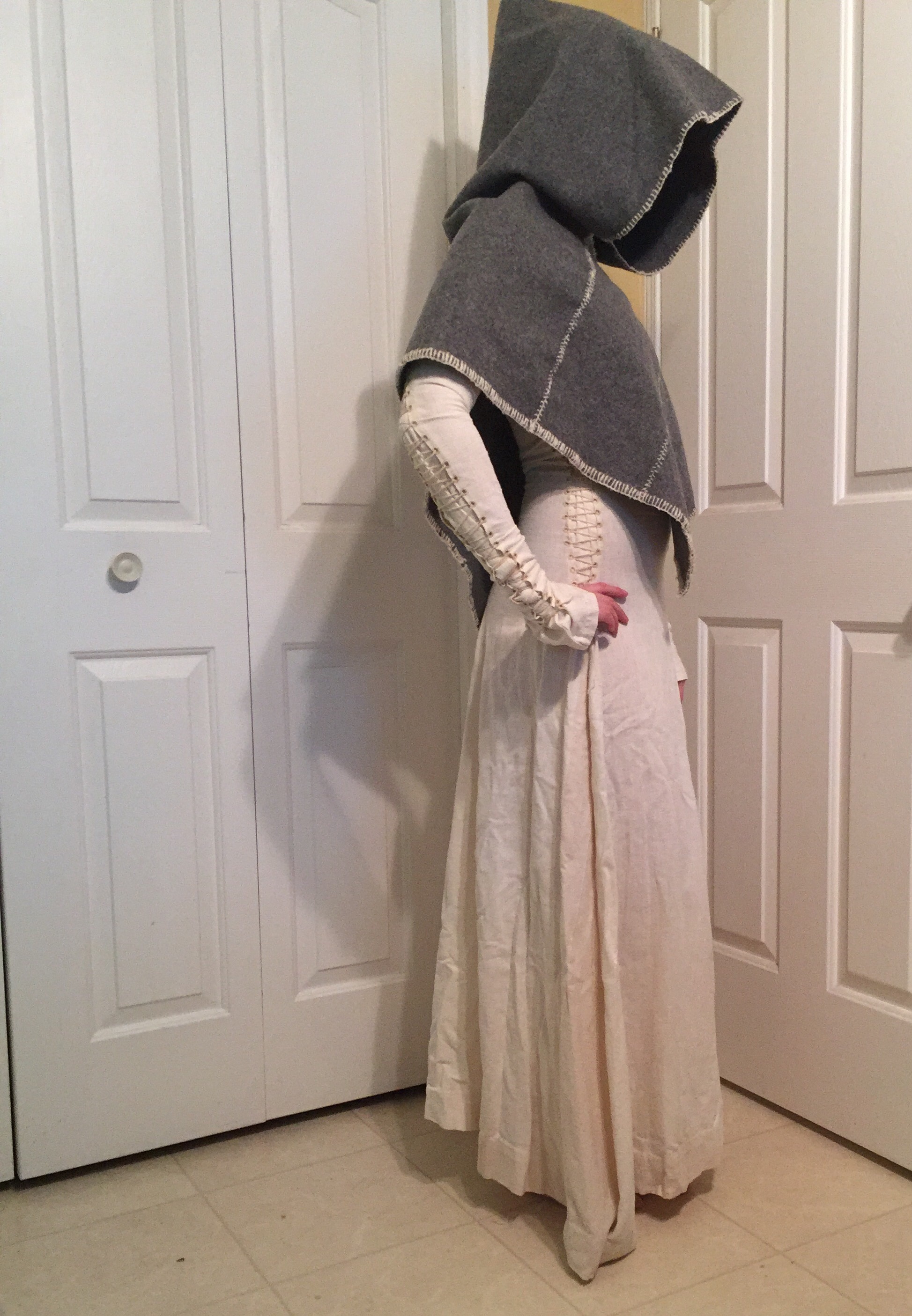





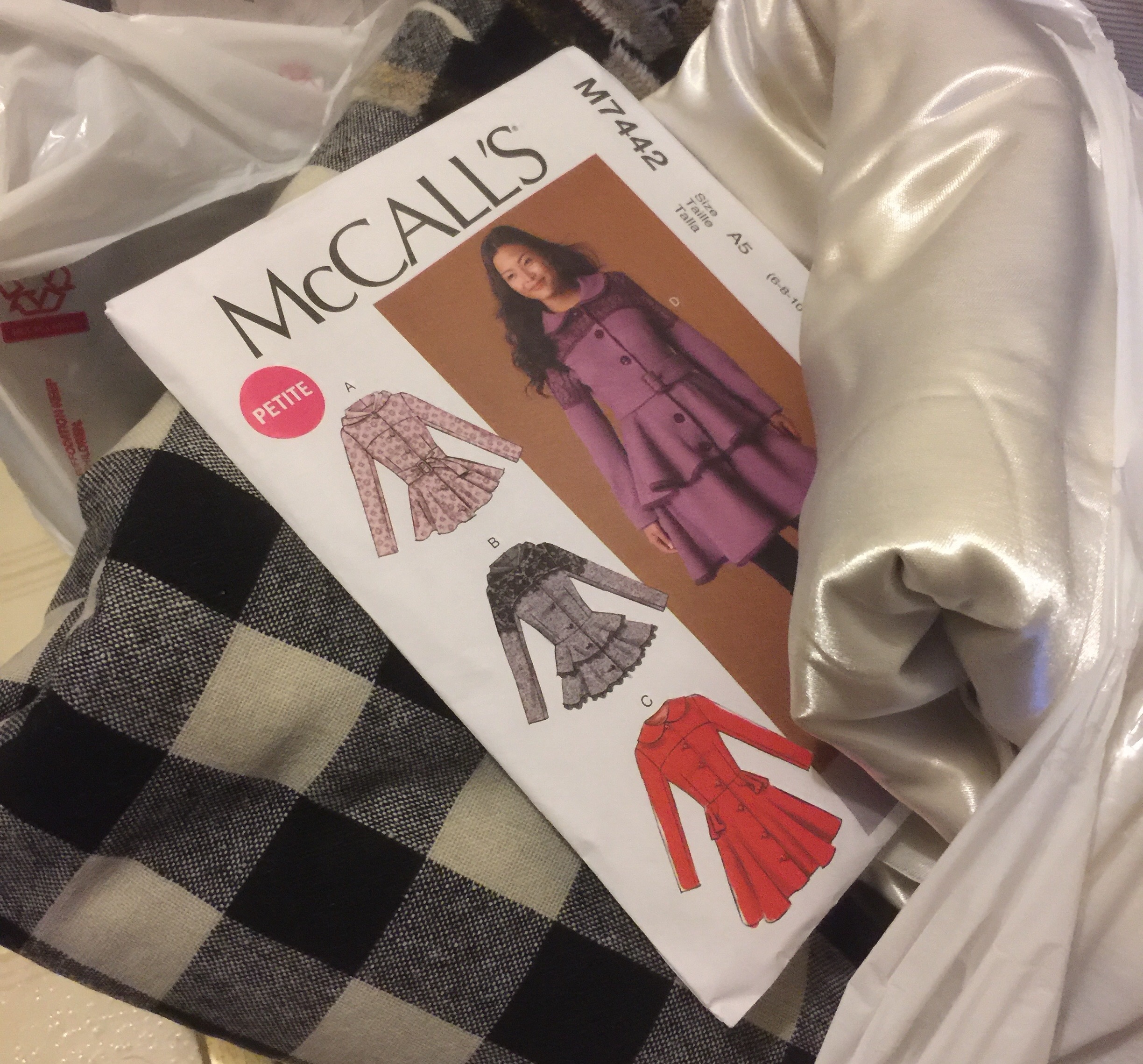
 My first thought was a version of view C with the hood, but after trying out the little flounce at the waist I decided to skip it. It’s cute in theory but a little too much ruffle right at the waist for my liking.
 The fabric is a “wool blend” lightweight coating (or possibly a heavy flannel) that’s only 10% wool—eyeroll—but I sure do like the look. Plus the colour scheme will work really well (if boringly) with lots and lots of the other things that I have made. To make it a bit warmer, I underlined with some heavy flannel from stash, the same stuff that I used for the
  Running with the inspiration of the lace-bedecked original, I also got as much of this black cotton cluny lace as I could fit in the project budget.
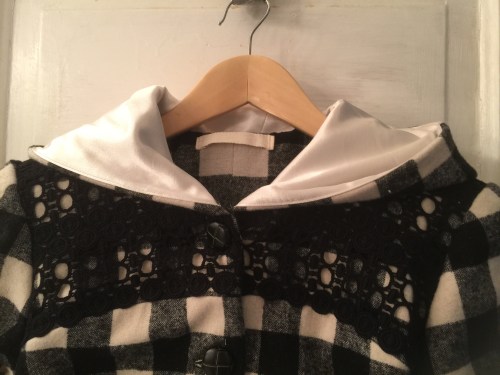 And I had just enough to go to town, covering not only the front and back yokes, but getting bands at the hem, waist, and sleeve hems as well. With only the tiniest sliver to spare!
 You might find this a bit unbelievable, but this is the only coat I have with a hood. It’s not quite big enough, from my point of view, to look good up, but it’s just right for wearing down. And I’m sure if I wear this far enough into the fall (assuming I can wear it, when the chips are down) I’ll test it out for warmth. At a certain point in the Canadian winter you give up on caring about what things look like.
 Basically, I botched the plaid matching. Since it’s such a simple check, I guess I thought I could kinda wing it and, ah, no. Not a good idea. I should have spent much more time reviewing/researching. Or just thinking. Gah. All the different seam-lines (yoke, waist) didn’t help either.
 And I stretched and eased and fudged and tweaked and made it work, kinda, but, there was a price, which was that I had to trim off some of the centre front bodice. And that I lost what had been a vertical stripe match from left side to right side, in order to match bodice and skirt. Maybe not the right call in hindsight, especially since this meant I also lost inches, where you don’t really want to lose inches in a fitted coat that I was already making down a size. Which means the whole damn thing is tight, bordering on way too tight. Not what I wanted in a brand new coat. And you can see the awkward pulling across the front, especially above the bust, where there just isn’t as much fabric as there should be.
 Otherwise, I was pretty happy with my fit alterations. I started with a size 10 in the shoulders & bust, grading to a 12 at the waist, and squaring the shoulder down to the size 6 height. I did a petite through the armscye (but then forgot to take anything out of the sleeve cap, which led to a bit too much ease there, oops. My fabric was forgiving enough to accommodate it, but I wish I’d remembered in time to just trim it off. I’m glad I didn’t go with the straight 12 though as the shoulders are still a little boxy. I should have lowered the dart point a little bit, but the pulling above the bust bothers me a LOT more than the high dart.
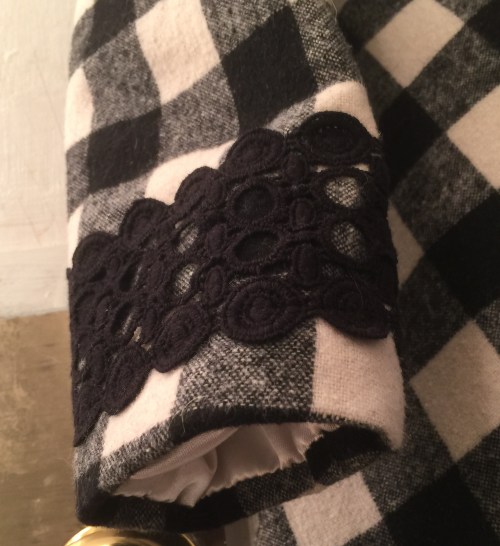 I do like the two piece sleeve, although I did need to taper it in a couple of inches at the wrist—the bicep width is great, though. After comparing it with the sleeve for my Springy Coat, I added only 3cm of length, but then I lost about half of that trying to get the stripes to match up between my under and over-sleeve, and it’s still long enough. Which means that’s a very long sleeve to begin with, since it’s not unusual for me to add 3″ of length, not 3 cm. I wish I’d been able to keep the full 3cm, though—somehow with turn of cloth and everything it wound up about the same exact length as the Springy Coat sleeves, which are just a little shorter than I’d like. (Keeping in mind that I am obsessed with overly-long sleeves. Probably the length would be perfect for a normal person.)
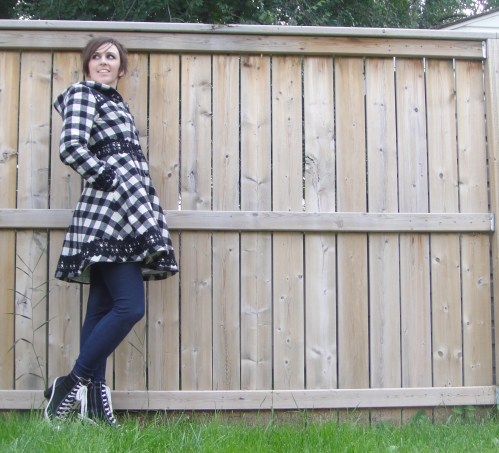 Oh, yeah. It comes with pockets! They are obscenely tiny. Make them bigger. BIGGER.
 I do enjoy my lace, even though it adds to the business of my busy fabric. I used two rows to cover the yoke parts, and just had to piece in a tiny bit right along the shoulder-line.
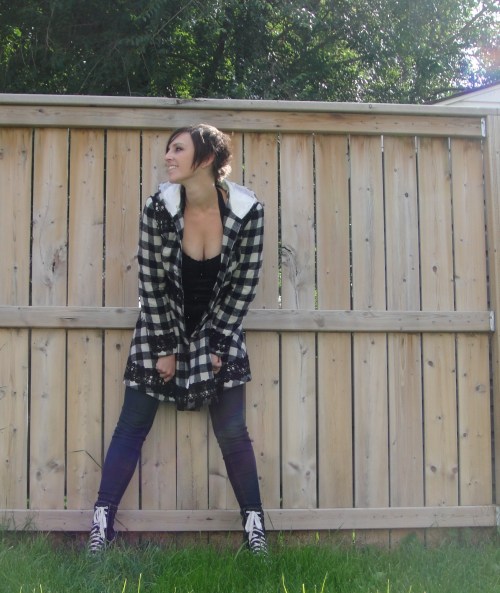 I think that’s it. I like the pictures. I love how it looks on the hanger. It just remains to be seen if tight is actually TOO TIGHT.
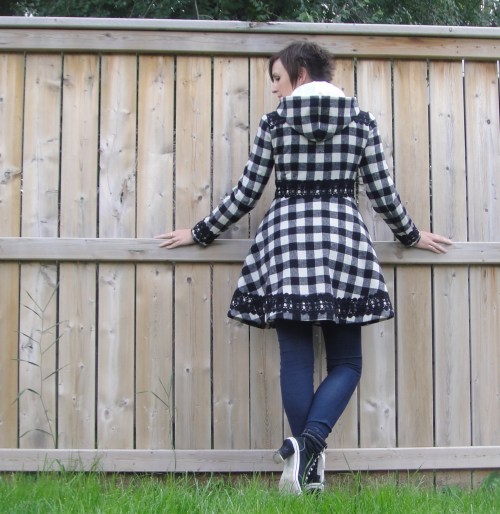 The hood looks perfect when it’s down. Just the right amount of fabric to sit nicely.
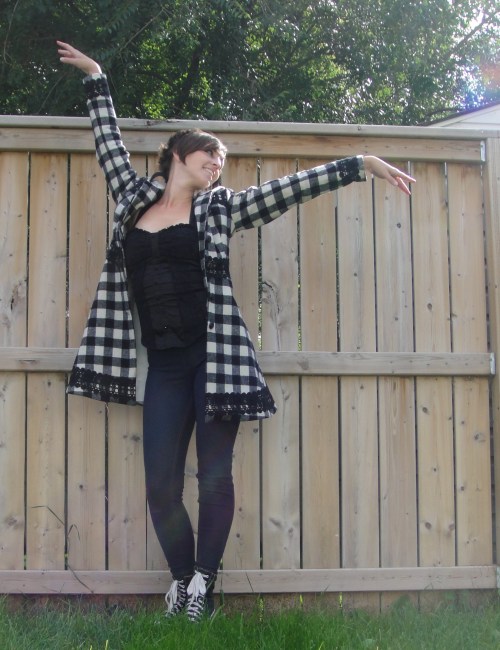 All in all, I think I will be happy once the plaid-related trauma fades…



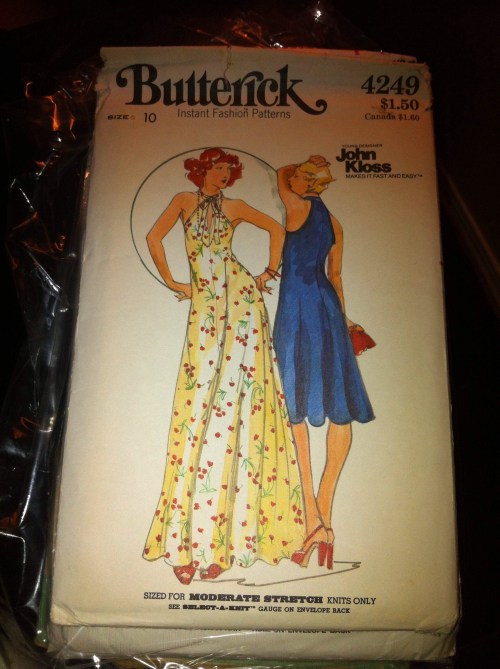
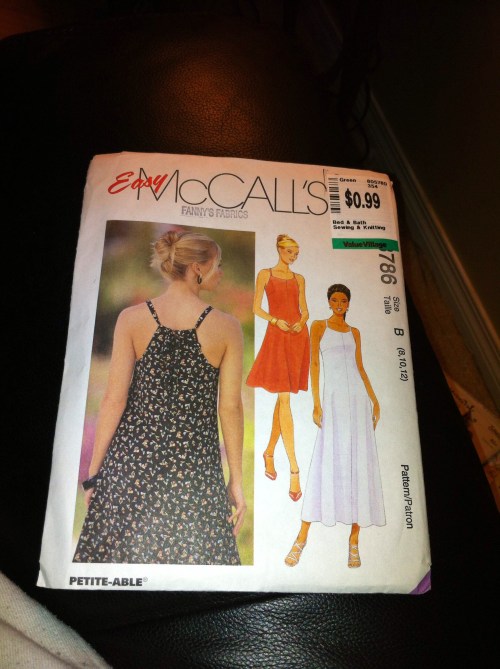
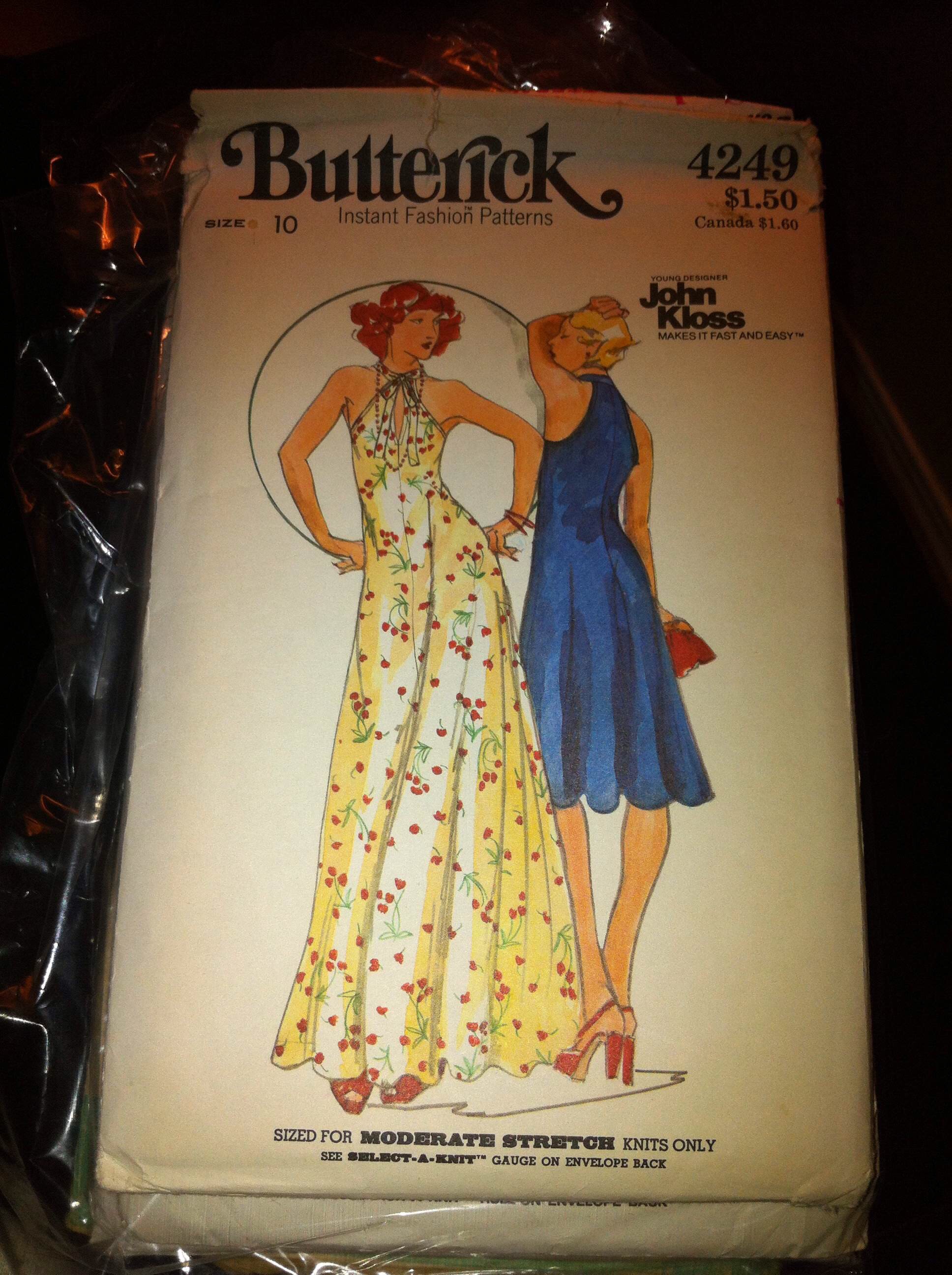
 Anyway, I bit the bullet with Butterick 4249 by John Kloss. Incidentally this also reminds me of Daughter Fish’s
  So, um, tent-y it was. I should’ve taken pictures, but, um, no.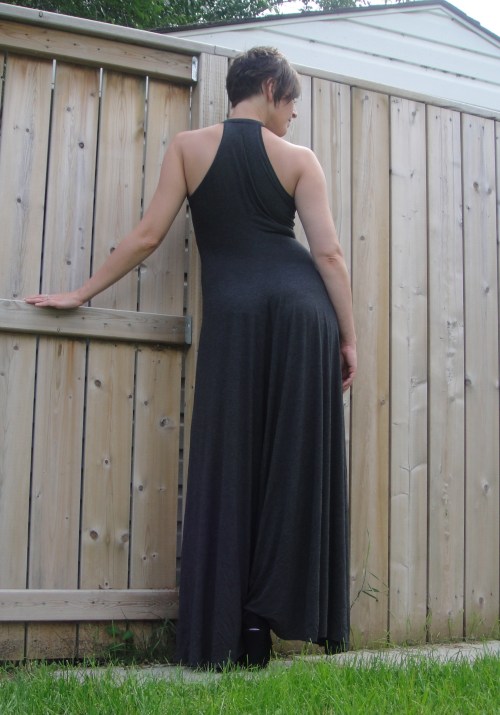
 I made a couple of adjustments to the construction. The pattern had faced armholes; I used a band instead. I interfaced the sides of front opening with a fusible knit. Both of these were very good ideas. I cut the neckband on the cross-grain (pattern piece called for it to be on the lengthwise grain, not that that would have helped a whole lot with this stretchy fabric.)
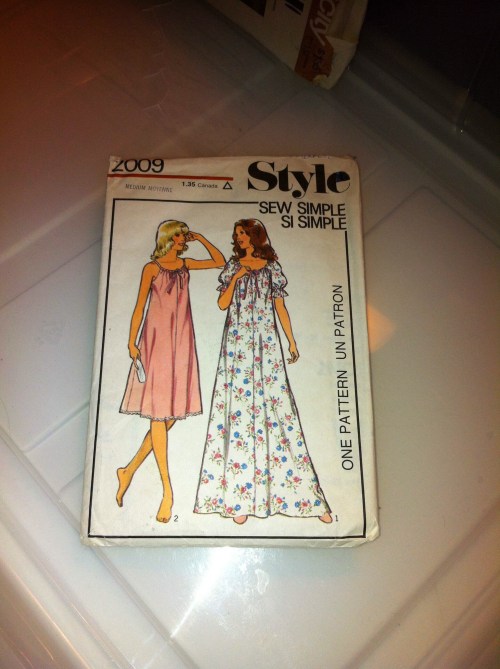
 Anyway, pretty happy with this, despite all the surgery and limited tent-osity. This was the last sewing of my vacation (I kept doing family stuff. Jeez. Darn family, getting in the way of important things), “finished” in the afternoon after we put Tyo on a plain for Vancouver Island, but before I had to go to my first shift back at 5:00 pm. So at least I got to wear a new dress back to work. And then on my first full day back it was nasty and rainy, so I did get to wear my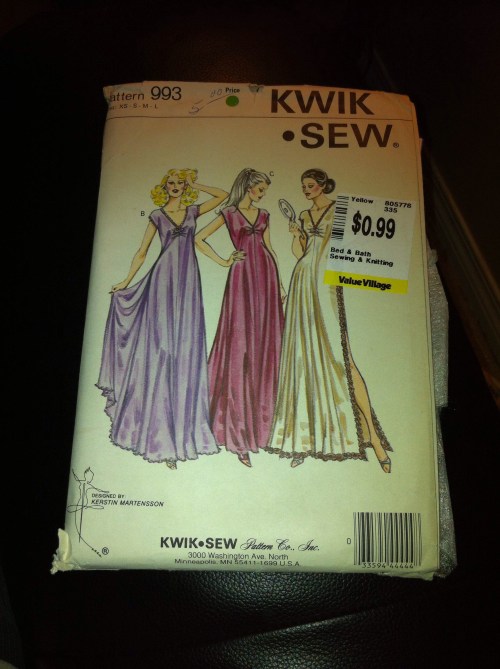

 T
T
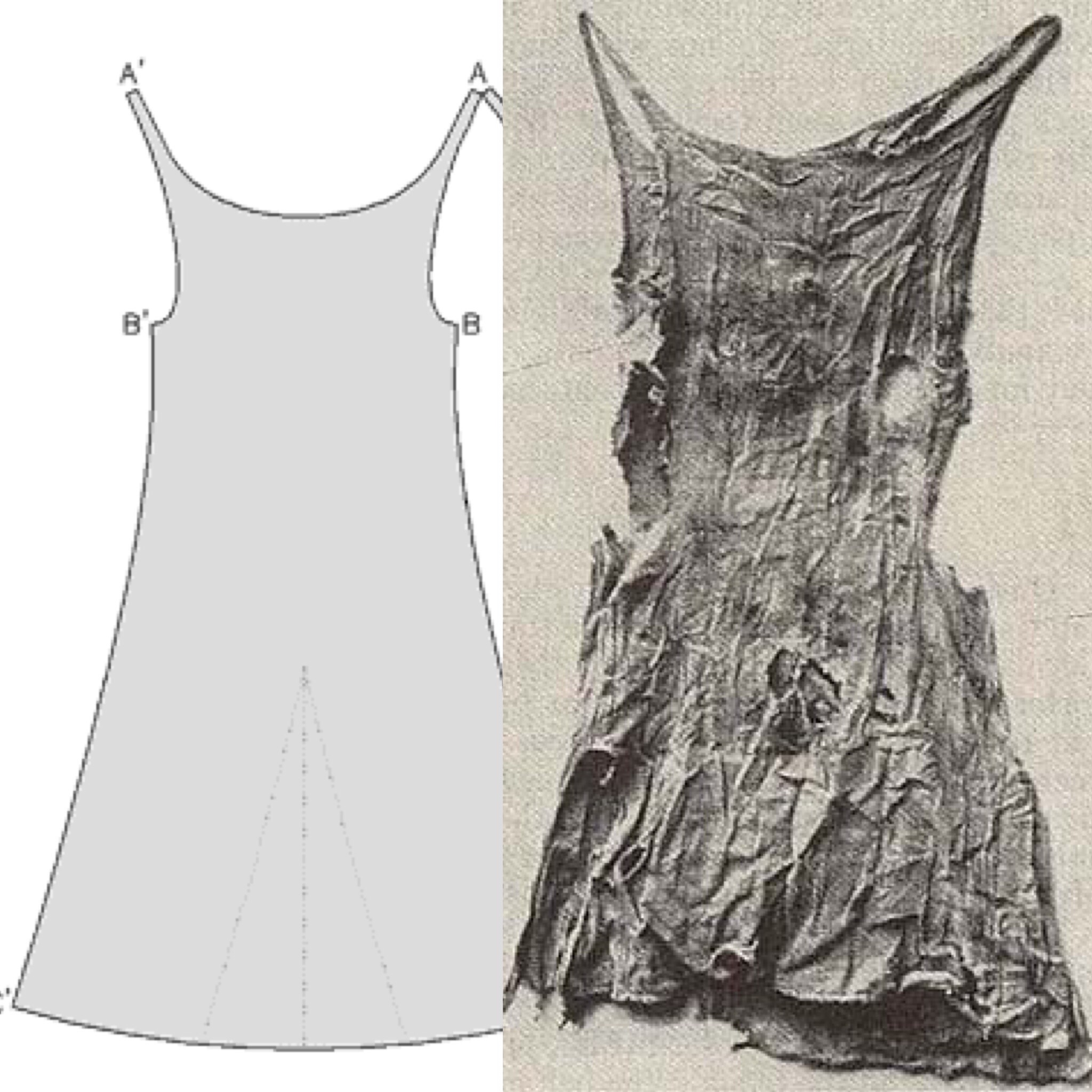
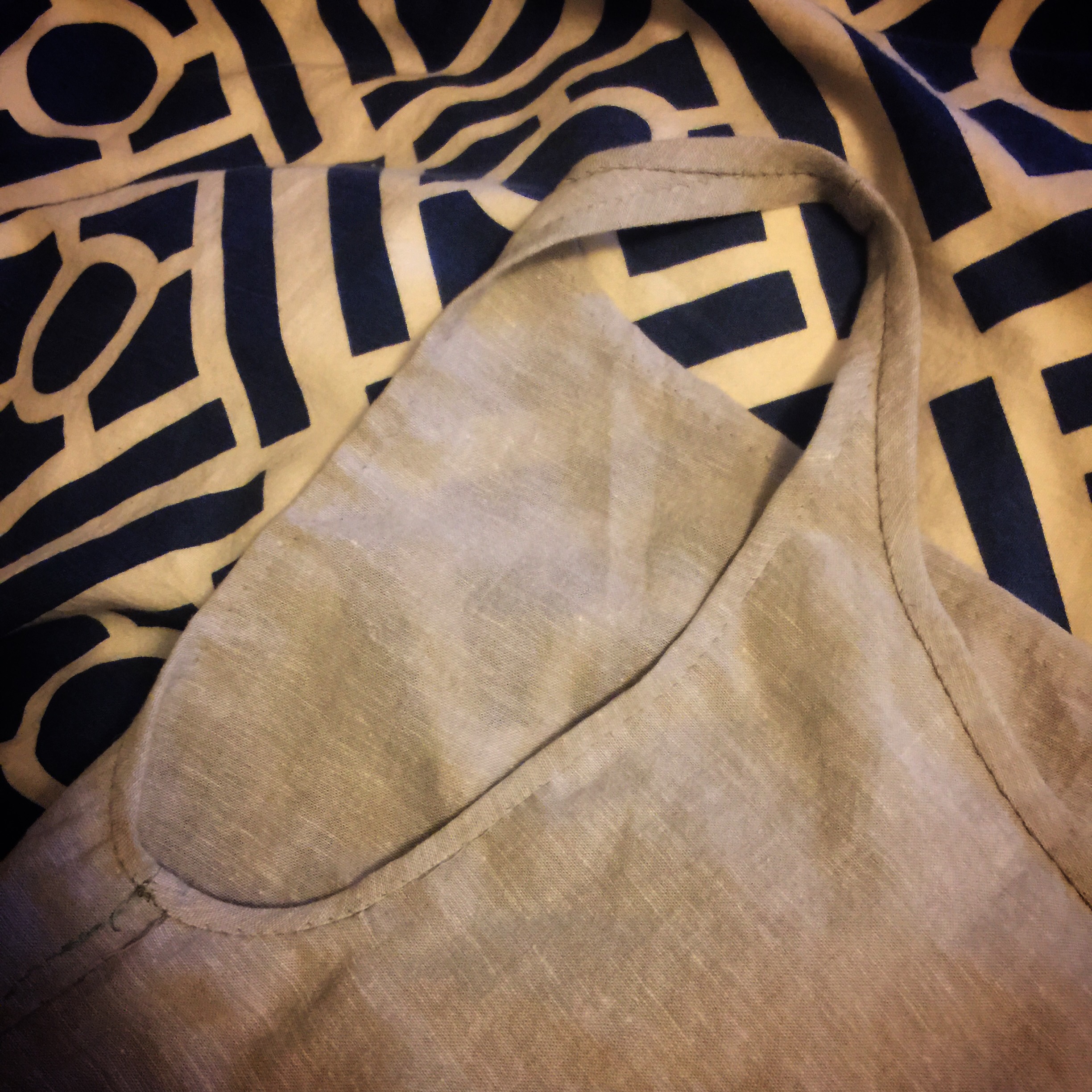

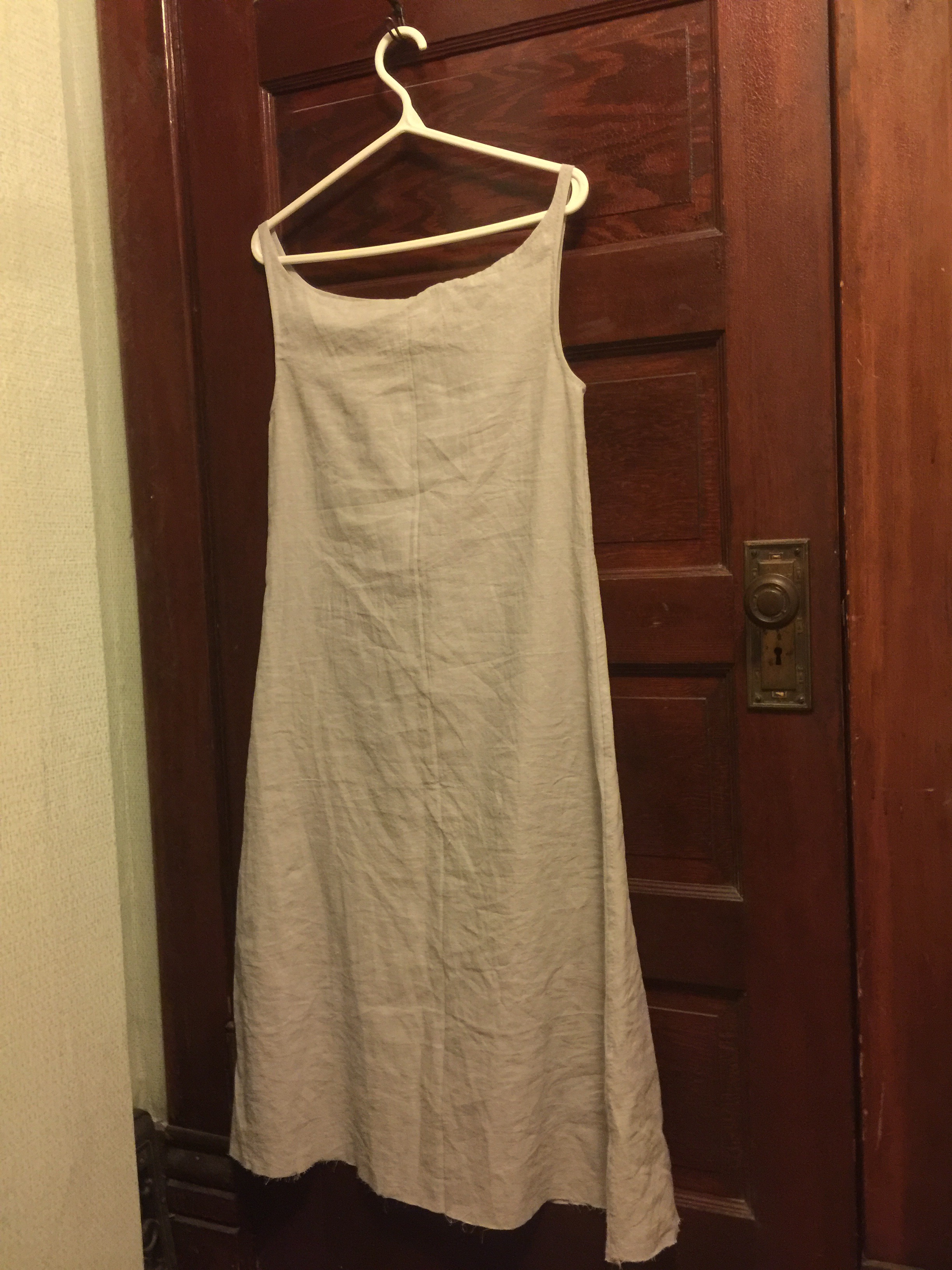

 I mean, if they are made by just hemming the edges, that’s a method prone to stretching, and they do look stretched out in the picture to me. (Apparently it was found wrapped around a wooden plate, and I almost wonder if the straps had been stretched around the plate to secure it in place) anyway. WAY whack long.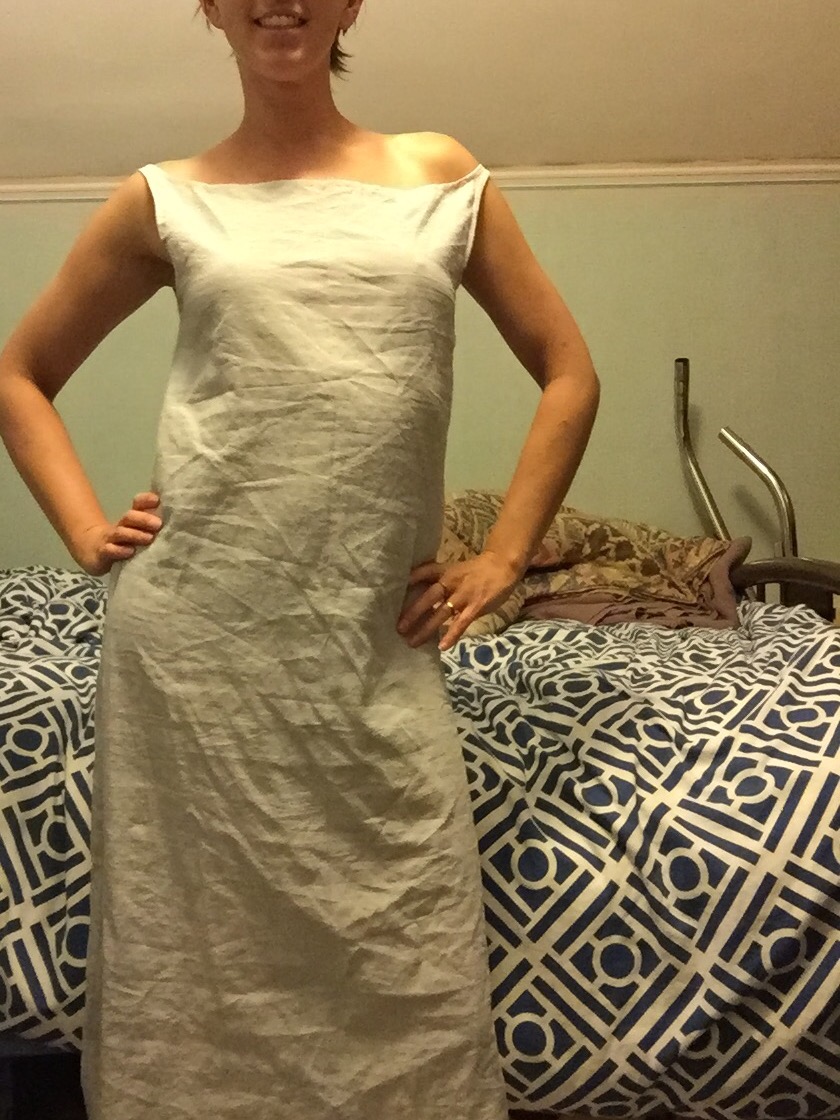
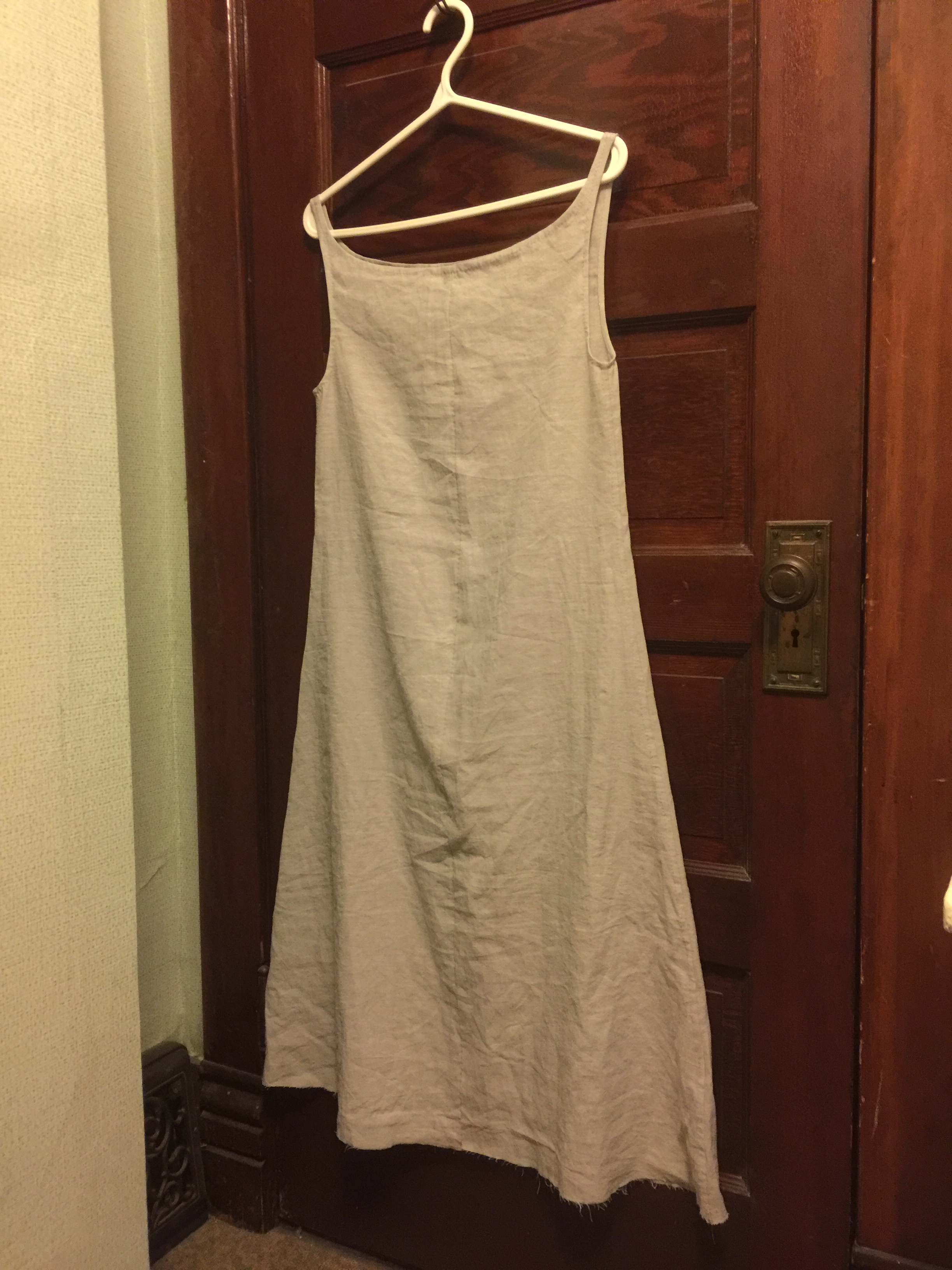
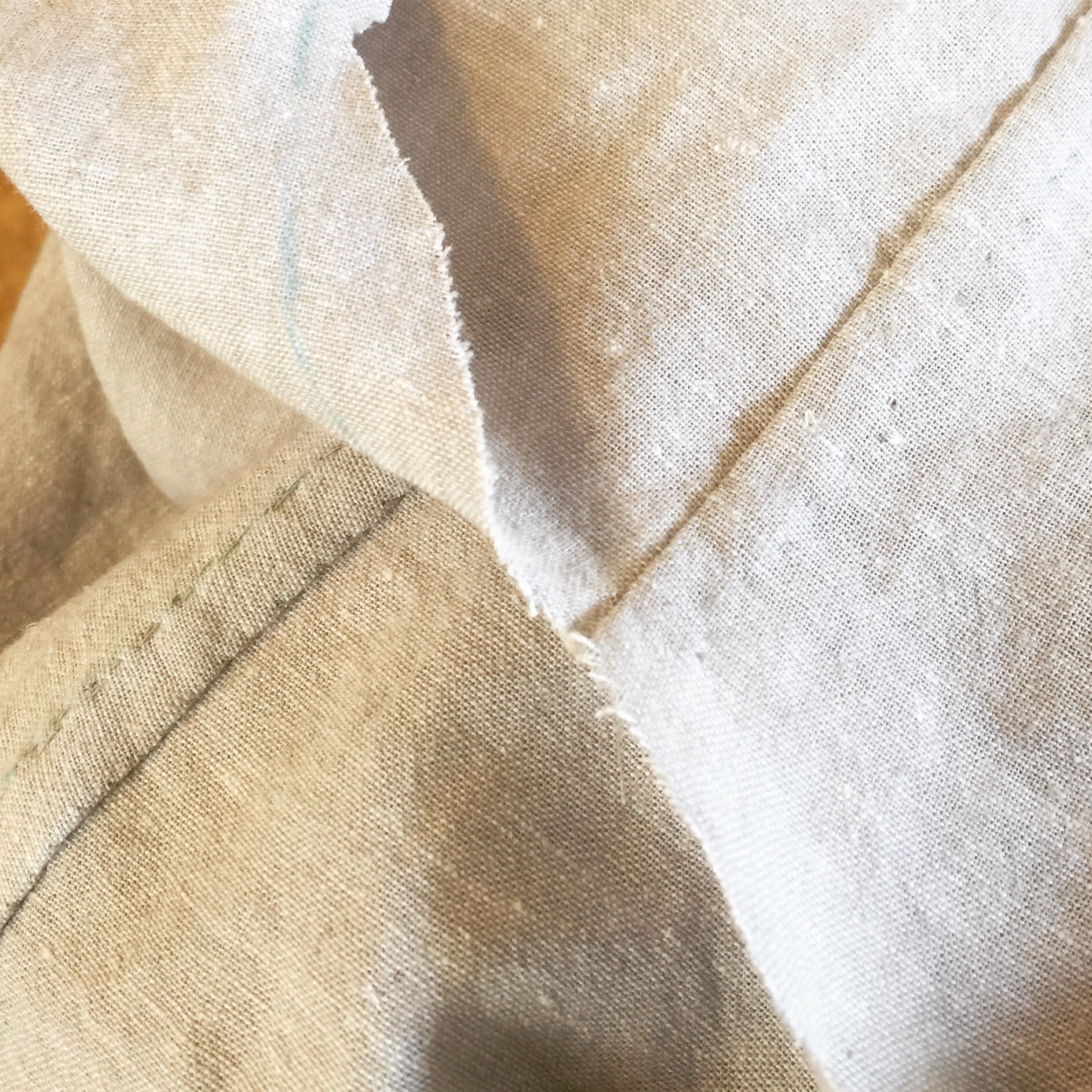
 Anyway, fun experiment, and successfully completed in about a day and a half of lackadaisical hand-stitching. People who make historical costumes seem to be fond of grading themselves on their accuracy, but I’m never clear on how you would do this. So what do you think? Fabric is reasonable but not accurate—linen-cotton blend, not pure linen; thread is cotton. Completely hand-stitched, possibly with period techniques although I haven’t done extensive research into mediaeval hand-stitching (they would work for the Victorian stuff I have read, except that my stitch lengths are way huge by those standards. On the other hand the original apparently had “thick stitches” so I’m not too fussed.) I feel like overall that’s pretty good, except for the weirdness of the pattern.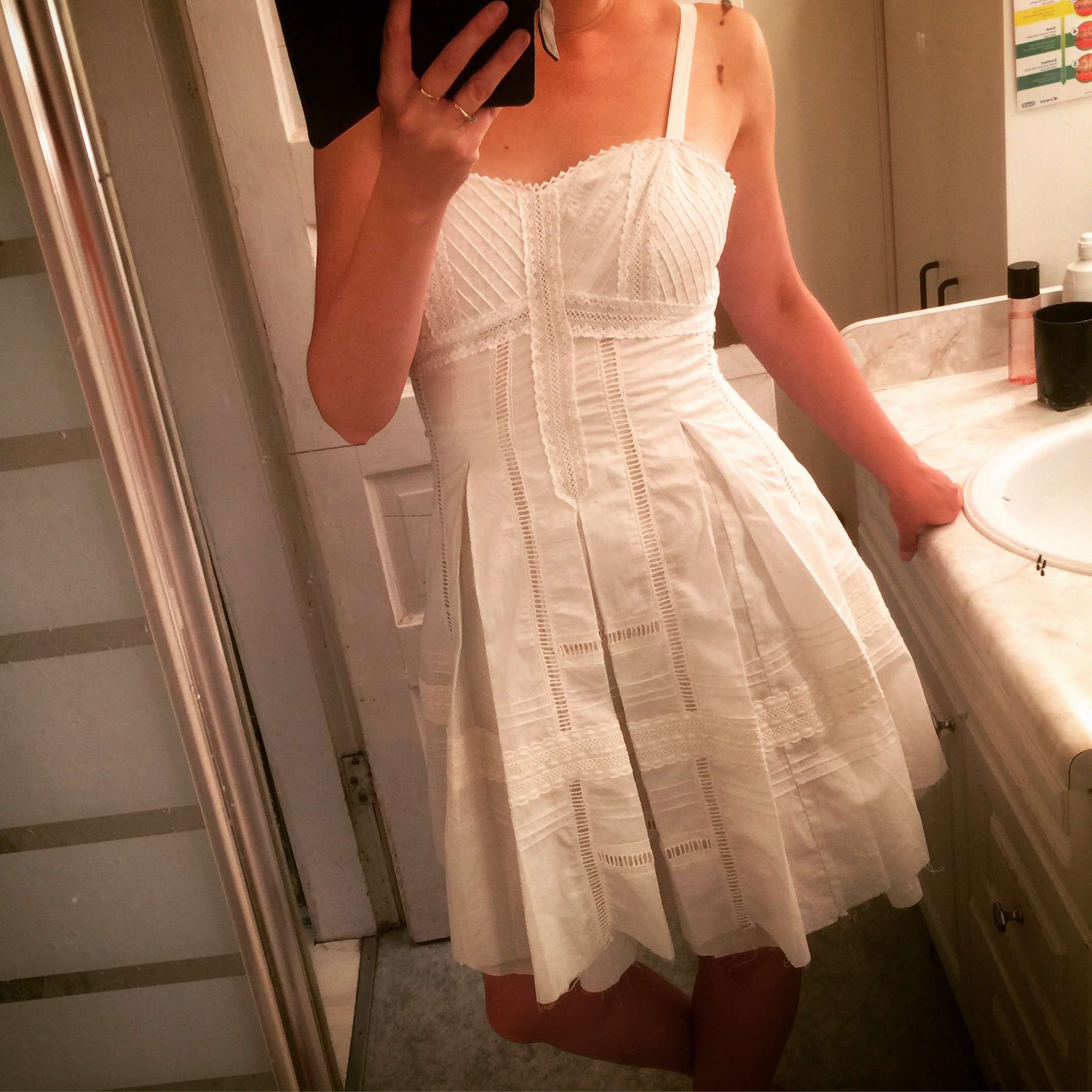





 Tanit-Isis Sews


