Category Archives: Sewing

That 70s Dress

Simplicity 5728

A(nother) 70s dress

Now there’s a way to begin a post, by referencing a TV show I never even watched…

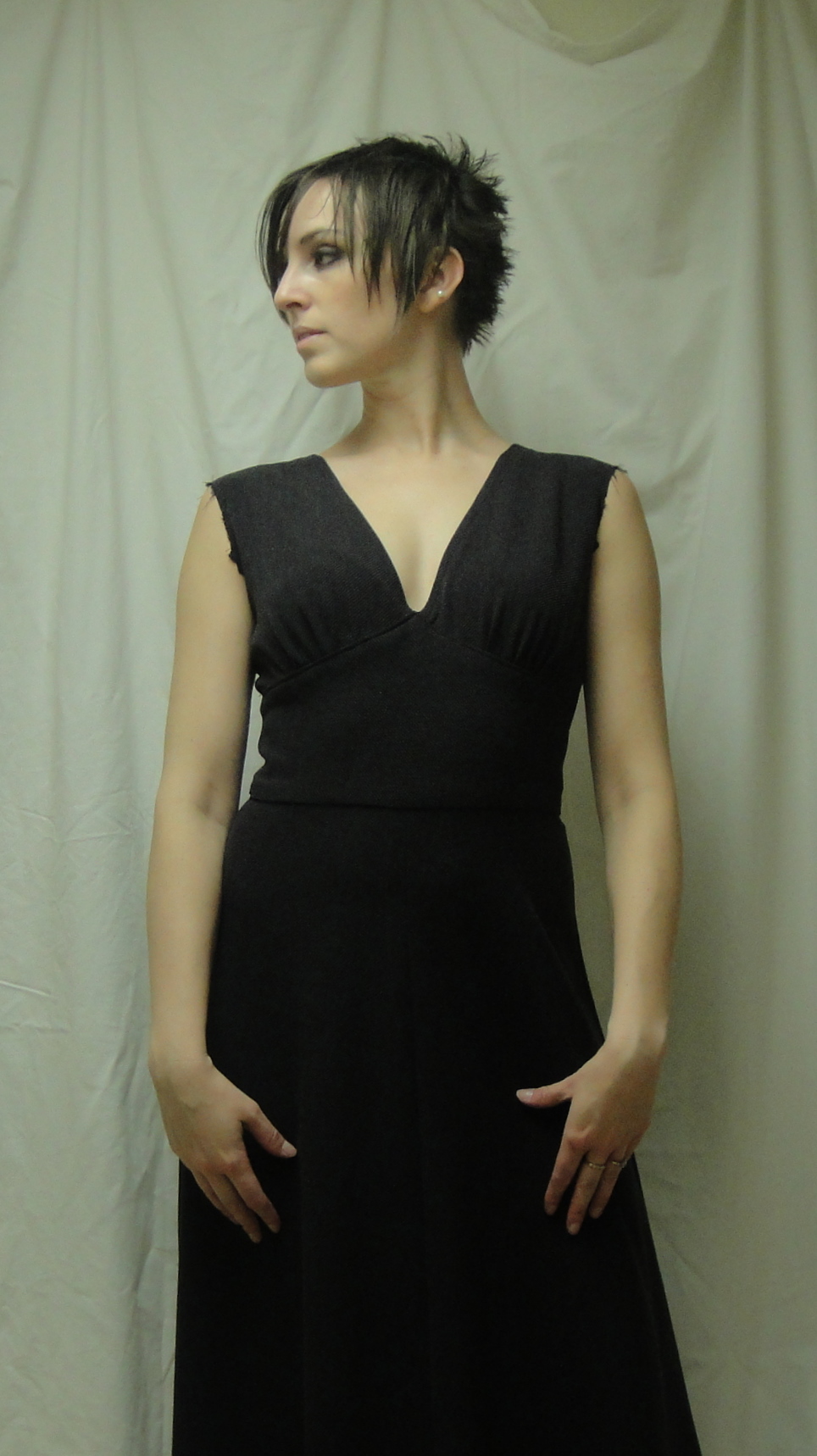
Anyway, despite my complete disinclination to do anything yesterday other than read through one of the novels I picked up at VV a couple of days ago, I did manage to get the sleeves on and hem the Simplicity dress. Raising the armscye worked like a charm—it’s lovely, high, and mobile.

As you can see, I opted (after the debate between long and short) for 3/4 length sleeves. This was initially inspired by the fact that as I was cutting there was a perfect spot to cut the sleeve out—but one side was a couple of inches too short due to the uneven cut end of the fabric.  But I’m really glad I went for it—warmer than a short sleeve*, but (I think) dodging the school-marmish/little-house-on-the-prairie potential of a full length sleeve with a full-length skirt.

Simplicity 5728

Curse that indoor light...

Since this blog is the closest I get to taking notes on my pattern alterations, I’m going to point out a few things about the sleeve again. I lengthened the full-length sleeve 2″ total, one inch above the elbow, one inch below. After doing this, I’d like to add, the elbow dart is in exactly the right position. Hooray! When I converted it to the 3/4 length, I cut off at the upper edge of the forearm “add length here” section. I felt like the sleeve was quite roomy in the muslin, even for a non-stretch sleeve (which obviously can’t be as snug as the knits I’m used to wearing), and when I decided on my stretch fabric I decided to narrow it: 5mm off each side, mirroring the 1/4″** I took off the sides of the bodice, and then I took a tuck of about 1/2″ out of the middle of the sleeve, all the way down. I figured there was more than enough ease in the sleeve cap to do this without messing with the length of the sleeve-cap, and there certainly still seemed to be plenty of gathers to go around. So in total the finished sleeves are about 1″ narrower than the muslined ones. This is perfect for my fabric, but might be a little too narrow for a non-stretch sleeve.

Simplicity 5728

Lots of sleeve mobility!

I do feel like the sleeves sit a little far out on my shoulders (possibly exacerbated by my alteration to the back neckline), although if I tug them up higher on my shoulder it seems to push out the sleeve oddly, so I’m not sure which is preferable.

I made the front midriff piece double-layered, to give it a bit more stability and make for a nicer finish inside. It is a nice finish, but it makes for a lot of layers of this fairly thick fabric, especially right under the bust where it encases the gathers. Possibly I should’ve graded the seams in this area. I’m also debating the merits of a waist-stay.

I decided to try a machine blind-hem on the grounds that a) this fabric is quite thick, and b) it hides the thread so well that it would be unlikely to show even if I did a whack job, which I basically did, and c) it just seems odd to hand-hem a stretchy. And it worked out pretty well, so long as you don’t look too close. The nice thing about such a long skirt is that the hem is a long way from anyone’s eyes, too ;). Well, except for the under-2-years age set, but presumably they won’t tell on me. The hem is the 2 1/4″ specified in the pattern, which brings it up to a length which is just shy of floor-skimming when I’m in bare-feet, which seems about right looking at the pattern illustration. Again, this is after I lengthened the entire skirt 5″. Which tells you everything you need to know about how my height is distributed (I know, cry me a river, right?)

Simplicity 5728

Finally, a smile!

I feel like it may be important to highlight a few lessons learnt from this pattern:

1) I really am short in the body. It’s not just in my head. Junior Petite, people, and the only bit of lengthening I did in the bodice I kinda wish I’d skipped out on.

2) especially in the armscye.

3) apparently I like 70s fashion, or at least the dresses. The only vintage patterns I’ve sewn for me this past year have been 70s dresses, and I have another one in stash, too. This is a little hard to wrap my mind around given that I grew up in the 80s and couldn’t even stomach the sight of bell-bottoms until well after their return to popularity in the late 90s.

4) I have neither the right hair nor the right shoes to go with this dress. Well, technically I have the right hair, but not the right hair-cut (nor am I likely to have it again. I love long, straight hair. Just not my long straight hair.). The shoes thing is unforgivable. How can I have no cute, delicate platform shoes? All I have for thick soles is my kick-ass boots, which would be fun but are not exactly period.

Simplicity 5728

Nice dress!

All in all? pretty happy camper! Though I’m still not convinced the dress will become part of my everyday wardrobe.

… now to fight down the urge to start working on a fluffy petticoat…

Oh, yes and a few more photos in the Flickr Gallery

*yay! The weather, which has been relatively clement since before Christmas, is reminding us that this is still Canada and winter still has a good two months to mess with us before spring will even begin to get a finger in the door. Today was  a virtual blizzard.

** very glad to hear that I’m not the only sewist who flits randomly between measuring systems. Canada officially went metric in the 70s, but somehow it’s never completely taken hold. For the longest time I did outdoor temperatures in Celsius, but indoor temperatures in Fahrenheit, for example.

36 Comments

Filed under Sewing

SFOs (Semi-Finished Objects)

Zena of Blood, Sweatshop, & Tears once commented that “wearable is climax. Done is denouement.”

She is so right.

Lekala twist-top, v. 2

In that spirit, I give you my second take on the Lekala 5675, a.k.a. the twist top. The hems are serged but not completely finished, and it’s been like this most of the week. I am disinclined to fuss with trying to stabilize them for topstitching. Bleh. This red knit is wiggly, super-stretchy, and much more like the kind of fabric I imagine the shirt was designed for than my last attempt. It’s also an amazing example of the difference fabric choice can make for the exact same pattern (only difference is I added perhaps an inch more extra length to the red version, just in case, bringing the total increase to about 3-4″ in the sleeves and 4-5″ at the hem. The first version was roomy and sweater-like, with a surprisingly perfect fit in the shoulders. This version is second-skin tight and the shoulders look really narrow. Although about the same as they look in the pattern illustration, actually.. The twist still doesn’t pull naturally into the kind of tight twist the illustration suggested. This might be a drafting problem (maybe they should just have widened the upper front piece a bit so that a full twist was required), or it might just be that my doubling of the front (makes the finishing easier and never a bad idea in a thin knit) gives it a bit too much body. I think in my head the slit below the twist should be wider, but again it’s actually quite comparable to the illustration. Some day I shall use Sherry’s post to attempt to reduce a swayback in a knit. Someday.

Simplicity 5728

Simplicity 5728

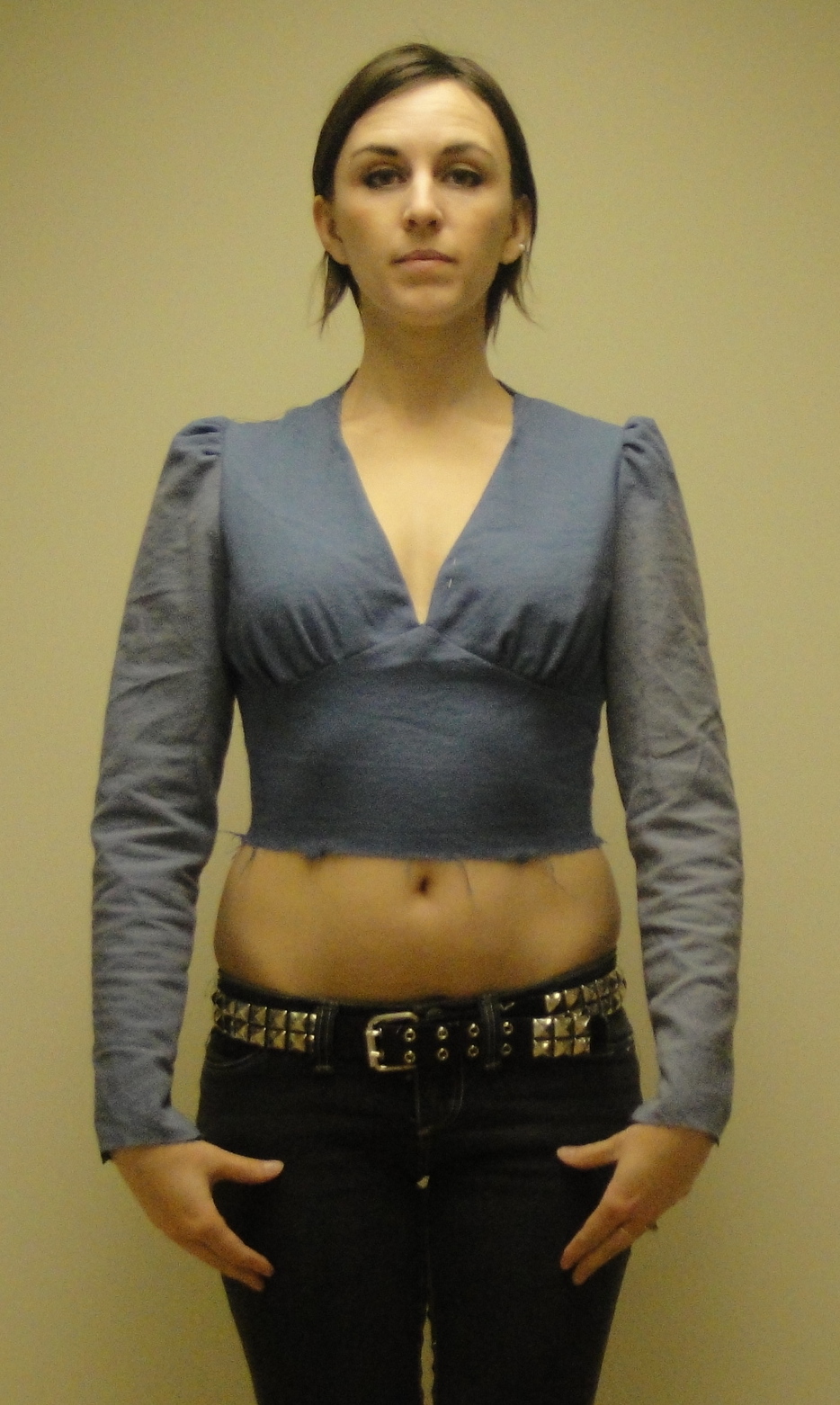
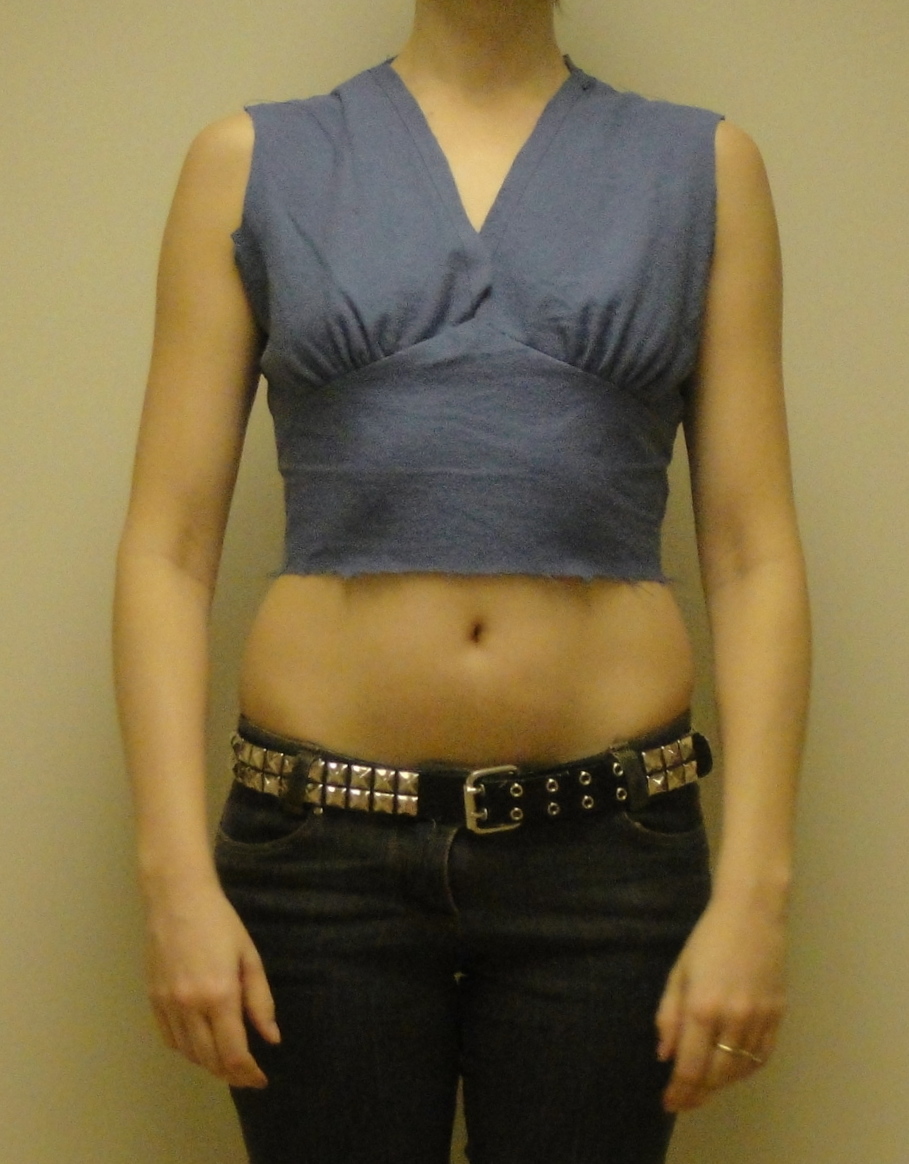
In a similar vein, my (wearable muslin?) version of Simplicity 5728 is at a try-on-able phase in construction. Yay!

This is such a peculiar fabric. I would’ve sworn it

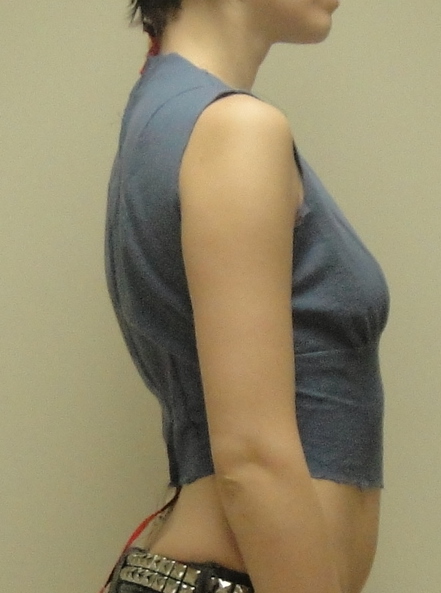
Simplicity 5728, side view

was a diagonally-ribbed knit, but it frays like a woven. It’s stretchy, very slightly in length, significantly in cross-grain, but fairly stable. It does have that cling-to-every-lump-and-bump quality of a knit.
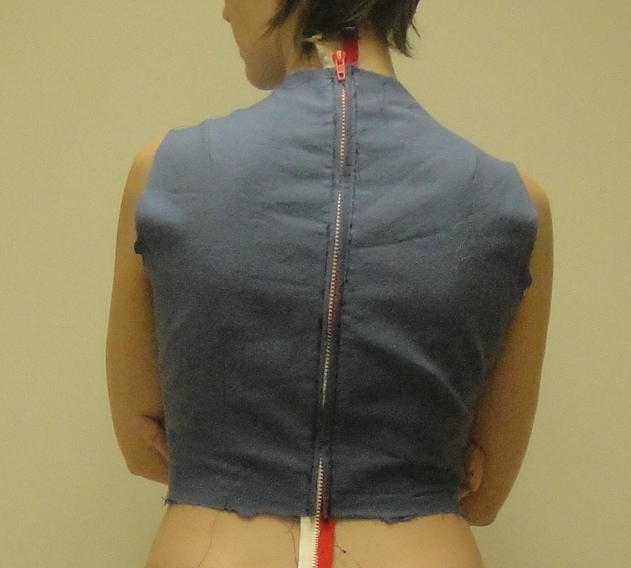
In the stretchy (whatever the heck it is), I should probably have used the original bust-length, as the extra length doesn’t seem to be necessary. I had narrowed the bodice sides 1/4″ on the pattern, since it seemed a bit roomy under the arm,

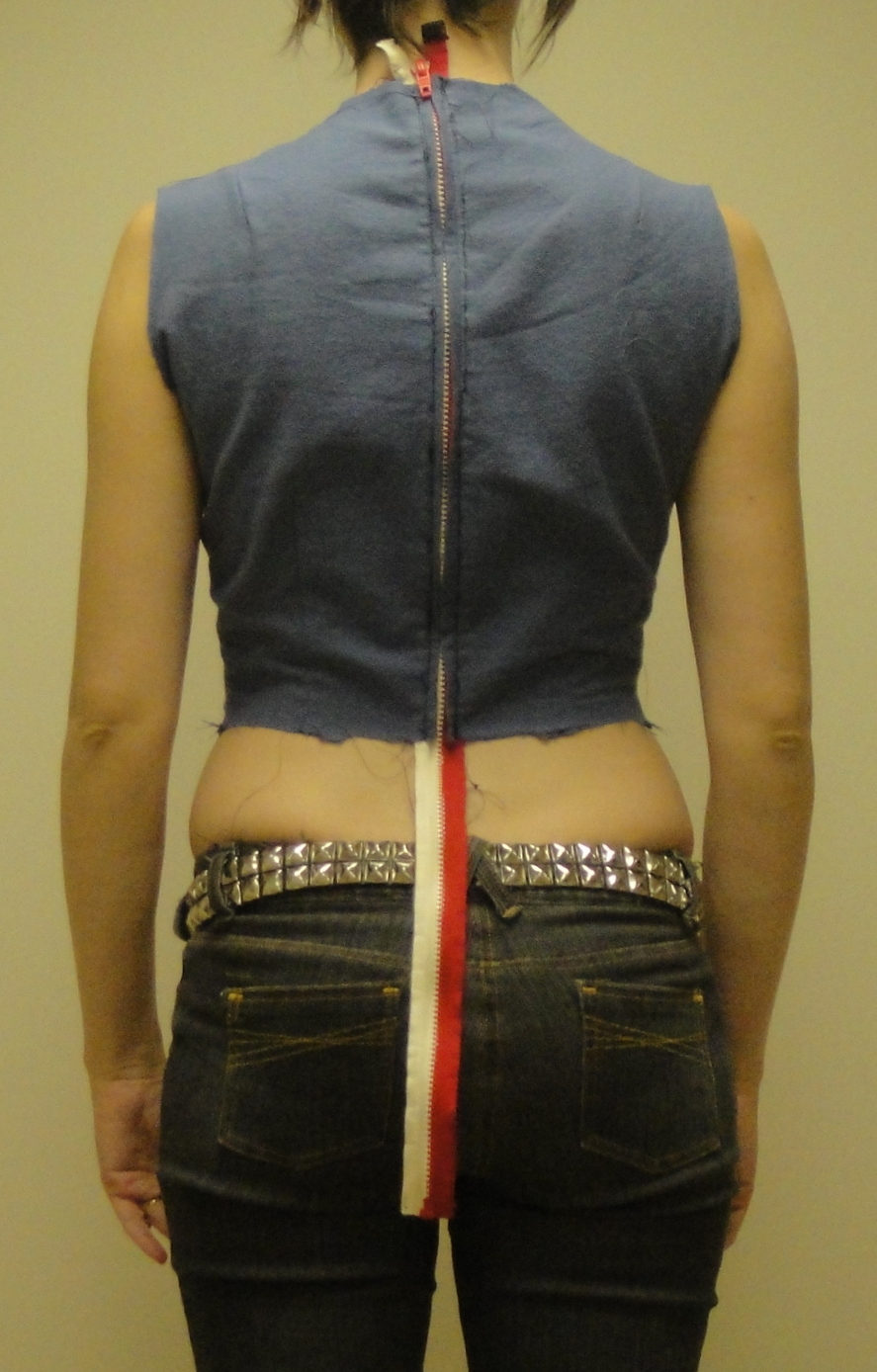
Back (lightened to show lack of swayback wrinkles!)

tapering to nothing at the waist, and I took it in another 1/4″ here after trying it on (adding up to a substantial 2″ reduction in the total bodice width). I did a swayback alteration as per Sherry’s instructions (sooo easy when you have both waist and CB seams), taking off about 1/2″ (12mm) both above and below the waist seam. I gave the CB seam of the skirt a bit of an S-curve to it as my swayback seems to be rather below my waist in this area. And then I cut, inserted zipper, and hoped. And—well, look!

Can we say, happy customer?

Also, like what I did with the back neck? I did a brutal job of finishing the top of

Simplicity 5728, full back

the zipper, but otherwise it’s snazzy! Er, and yeah, the zipper’s pink. I thought it coordinated/contrasted nicely with the muted purple of the fabric, but probably it’s just too light. But the only other zipper I had of suitable length was white, and an invisible one, which I don’t actually know how to install. It’s vintage and metal, though, so it’s cute enough to deserve to be looked at.

Simplicity 5728, front closeup

You will recall that I received excellent advice from Kay and others on my sleeved muslin to raise the bottom of the armscye to improve my sleeve mobility. So I raised it a full 2cm, on the principle that it’s easy enough to lower it after the fact if I need to.

(It occurs to me that I probably annoy nearly everyone with my flitting back and forth between metric and imperial measurements. Can I call it a Canadian thing? I prefer to do my seam-allowances in metric because the metric markings are at the front of my sewing-machine face-place, making them easier to see than the imperial markings, which are at the back. On the other hand the width of the regular foot is definitely 1/4″, so I tend to do things like small alterations in this increment. It also depends on which ruler or measuring tape comes to hand first…)

I should also mention that I added 5″ (and we’re back to the imperial) to the hem of the skirt to get it to this luxuriously long length. That’s supposed to include 2 1/4″ of hem, which would bring it to a perfectly respectable heel-length, I think, although I’m not convinced a 2″ hem will be desirable in this fabric. I’m wearing a 3″ heel in the photos. I love these crazy-long 70s skirts.

Coming soon: the great sleeve adventure!

19 Comments

Filed under Sewing

Shiny Happy Things

Sharp 'n Pointies

Sometimes, wonderful things happen.

Over the holidays, several actually have, and I thought I’d mention them all here before getting to the buttons post.

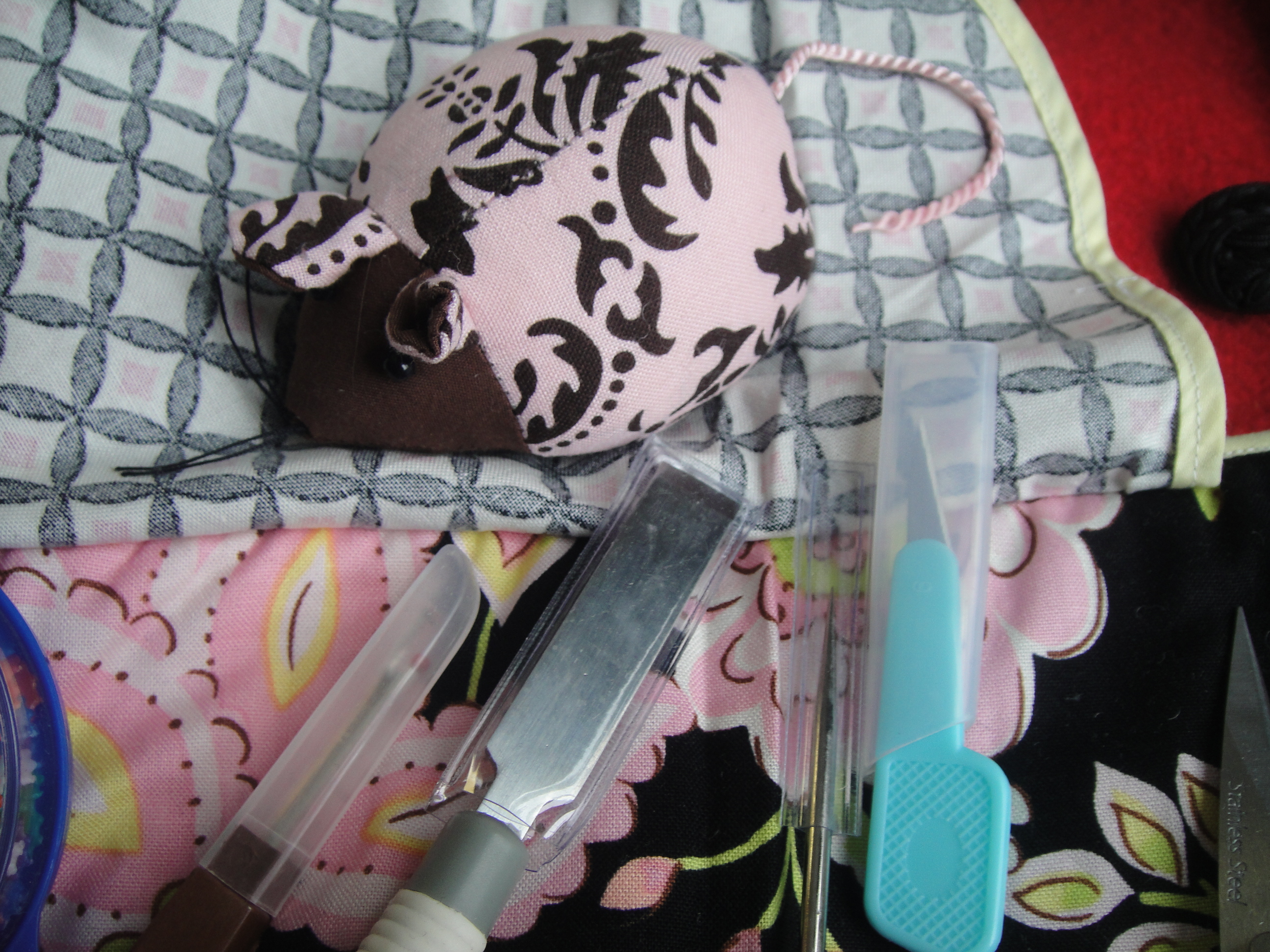
Back before Christmas, I won Steph’s Sharp and Pointy Giveaway (my first giveaway win and probably the one I’ve *most* wanted to win ever) Yay, sharp and pointies! And they arrived today. Now I have a pin-cushion (a cute little mouse), pins that aren’t from the dollar store, and some other neat little sharp things like

Cute little sharp and pointies!

a buttonhole chisel and an awl. All of which are things I’ve though “gee, that would be nice to have,” but been too lazy/broke/disorganized to acquire myself. Yay! And it came with this adorable little case, too.

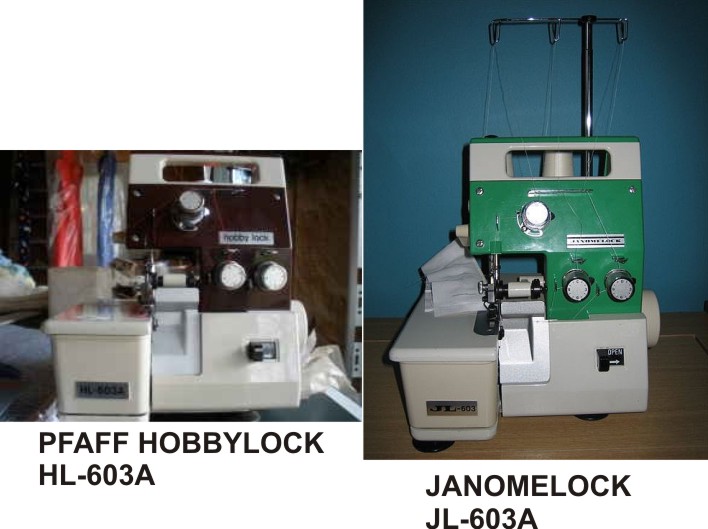
Around the same time, Claire a.k.a. Seemane, who’s been one of my favourite commenters since back in June when I got like 30 views a day and usually no comments at all, emailed me out of the blue after reading my lament about my lack of a manual for my serger. Not only had she happened to notice that my Janome JA-603A was identical to the Pfaff Hobbylock HL-603A, but she had tracked down a pdf manual to the Pfaff… and then bought it for me!!!!!! So I now have a manual for my machine (cue

The curious case of the 603A

choirs of angels), which details a number of nifty things it can do beyond basic serging. Some of them require more intensive adjustments than I’m likely to bother with, or different face-plates which I just don’t have, but at least I have a place to start. Thank you Claire!

To make this even better, Claire’s finally posting to her blog, Sew, Incidentally! So head on over and check our her progress on Sunni’s Trouser Sewalong. And whatever else she may get up to—I know I’m excited.

Speaking of Sewalongs, Peter’s going to be hosting a men’s shirt sewalong! And I have just the pattern in mind, of course. My only worry is fitting—as far as I can tell Peter fits his patterns straight out of the envelope, which my hubby decidedly does not. Fitting someone else is always a bit nerve-wracking, isn’t it?
On the up (or down?) side, several friends and relations got to try on my “Kimono Lady Grey” over our quick little holiday, and not only did they all love it, it was remarkably flexible in its fit, considering the sash isn’t adjustable. Although those blasted pear-shapes look good in darn near everything as far as I can tell. 😉 My SIL suggested a full-length version for a house-coat. Which would be fabulous, wouldn’t it? (can you imagine how much fabric that would take, though?!?)

Clockwise from top: diagonal-striped jersey; blue and cream stretch lace; blue and pink leopard fleece

I also took my sisters-in-law out to Fabricland for the New Years sale, and scored some fabric for some upcoming projects. The leopard fleeces are for lining little coats for my nieces (aged 2 1/2 and almost 4); I have some black textured wool flecked with sparkles for the outside of the coats already). At some point I’ll have to make something for my 13-year-old niece, too, but, well, between the hazards of trying to fit someone who lives 600km away and trying to hit the right style with a teenager, well, I’m hesitant. I was thinking of using the jersey for my 70s dress, but while it’s relatively stable, it still stretches nearly 20% across the width. Jersey is a listed fabric, but… well, I’m not sure. I’m sure it can be something else if necessary; I loved the muted purple colour and the nifty diagonal ribbing/stripe (and at $2.50/m, I’m not going to complain.) The blue and cream stretch lace has no particular plan in mind yet, but it was too gorgeous to pass up for $2/m. Maybe I’ll go scout out Carolyn’s blog since she always has such gorgeous lace pieces :). I probably will need some kind of thin knit underlay for it, though, which could easily cost considerably more than the lace did…

So those are my wonderful things. How about you? Has life given you any wonderful little gifts lately? Or are you just gritting your teeth to get through? (believe me, I do my share of gritting…)

13 Comments

Filed under Sewing

A little bit of history

I’ve got Canada in my pocket
a little bit of history
a penny and a nickel and a quarter and a dime mean a lot to you and me…

Oops, sorry. Channeling the children’s lit (or in this case, songs) again there.

The Box

The Box

Sometime in the early seventies, as I understand it, my mother attended the auction of the estate of an elderly relative. One of the things she bought was an old wooden box full of buttons, which had belonged to the wife of this elderly relative, my grandmother’s great aunt (great-grandmother’s aunt?)
Even at this time, the little stash was “vintage”—the newest buttons were probably added sometime in the 40s, and most of the collection dates to much earlier. Put it this way: although there are plastic buttons, the majority of the collection is shell, metal, horn, and even glass. There are a lot of boot buttons—the tiny toggle buttons you see on Victorian and Edwardian women’s footwear.

My mother and Syo hard at work

My mother and Syo hard at work

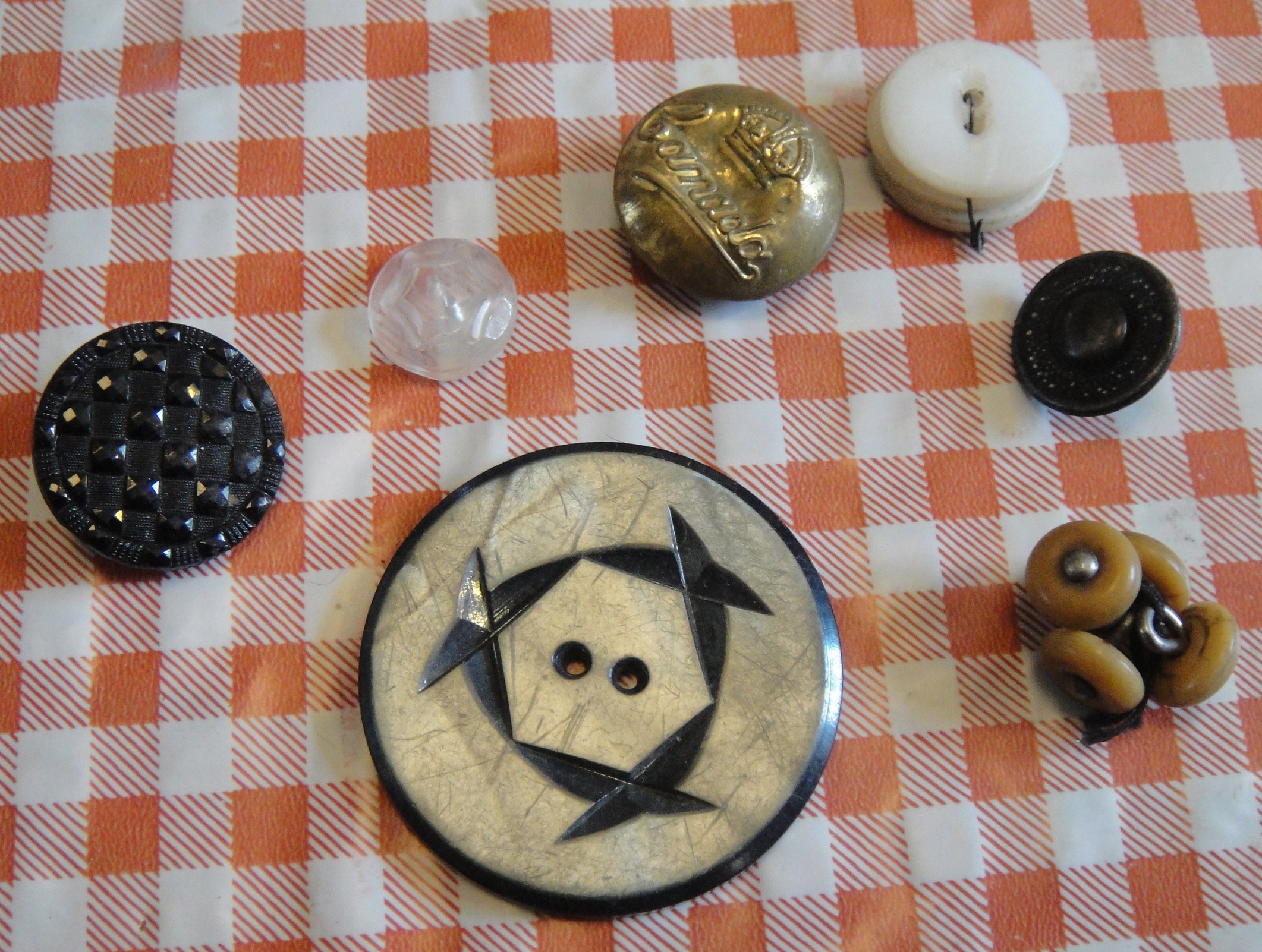
Although I’ve been familiar with this collection all my life, when we went to visit my mother this weekend she had pulled it out, so I got the chance to document some of it for your (I hope) viewing pleasure. We also, as one must when playing with button stashes, did some sorting, as well as some unraveling of matted clumps of button-groups. Unfortunately my camera battery was dying, so I didn’t get to take as many photos as I would have liked, but I hope I got most of the highlights. Fortunately, my mom’s checked tablecloth is a perfect 1/4″ grid for scale. 🙂

Buttons and jewelry

A wide assortment

Everything from giant coat buttons to tiny shell buttons are represented. There are a lot of fabric-covered buttons, including some “homemade” ones which are just regular buttons with fabric sewn around.

Buttons

Assorted buttons

More doodads

Assorted not-buttons

There are also a number of inclusions of buckles, garter clips, screws and other bits of hardware, and even two little spigots.

Buttons

Shell, cloth, plastic

Since there are SUCH a lot of photos, I’ll leave you to peruse the flickr gallery for the most part.

The Box

Halfway through. Chalk drawing on the box courtesy of me, aged 3 or 4.

I love pawing through this stash, but I don’t think I could ever actually bring myself to take anything out of it. To me (and I’m known to be sentimental about such matters, so your mileage may vary) this collection has gone from stash (to be used) to time-capsule, to be cherished, curated, and preserved for future generations. I suppose realistically there isn’t a huge amount of historical data in a bunch of buttons—or is there? Considering that most of these buttons were probably cut off clothing on its way to the rag bin, perhaps you could perform some kind of an analysis—proportions of shirt buttons to boot buttons to coat buttons? Dating the various buttons would be interesting, though I don’t know if carbon-dating is feasible at this age (it would work on the wood and horn buttons, potentially. Is there enough carbon residue in shell?). Stylistic dating would probably be more useful. Isotope studies on the shells could probably shed light on their origin, and maybe highlight trade/manufacturing pathways in the early 20th century.

… okay, pulling back from the brink of madness. What would you do with a treasure trove like this? 🙂

11 Comments

Filed under Sewing

The Grand Old Dame

The Pfaff 360

Long, long ago, but not so very far away, a young girl sat at her mother’s sewing machine, fiddling with the knobs. This one changed the stitch length—long and short. That one changed the width—straight to zig-zag to wider zig-zag. Another one—but that’s a story for another day.

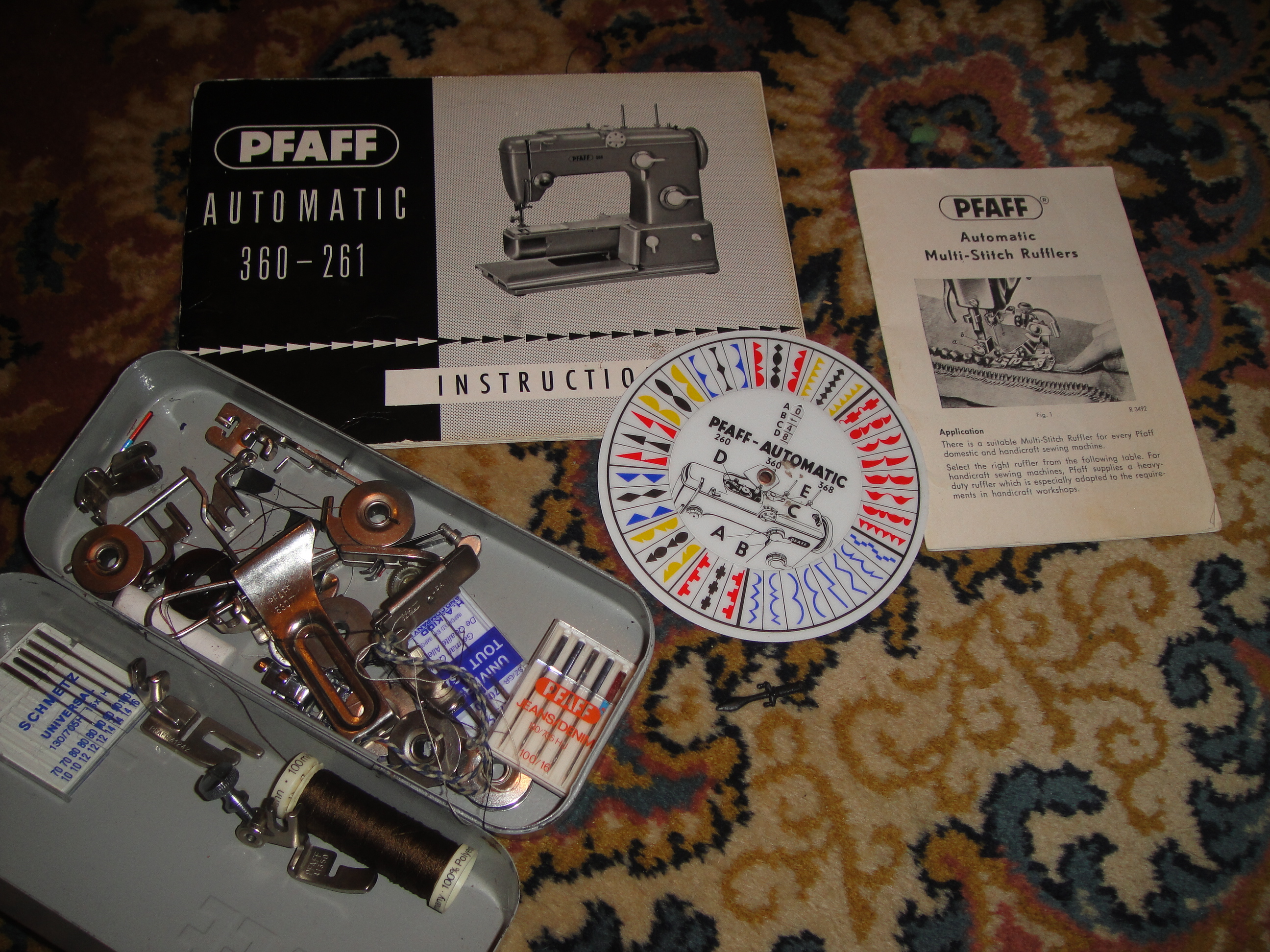
This is the machine I learnt to sew on, the Pfaff 360. At the time of its

The Case

manufacture, sometime in the 1960s, it was a top-of-the-line embroidery machine. My mother bought it second-hand in the early seventies, complete with manual, carrying case (it’s “portable”), and more feet than you can shake a stick at.

I can’t recall particularly clearly how I learned to sew with this machine. I remember watching her sew on it,

Coming out of her shell...

explaining that you needed to backstitch at the start of a seam. I remember at some point her showing me how to clip seams. She must have showed me how to thread it, too, since I’m quite sure I didn’t figure that out on my own, and I have vague recollections of learning how to wind a bobbin. That was about the end of my sewing instruction.

Then, when I was nine or so, my best friend and I started making doll clothes. I think it began with the paper dolls, but it spread fairly quickly to our Barbies. Our tastes were decidedly mediaeval: we started with

the accessories.

tabards, moved on to T-tunics, eventually experimenting with vests, jackets, and pantaloons and even front-opening shirts. At the height of my doll-sewing I attempted a few fitted dresses and circle-skirts. Everything was closed and cinched in with belts; there were no other fasteners (beyond a few ties), no darts, no real gathering. Seam allowances were 1/4″, seam finishing was nonexistant (except for external, decorative zig-zags), and hems were usually just zig-zagged for a tight, embroidered contrast finish. The fabrics were anything I could salvage from the scrap bag or steal from my mother’s modest stash.

The manual, which is the closest I came to real sewing instruction for well over a decade. Unfortunately, like most manuals, it describes the mechanics without hinting at the myriad little difficulties that crop up...

And I sewed them all on my mother’s Pfaff. My friend’s mother’s machine was a 1980s Kenmore, and I never liked it half as much—the tension just wasn’t as even. Although it didn’t weigh quite as much as Lady Pfaff.

I never did figure out how to make her do the myriad of embroidery stitches illustrated on that round card, which were her specialty. It takes twiddling of a number of dials, as each stitch can be modified for width, length, and “side”, and then there’s another lever that basically engages or disengages all the embroidery settings (which is only mentioned in the last paragraph of the manual talking about them, and not illustrated). Too bad, because I would’ve had a lot of fun.

The Barbie clothes may not have been spectacular, but they left me with one major legacy: the powerful misconception that I could sew.

This misconception has stood me in good stead through the years since. When I took up bellydance in later high-school, it never occurred to me that I might not be able to make my own costumes (and, with the aid of the creative ladies I danced with, it turned out I could). It helped that tribal bellydance costumes, like the barbie-clothes, are often based on traditional, economical patterns (i. e. lots of squares, rectangles, and triangles). I still remember the moment I realized why “real patterns” had such wide seam allowances. (rrrrip! By the way, there have been many such lessons I’ve had to learn the hard way…)

The Ruffler

Which brings me to the ruffler foot.

I love this thing.

One of the major articles of tribal bellydance gear is the tiered skirt. Three or more tiers of gathered rectangles, adding up to at least 10 (but often up to 25 or beyond) linear yards of fabric at the hem. I wanted to make my own, and I didn’t want to gather it all by hand.

Some online research tipped me off to the existence of “ruffler feet”. They were apparently terrifyingly complex, unpredictable creatures, but capable, under the right circumstances, of creating instant ruffling without fuss or fidgetting. I had never seen one (nor a picture), but I set off to see if my mother’s machine had such an attachment. I pawed through the box (I still don’t know what half those feet are for, though my score is improving), and picked out the biggest, most frightening foot I could find—the one above. I had no idea how to even attach it to the machine, nevermind whether it was the one I was looking for.

I poked. I prodded. I figured out that the weird upper prongs fit around the screw that holds the needle in place (wtf?) and… I figured out how to ruffle. And pleat.

Once you’ve conquered the ruffler foot, surely there is little left to terrify you in the world of sewing-machines.

Well, maybe sergers, but anyway.

These photos were all taken in my mother’s upstairs hall because, against all

The crochet lampshade cover

expectations, we made it home for New Years! (and boy did we surprise them good 🙂 ). Tomorrow we drive back and Real Life resumes (/sniffle), but before that I thought I’d share the beginning of my sewing journey with you all—I’m just sad I wasn’t able to set her up and demonstrate some of those nifty stitches (or the crazy feet!)

And, to thank my mom for making her run up and down stairs hunting for the machine yesterday (and because I think it’s super cool), I want to show you her latest crafty creation: a crochet lamp-shade cover. Isn’t it gorgeous? Her own pattern (aka trial and error). Which just proves that she has way more patience than me!

An Antique Button Adventure

Coming soon: the fine line between “vintage” and “antique” and when stash becomes time capsule.

23 Comments

Filed under Sewing

A little goes a long way…

A small lengthening adjustment

I took Steph (and several other peoples’) advice and lengthened the CF by rotating the bottom of the bust piece down 1/2″. (thanks for your thoughts, everyone!)

This seemingly-insignificant alteration had some major consequences. On the up-side, it achieved its intended goal of allowing the midriff piece to sit a little lower, bringing the seam-line down to the vicinity of my waist. On the downside, now the bust feels a little too full and wide (odd since if anything the piece is narrower than before). I assume this is because it’s under less vertical tension or something. Also the neck feels a bit gapy—always a risk in a V-neck like this, the correction for which is the exact opposite of the alteration I just made :P. I’m hoping that the weight of the skirt

Simplicity 5728, v. 2, with sleeves!

keeping the bodice in place will keep this from being a problem. In today’s photos I’m wearing the Bullet Proof Bra, which brings my bust measurement up in line with the pattern’s intended 34″; it succeeds in filling in most of the extra fullness, but it still feels a little bulky/loose under the arm.

(To bra or not to bra… that is the question. On a daily basis I tend to go without—a knit top offers enough support to get me through my daily routines, and indeed most exercise except for jogging. On the other hand, a bit of support is nice for when I’m wearing wovens, and if I must wear an annoying band around my ribs, I might as well get some, ah, enhancement, from it, which is where the Bullet Proof Bra comes in. Which will I be more likely to wear with this dress? Well, whichever ends up fitting under it better, I guess…)

Arm-lift---uh oh

Then, of course, I added the sleeves.

Can I just say that woven sleeves are a pain in the arse? These particular ones have a little pouf at the top, which is achieved by lengthening, rather than widening, the sleeve cap. So they look gorgeous with my arms down, but ride up mightily the moment I lift my arms. Now, I’m not expecting to be able to do jumping jacks, but it would be nice to able to put my hands on my hips without the entire bodice pulling up around my ears. And then the neckline goes totally wonky, too. Grr.

Side view, arm raised.

On the up side, I’m no longer wondering if the armscye is too high. With the sleeve on, it feels not nearly high enough.

Incidentally, I lengthened the sleeve pattern by a full two inches to bring it to this point, which is about where I’d like a finished sleeve to end. I’m not totally sure if I want the fold-back cuffs that came with the pattern or not (do they make sense without the collar?) so I’ll have to think on that. Maybe I don’t want long sleeves at all (but I’m having a hard time thinking about anything short sleeved right now, as I’ve said).

Back, with sleeves

But, the back looks pretty good with the sleeves—I wouldn’t want to take any ease out of it, I think.

Back with arms raised

It handles the arm-raising much better than the front.

I think I’m satisfied with the bodice for now—side seam ease is something I can

Side view, with sleeves

always tweak in my final fabric (whatever that may be), so the issue that remains is the sleeve. What do you think? Keep with restrictions? Attempt to alter the cap (I seem to recall the Sewista Fashionista taking a stab at something similar not that long ago…)? Swap in a different sleeve I like better? (I haven’t done a long-sleeve in a woven for me yet, so I don’t really have any candidates. I could do a short sleeve—I’d probably like a short cap sleeve better than a puff anyway, or there’s always the lure of a pleated sleeve cap. Again, though, I don’t have a preferred pattern for any of these.

This is my first elbow dart, by the way. it does make for a nice fit.

So what do you think? Short sleeve or long? This sleeve or other? I have a feeling I’m going to go with the long skirt option. Cuz, well, I love me a long skirt.

The pattern girls, to remind you

13 Comments

Filed under Sewing

Whimsy

It’s Steph’s fault.

I should be making up another long-sleeve knit top, or at most cutting out another pair of jeans. But she left the sweetest little invitation to join in the Vintage Sewalong 2011 in her comment on my last post. So of course I had to go check it out.

Simplicity 5728, on the right

And the next thing I know, it’s 10:00 pm (we’re staying up late these days with the kids out of school and my hubby not starting work until 9:30 in the morning) and I’m pulling out the pieces of Simplicity 5728, doing a bit of tissue fitting on my duct-tape me (I suppose I should dignify her with a name…), and finally decided to make my first muslin as-is. I did trace out the bodice pieces first, however, since I was anticipating fairly extensive lengthening alterations. This is, after all, a pattern drafted for someone a good half a foot shorter than me. (I have, however mentioned that most of my height is in my legs. The pattern’s back neck-to-waist measure is 15″, which is the same as mine.) So I pulled out my trusty blue flannel ex-duvet (what will I do when it runs out?) and cut out the pieces. Then, bright ‘n early (okay, not early—you saw the bit about tracing this out at 10pm last night—and not bright as it’s snowing once again) this morning I popped out of bed and threw the thing together.

Oh, god. This means I need to show you…

fitting pictures.

ugh.

Simplicity 5728, Muslin 1: front

Well, it is a little bit short, at least in the front. The empire seam in the front could come down about 1/2″. The bottom of the front is almost exactly at my waist (and of course it needs to be about 5/8″ lower).

Simplicity 5728, back

The back is… well, practically perfect, length-wise. There are a couple of drag lines under the arms (if someone can enlighten me as to what they mean I’d be super-delighted… is is that the armscye is too high? it is high, although not uncomfortably so…), but they pretty much disappear if I cross my arms so I suspect I should just leave them (?).

Simplicity 5728, back, with arms crossed

The back hem could probably come up at bit at the CB, which I guess would be a swayback alteration? I’ve never done a swayback alteration where I had a waist seam to play with, so I’m not quite sure what the procedure is—I’ve heard some people rail that the hem must be kept on grain, and others say that you can just take a bit off it. I will have to do some research 🙂

Simplicity 5728, side view

There’s some tweaking to be done around the shoulders/back neck where I removed the collar—it won’t be a problem. The armscye is high but I think will be comfortable—I have pretty scrawny arms. The side-seams seem to be in the right place.

So… any suggestions on lengthening the front but not the back? Maybe I could just increase the curve at the gathered part to build that extra length in there, without having to mess with any of the other seams at all? Or add the 1/2″ to the CF neckline and curve that out. On the other hand I don’t really have the bust to fill in too much more gathering in that area, though I can always wear the bullet-proof bra, I suppose.

I eagerly await your thoughts and suggestions!

14 Comments

Filed under Sewing

Joining the Lady (Grey) in Red Club

Red Lady

Since I’m still suffering from PCSD (Post-Coat Stress Disorder) and can’t quite look at my sewing machine yet, I’m going to throw in a bit of blog padding :). To start with, I wanted to talk about the Lady (Grey) In Red Club. (And yes, I am shamelessly stealing the name from Ali.)

Did you know this club existed? You do now. I made it up myself. And if you made your Lady Grey in red, you’re a member! Isn’t that exciting? 😉 Membership benefits include, well, having an awesome red statement coat.

The Lady Grey really is a statement coat—not for the faint of heart, nor for the shrinking violet. It thus really deserves a statement colour (although there’s some lovely more restrained versions, too). And while there’s some terribly striking versions in teal and mustard (AKA blue and yellow, the other primary colours 😉 ), I have to say, when it comes to a statement colour, for me red takes the cake. And probably the ice-cream and the sprinkles, too.

As of this moment, other people who’ve agreed with me on the awesomeness of red members of the L(G)IRC (okay, not the catchiest acronym, I know)  I’m aware of include:

Liza Jane
Ali
Li’l Miss Muffet
The Sew Convert
Erika Jeane
Affienia

If you made one and I’ve missed you, or know of another one out there, let me know! Now it’s conceivable that some of you will argue that we’re being trendy (or just terribly obvious) in our colour choice, but really—there are not many colours out there more awesome than red. Seriously.

My first day of school... I remember picking out the outfit so carefully.

Okay, I’m not dissing on the other colours of the rainbow, I’m really not. There are fabulous Lady Greys in plenty of other colours, as I said above. I don’t think less of any of these coats for their colour, and many of them are probably more original than red.

It’s just, none of them would feel quite as much me.

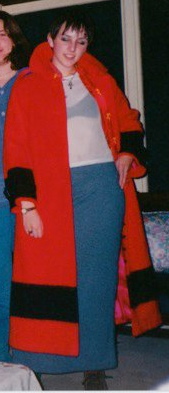
My fondness for red goes back for as long as I’ve had the power to choose my own clothing. The picture at right is from my first day of school, way back in 1985 (behind the big yellow bag you can just see bits of the red skirt and socks. Probably knee-highs). Back in early Uni I gloried in my original HBC blanket coat. I love red for its intensity; I love the ambiguity of its symbolism—blood and sex; violence and passion; left-wing and right.

My old HBC blanket coat, c. 1999

Do you have a signature colour (or palette?) One of my friends is all brown and teal, all the way. My mom thrives on the classic autumn palette. When I’m feeling summery I toy with cream and pale blue, as in the blog theme (but it was a bit of a wrench to change it away from the old reddish theme), and other colours catch my fancy again and again, but I always come back to red.

20 Comments

Filed under Sewing

The Christmas Coat

The Christmas Lady

Day-Glo Red

It’s (mostly) done!

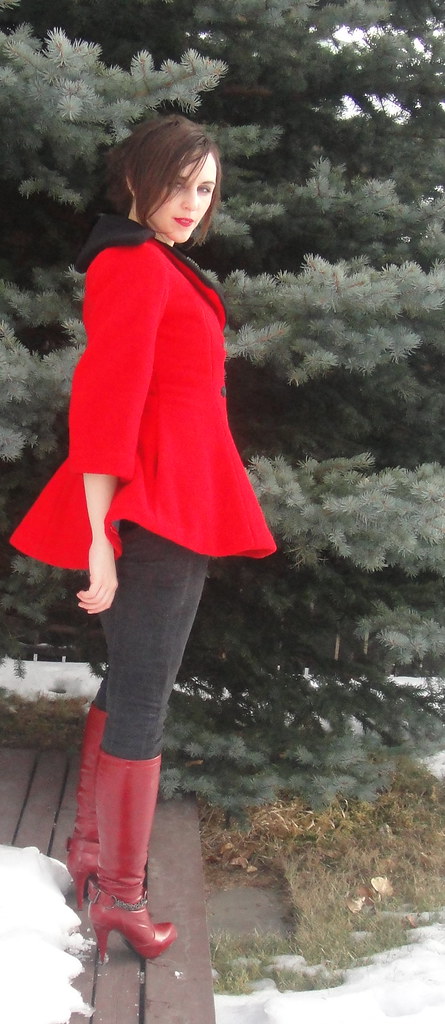
This was technically my Hudson’s Bay Blanket Homage Coat, but given the timing and the colour, I’m probably wishing if I think I can make it something other than the Christmas Coat.

The Christmas Lady

Holy peplum, Batman!

Tyo pried herself away from her new PSP long enough to take these photos for me, saving me the hassle of trying to set up the tripod in the snow. Although as you can see, it’s not quite the winter wonderland it was a month or so ago when I finished Tyo’s Coat. We actually had wonderful weather for Christmas—it was +6 C on Christmas day! My dad and I took the girls to the local playground and they ran around without their coats on. Amazing what feels like tank-top weather once you’re inured to -20 ;).

The Christmas Lady

Lining---needs letting out

I think nearly everything that needs to be said about this coat has been already. One of the buttons is missing in action, having disappeared prior to being sewn on somewhere in the dozens of rounds of “clean up” that have swept through my house more or less continually since last weekend (without creating a notable overall improvement, I’ll add). If it doesn’t show up in a day or two I’ll have to go buy another. Also, the two inch hem I took in the lining wound up being a bit too much, so I should really let it out a wee bit. At least I have that luxury, having cut my lining to the full length of the shell.

The Christmas Lady

Coat front

I only took a 1″ hem, but as you can see my fabric has plenty of body.

Christmas itself was lovely but hectic. We hosted my father, my hubby’s father, and my hubby’s father’s girlfriend. I was pretty spoiled my first seven or so years of marriage—I never once had to make a turkey on my own (or even in my own kitchen). It really is much more fun doing all the culinary craziness with three or four or five other people helping out. Fortunately my Dad, of all people, came to my rescue, peeling potatoes, washing innumerable dishes, and helping stuff the turkey. I fear I was a touch crabby, but hopefully it wasn’t too bad. I really was happy to have everyone there.

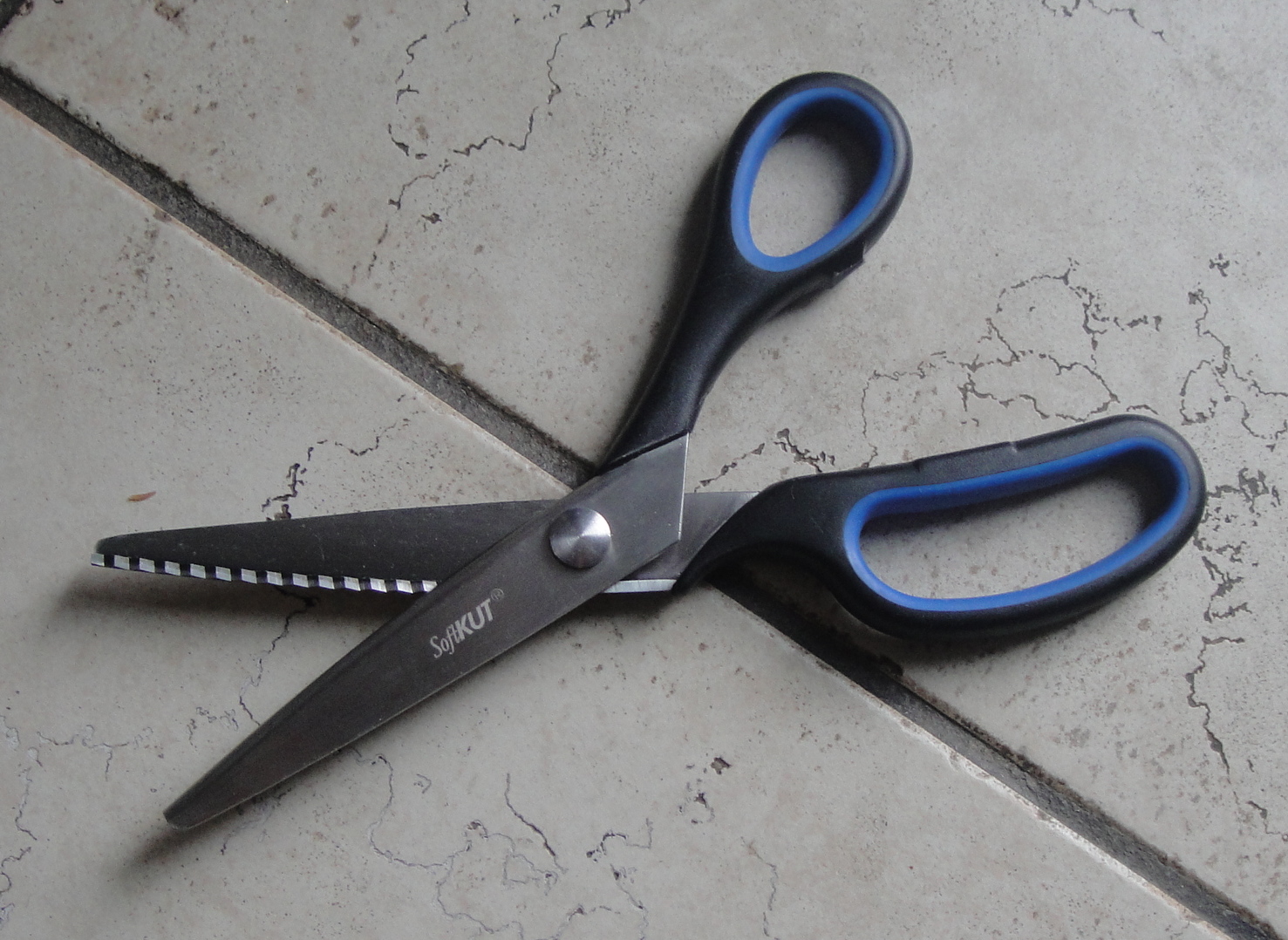
I did get one bit of sewing paraphernalia for Christmas, from my mommy. Look: pinking shears! My mind is racing about what I can pink. Or it would be, if I weren’t thoroughly sluggish from chocolate overdose.

Pinking Shears!

At any rate, I hope your Christmas (or seasonal equivalent 😉 ) was as merry as mine. I expect I’ll start thinking about sewing again in a day or two. For now, I’m going to go read one of the books I got for Christmas (The latest Terry Pratchett—oh, the joy!) and listen to my husband and children murder things on their various video game systems.

You can see all these photos and more on the Flickr Slideshow

All the posts on this coat can be found here. And this has been a (very belated) contribution to Gertie’s Lady Grey Sewalong.

29 Comments

Filed under Sewing

Details, details

… and an unexpected benefit


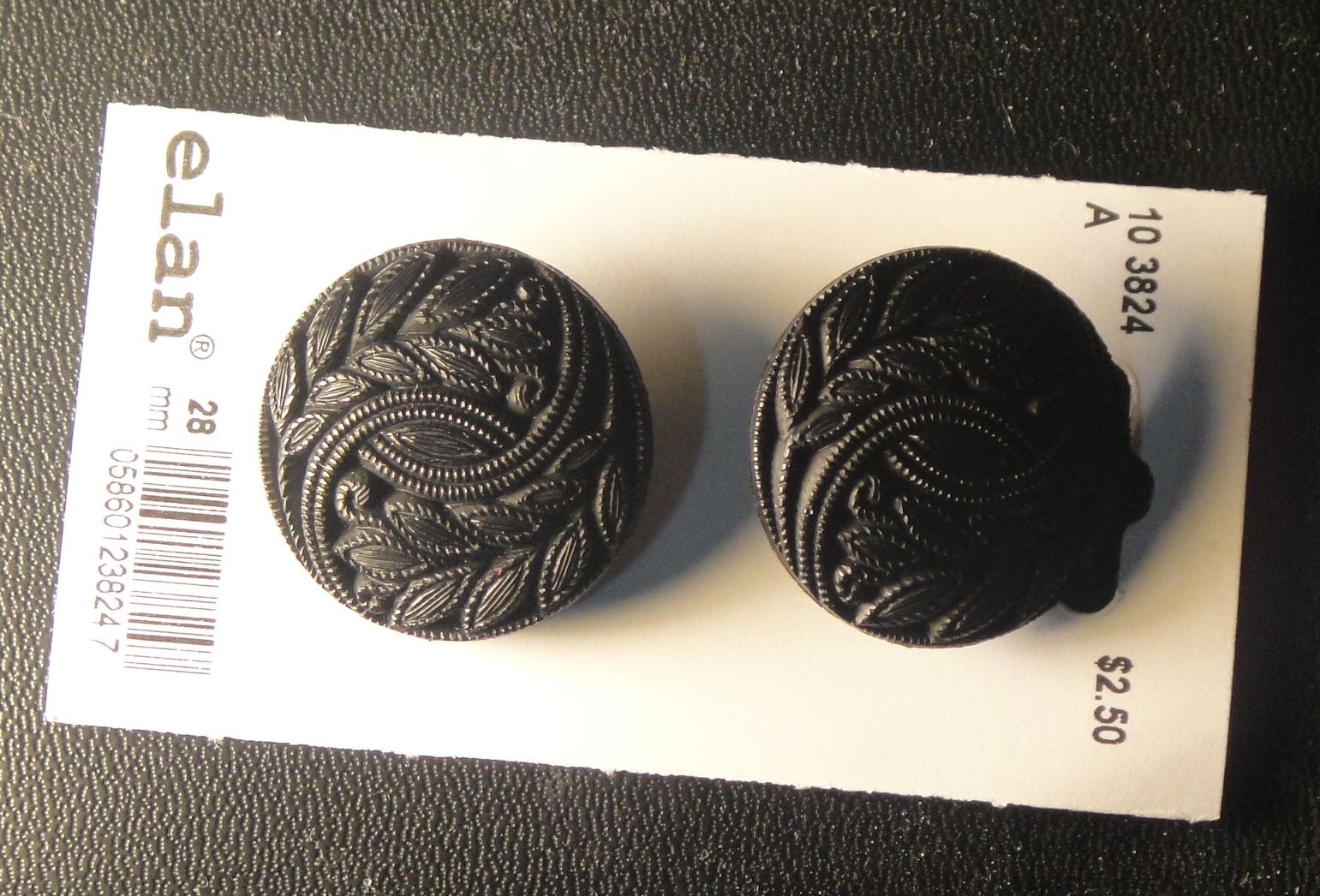
Buttons!

A lot of little things got done yesterday. I made it to Fabricland to pick up thread and got my buttons (By the way, photographing black, carved buttons is a bit of a trick. Oblique lighting for the win!). I picked up some bias hem-facing strips but then, on a whim, grabbed a couple of metres of red grosgrain ribbon to try.

Ribbon as hem facing

Now, proper grosgrain ribbon has bumpy edges and actually eases around curves a bit, so would be perfect for a hem facing.

This ribbon was not that kind, however it did have those attractive little decorative white stitches at the edges.

Which, it turns out, also make perfect gathering stitches. WOOT! (This didn’t actually occur to me until after I had the ribbon sewn in place, by the way.) I sewed the bottom end to the hem itself, easing the shell fabric to the ribbon, and then gently tightened the upper row of white stitching to ease the upper edge of the ribbon in. Then I stitched it to the underlining. I actually started catch-stitching between the underlining and the ribbon, as Gertie describes, but it was lame and annoying, so I ended up doing something more like a slip-stitch. The final look may not be quite as soft, but it’s more secure and, more importantly, didn’t make me crazy. I generally enjoy

Hanging loop

hand-stitching (especially to the dulcet and soothing soundtrack of my husband’s latest video game) but the catch-stitching inside the hem drove me nuts.

So the hem is hemmed and the lining assembled. I remembered (after forgetting in my last two coats) to add a hanging-loop, too, just some bias tape folded in half and stitched. Not the prettiest thing ever—perhaps I should’ve made one out of the lining fabric—but it will be functional. The collar is also sewn up and basted in place (as per Gertie), but I’m going to save those pics for the big reveal ;). I will say that the padstitching really does make a difference in how the collar sits (or rather, how it stands rather than lying down), although I bet you could skip the outer padstitching and just do the seamline and maybe the below-the-roll padstitching and get much the same effect.

Anyway, To do:

  • insert shoulder pads
  • hem lining
  • attach lining
  • bag lining inside sleeves
  • finish inside of buttonholes
  • attach buttons
  • take fabulous photos, preferably in the snow

Hmm, I’ve probably forgotten something on that list.

Oh yeah, and clean the whole darned house because my father’s arriving today, not tomorrow, and the children have been running rampant for almost a week.

2 Comments

Filed under Sewing