The Little Lady
I didn’t get a chance to try out my new machine before I left. Not looking a gift sewing machine in the bobbin-case, as the case may be. Anyway, naturally the first thing I had to do once I got in the door (after kissing my husband, anyway) was run downstairs to play with my new toy.
First order of business: threading.
Threading
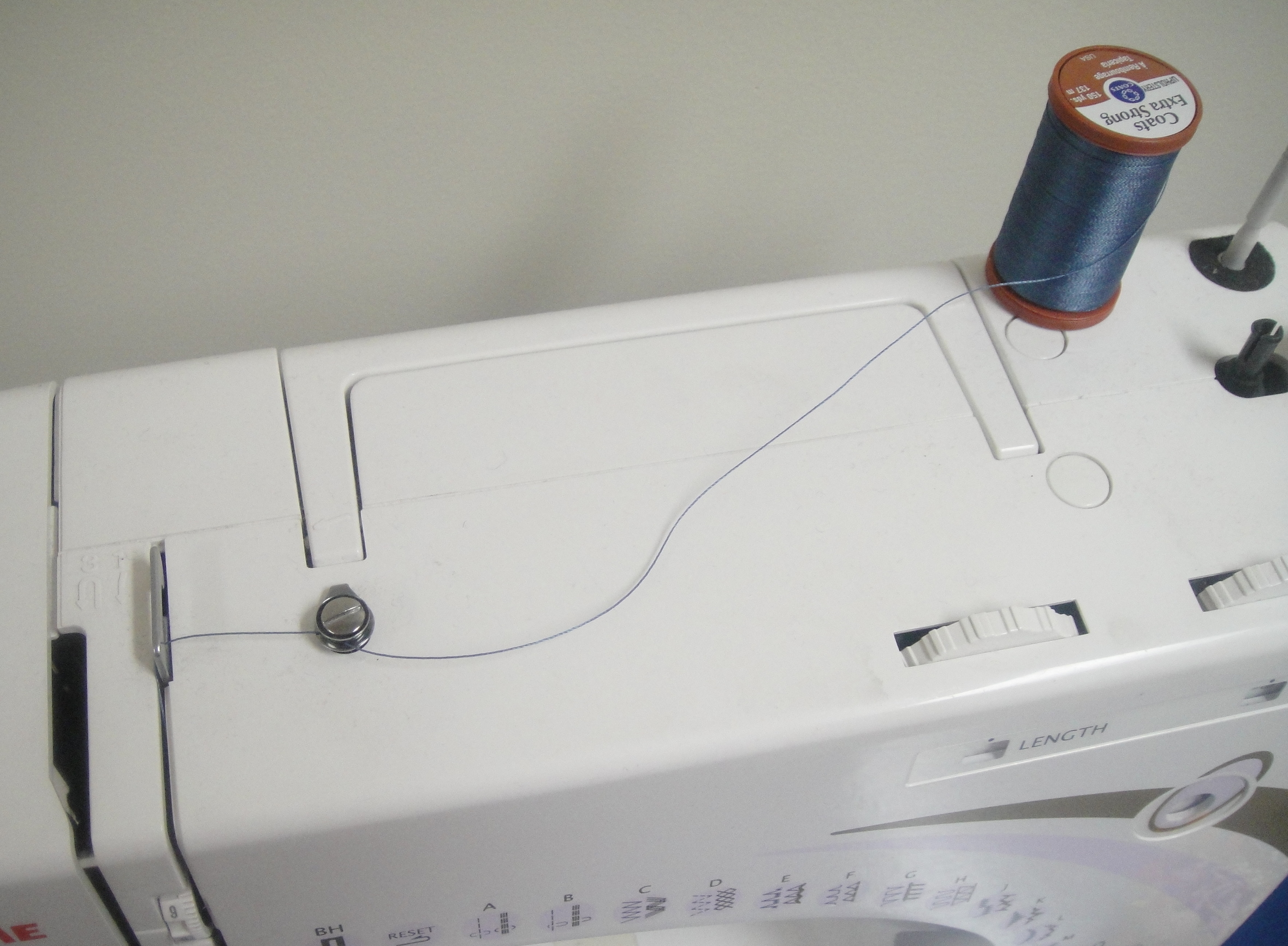
Now, there’s a vast amount of material out there on the internet concerning Featherweights. Probably everything you could ever want to know. But really, I learned on a vintage machine, albeit not quite this calibre of vintage, and I could already see that the basic threading was pretty familiar. Nothing like my mother-in-law’s drop-in bobbin, sideways-spool-holding Janome that made my brain fall out.

Bobbin
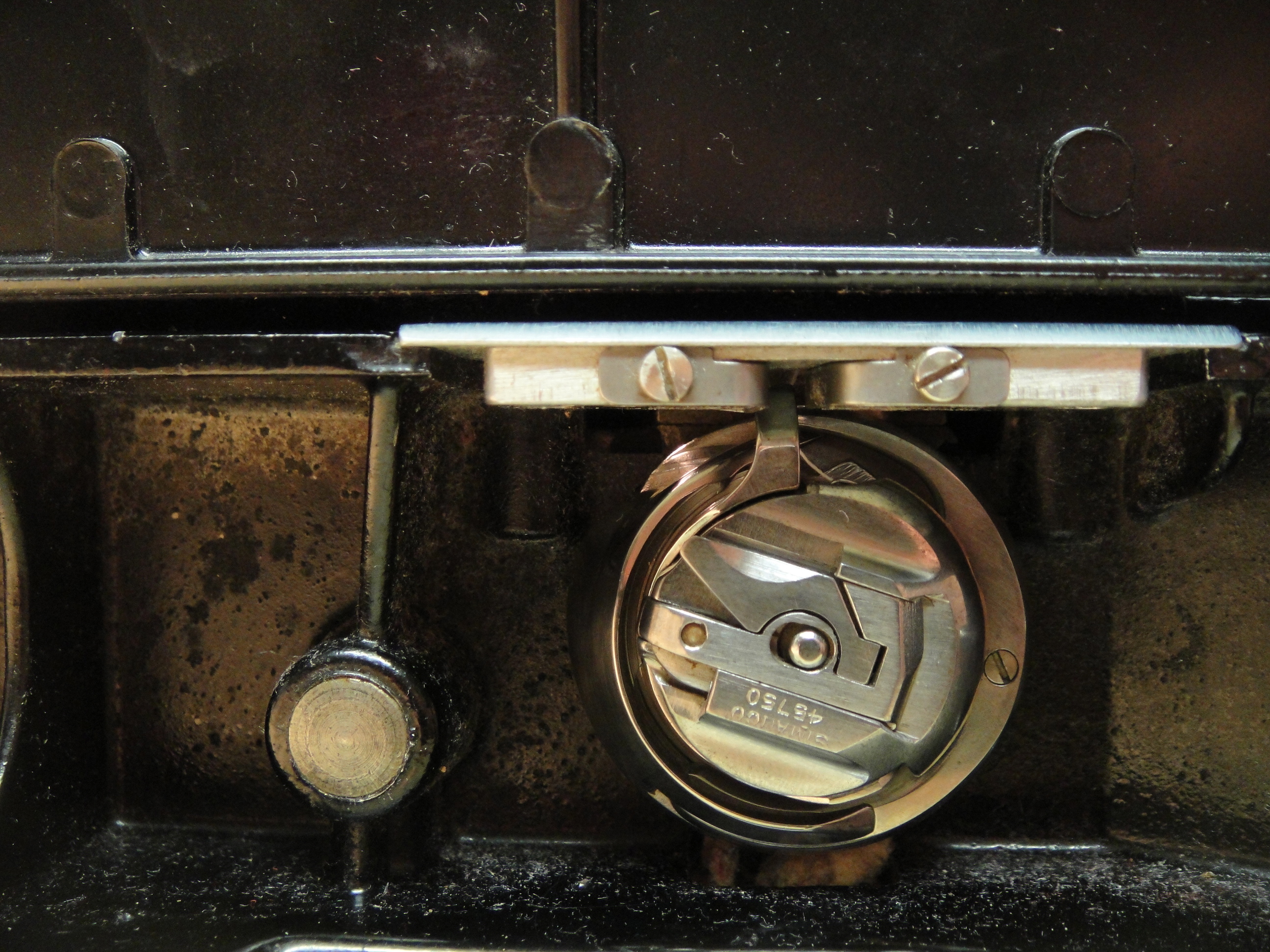
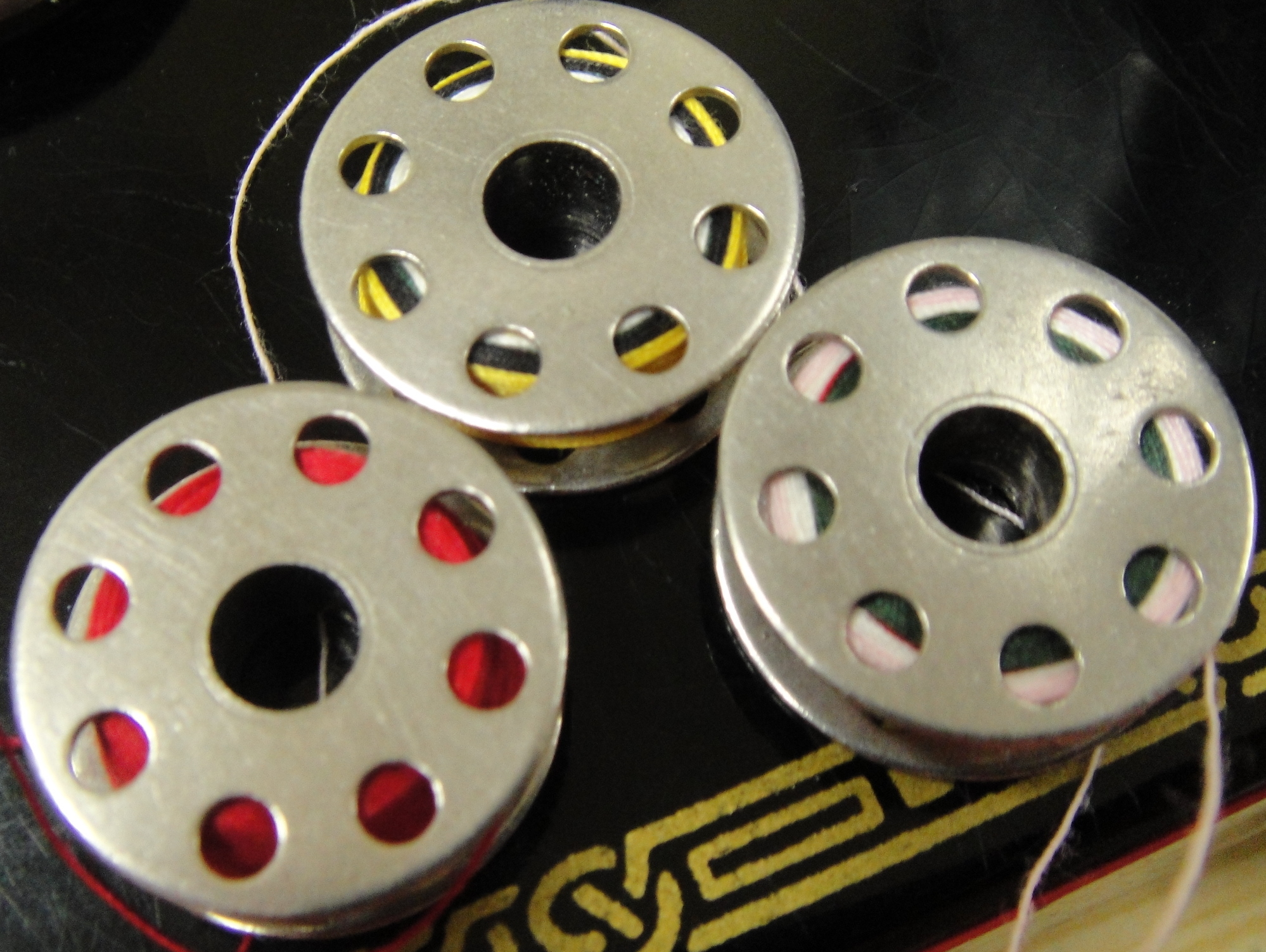
The bobbin orientation, which is 90 degrees to the left of what I’m used to, was a little odd, but everything else about the bobbin casing and the bobbins was familiar enough. Fortunately or not, the machine came with its bobbins still wound with a small rainbow of thread (glad to know I’m not the only one who does that!) so I didn’t have to figure out how to wind a bobbin right off the bat. I love how easy-access the bobbin is—just lift up the folding platform at the left and it’s right there.
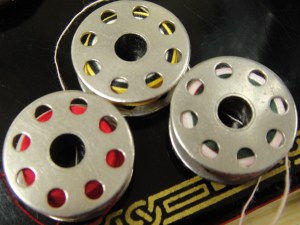
Bobbin rainbows.
So, I loaded up a bobbin, got the thread up to the top, inserted a scrap of fabric under the foot, and…
The engine whirred, the feed dogs moved, the needle sailed up and down,a nd within about three stitches I had a hopeless tangle and the thread fouling on the bobbin casing had sliced through itself.
Trying not to panic, I removed the bobbin from its case, put it in the other way, re-threaded, tried again.
And again.
And again.
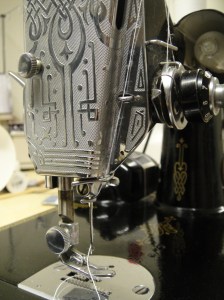
So pretty
After ten or so tries (thinking all the while about that definition of insanity as repeating the same action expecting a different result) I reluctantly came upstairs to google “how to thread a featherweight”. But no great surprises revealed themselves. I had had the bobbin inserted properly the first time; the top thread ran through its hooks, holes, and tension assembly just as I had thought. My stomach sank. Was something (ulp) wrong with my machine? Was the timing off? (My serger acted similarly when its timing was thoroughly blown, everything moving but somehow the stitches just not forming properly) Was something even more dire amis?
Then I reached the last, the very end, of the threading instructions.
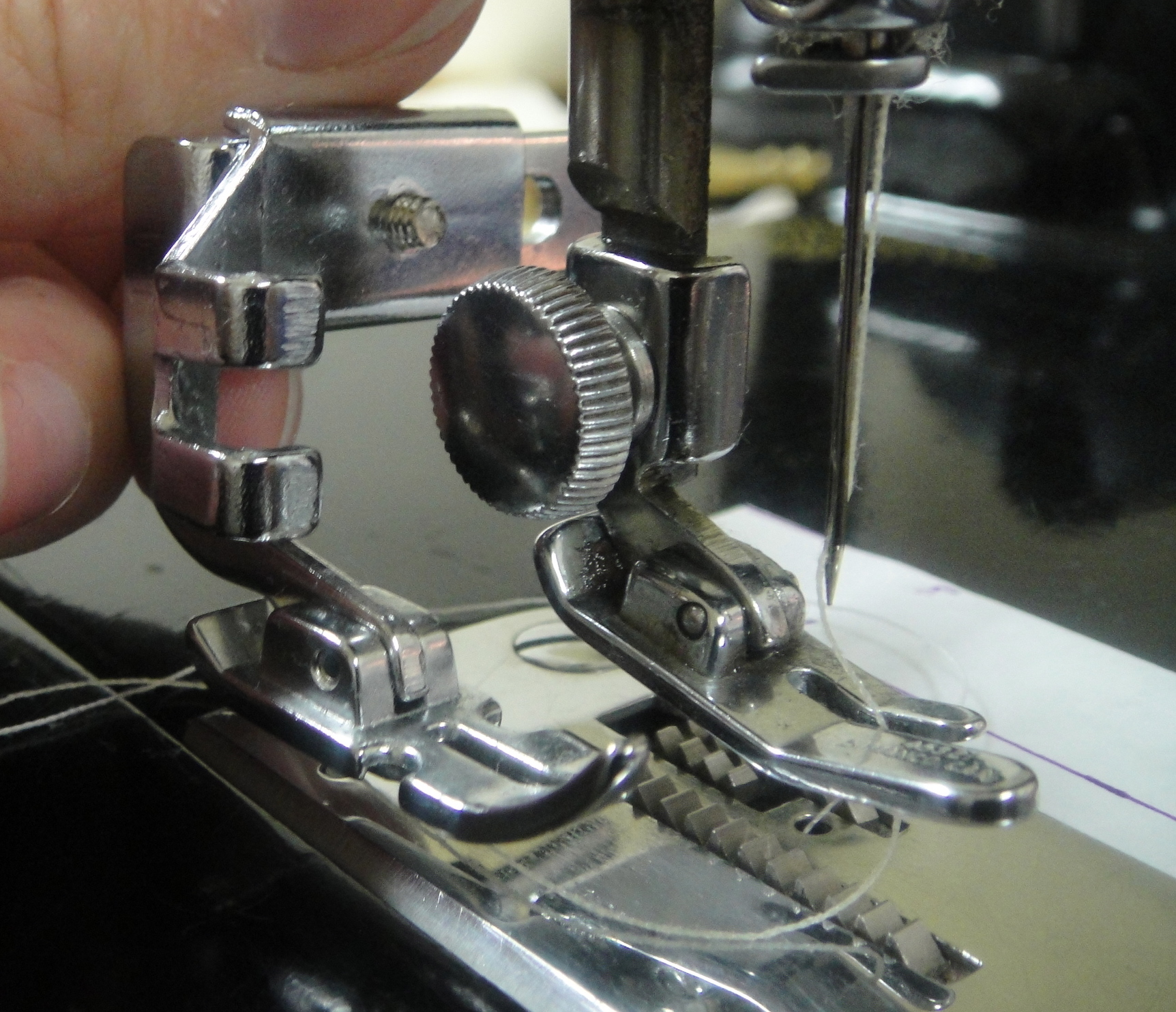
The one major difference between the Featherweight and the other machines I have used before now. The needle (like the bobbin) is oriented at 90 degrees to the front. Instead of the eye of the needle going from front to back, it passes from right to left.*
As I’m a lefty and it was easier to get at, I had without any particular thought threaded the needle with the thread entering from the left and exiting from the right. It never would have occurred to me in a million years that THIS was the one tiny thing that could throw the entire stitch off. But there it was, in the instructions, scanned from some original manual. Thread the needle from right to left.
I rushed downstairs and switched my thread.

She sews!
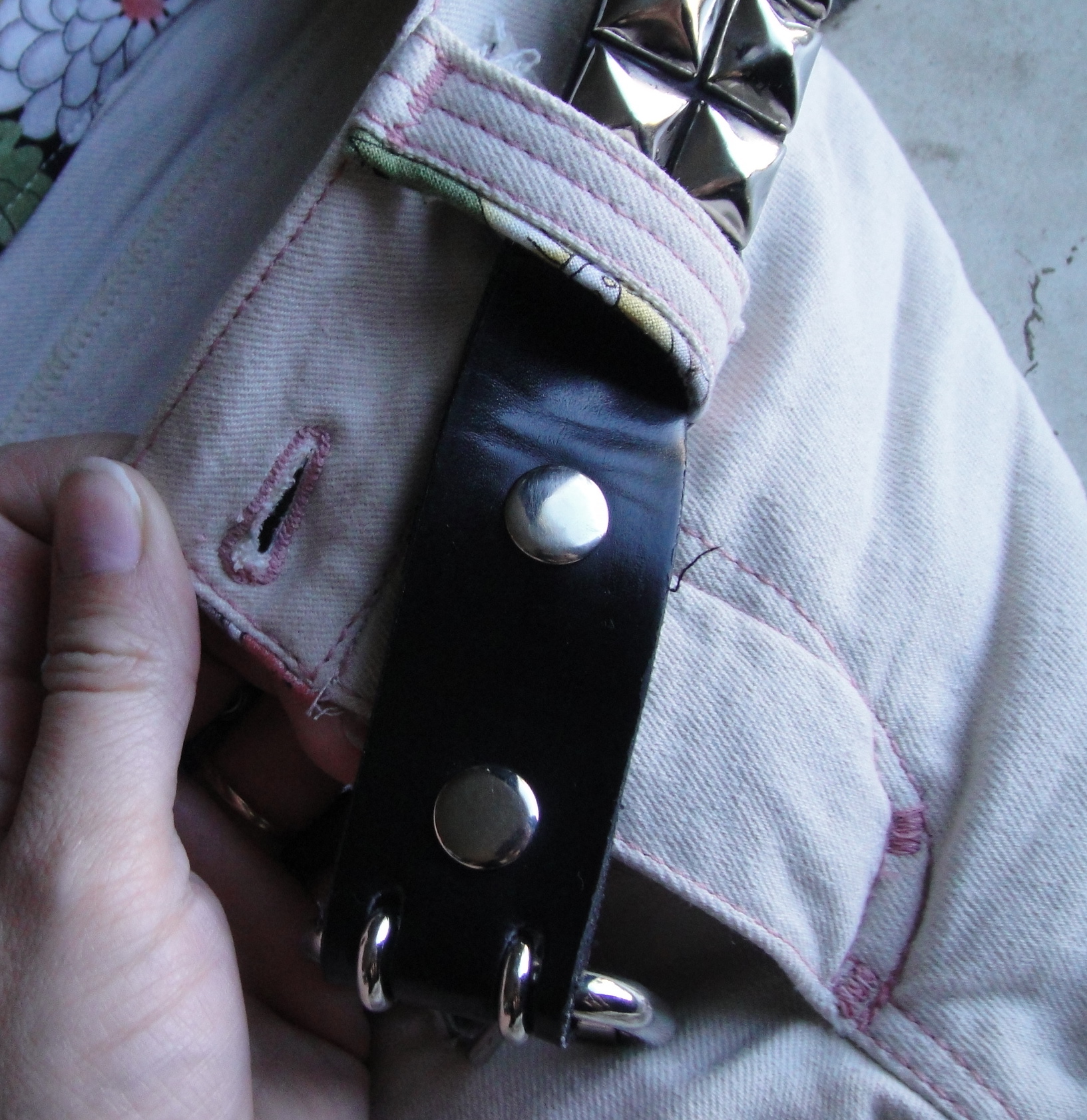
And lo, she stitched. With a minor tension adjustment, she stitched beautifully. She stitched with top-stitch thread. She stitched with the buttonholer attachment. She stitched layer upon layer of denim.

Stitch-length lever. Lift to stitch backwards.
Eventually, I figured out how to backstitch (move the stitch-length lever all the way to the top). I haven’t quite wrapped my mind around not having to hold on to something to keep it stitching backwards.
Some fun details:
My mom purchased this machine through the antique shop where she works, in my home town. The machine belonged to the mother-in-law of the woman who lived next door to us when I was little.
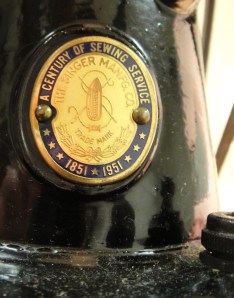
1951
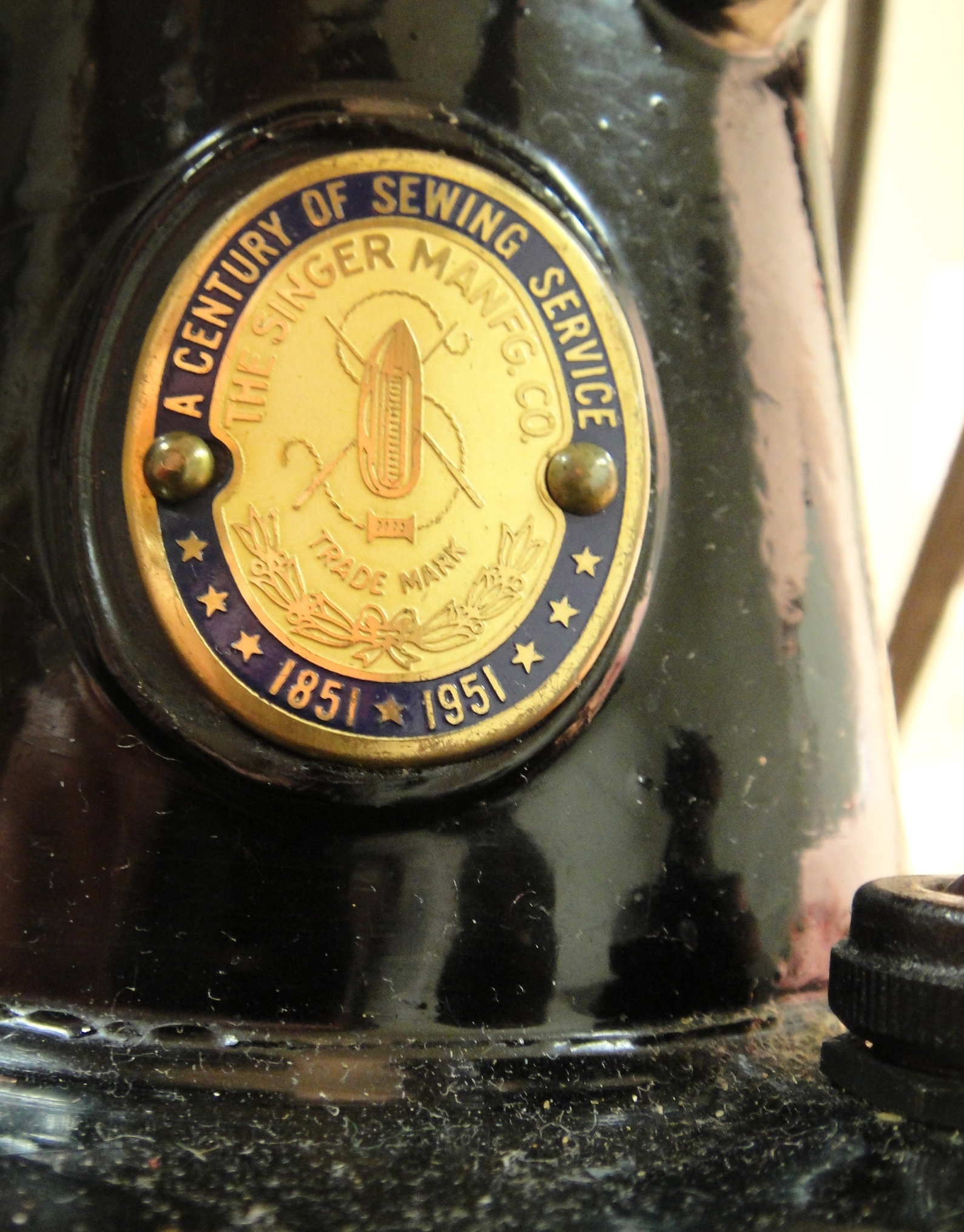
A plaque on the front of the machine declares 100 years of Singer excellence. This makes me think the machine was probably made in 1951. The serial number begins with EF, which this website suggests means that it was manufactured in the UK (Scotland, to be precise) in 1949. The motor, on the other hand, says it was made in Canada and has some notation that includes “AU 61” which makes me think August, ’61. Obviously the motor could have been replaced… anyway. I’m inclined to go with 1951 for the year, at least.

The motor
It came with neither attachments nor manual, but it did have a few cute extras in the box:
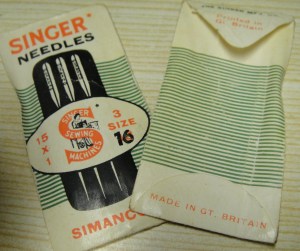
Vintage Singer needles
Several packets of needles.

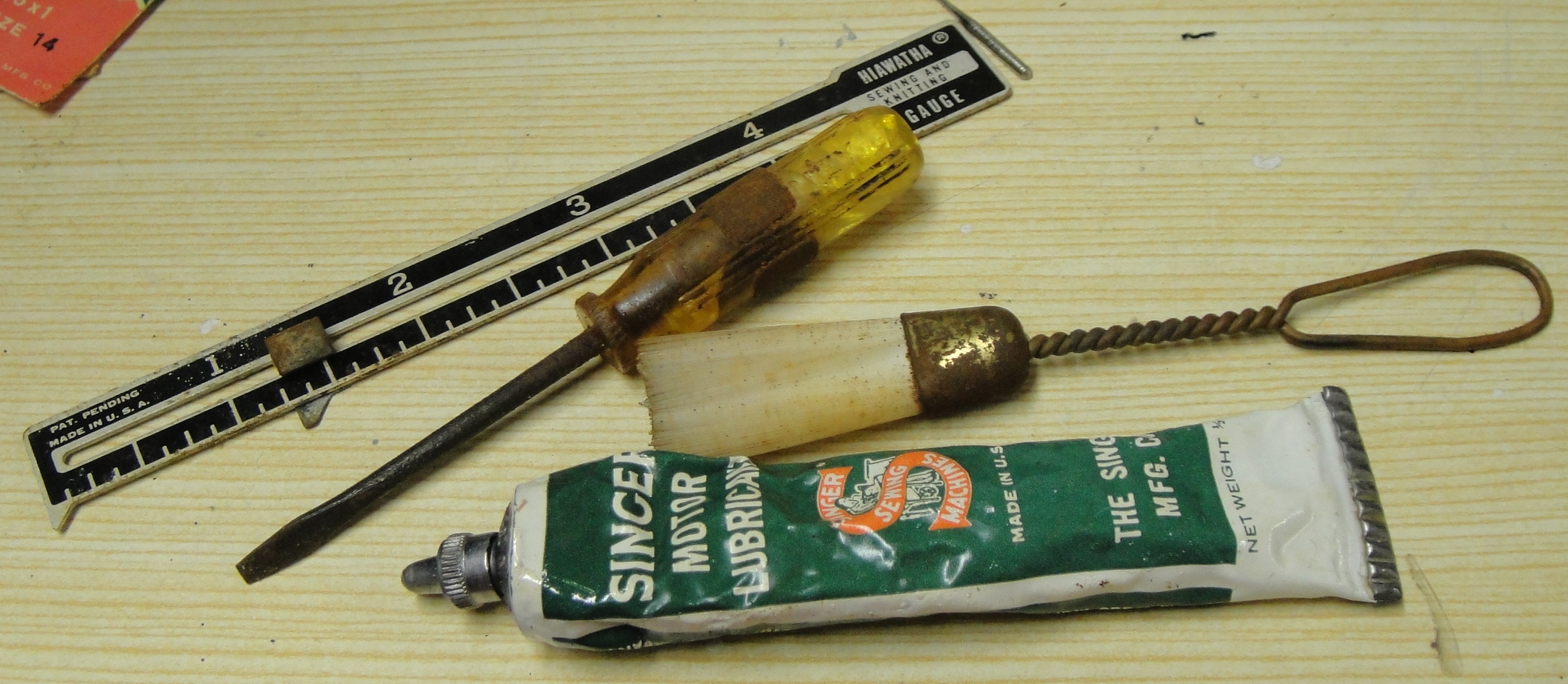
Un-cleaning set
The original cleaning set. I don’t think any of these will be getting too close to the machine. That’s an impressive amount of rust, especially when there’s none at all visible on the machine itself.
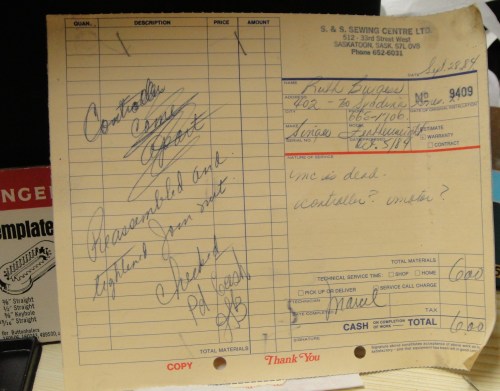
Repairs
Receipts for repairs done in 1980. There’s some notes about earlier repairs stapled to the back.
Also in my home town, my mom found another Greist buttonholder at Value Village for $1.99. This one had a box of additional templates tucked in with it. She’s keeping the buttonholer, but let me have the extra templates. A shorter keyhole (yay!) but no eyelet.
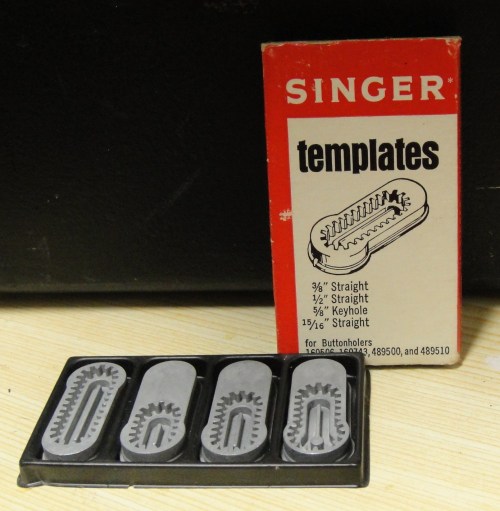
More buttonhole templates! (yes, they fit)
So in short, I’m ready for my next project!

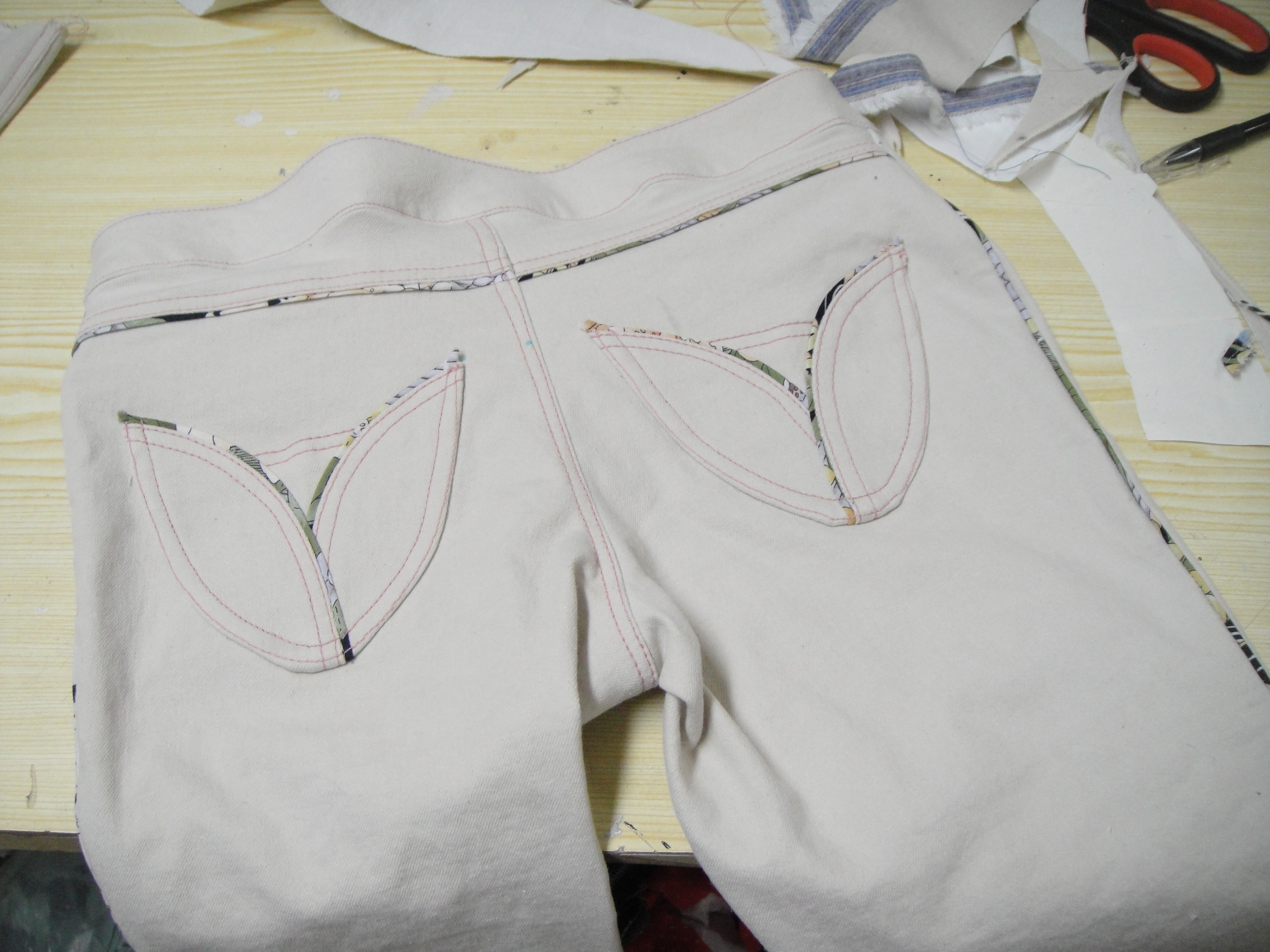
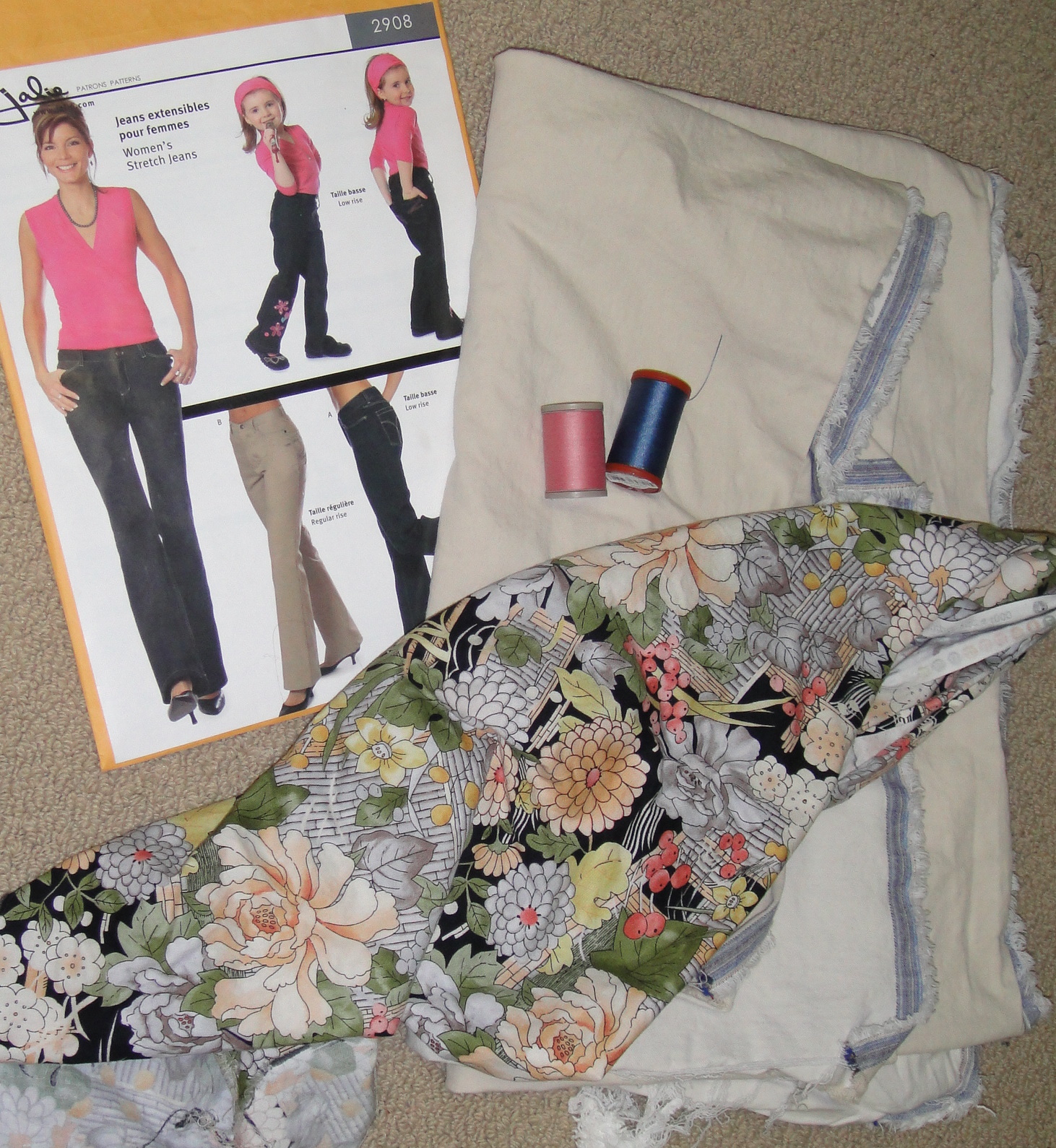
Next project! Summery capris
*Those of you who know Featherweights probably all know what I was doing wrong by now. Hush, don’t spoil it for the rest.