
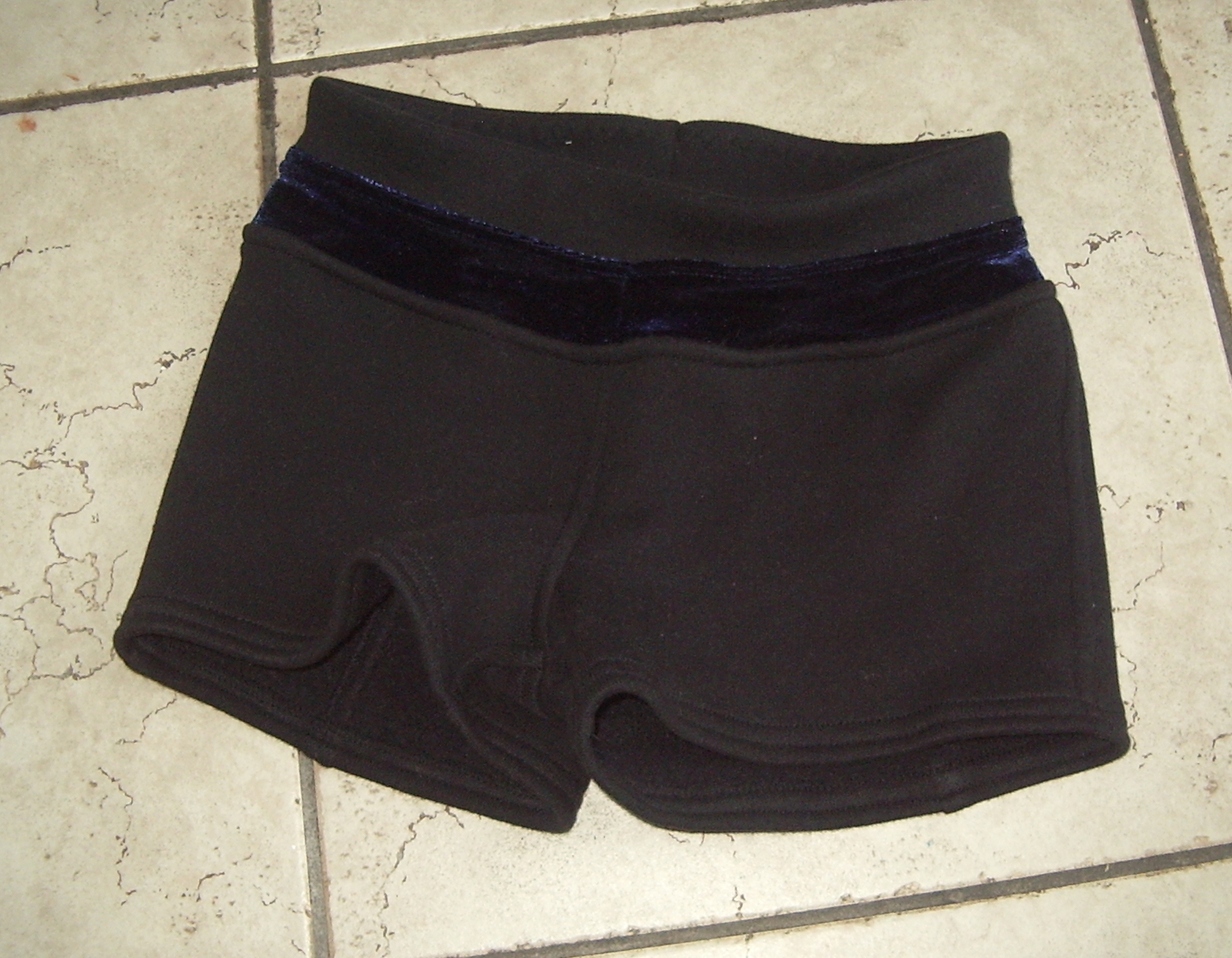
Tyo's shorts (front)
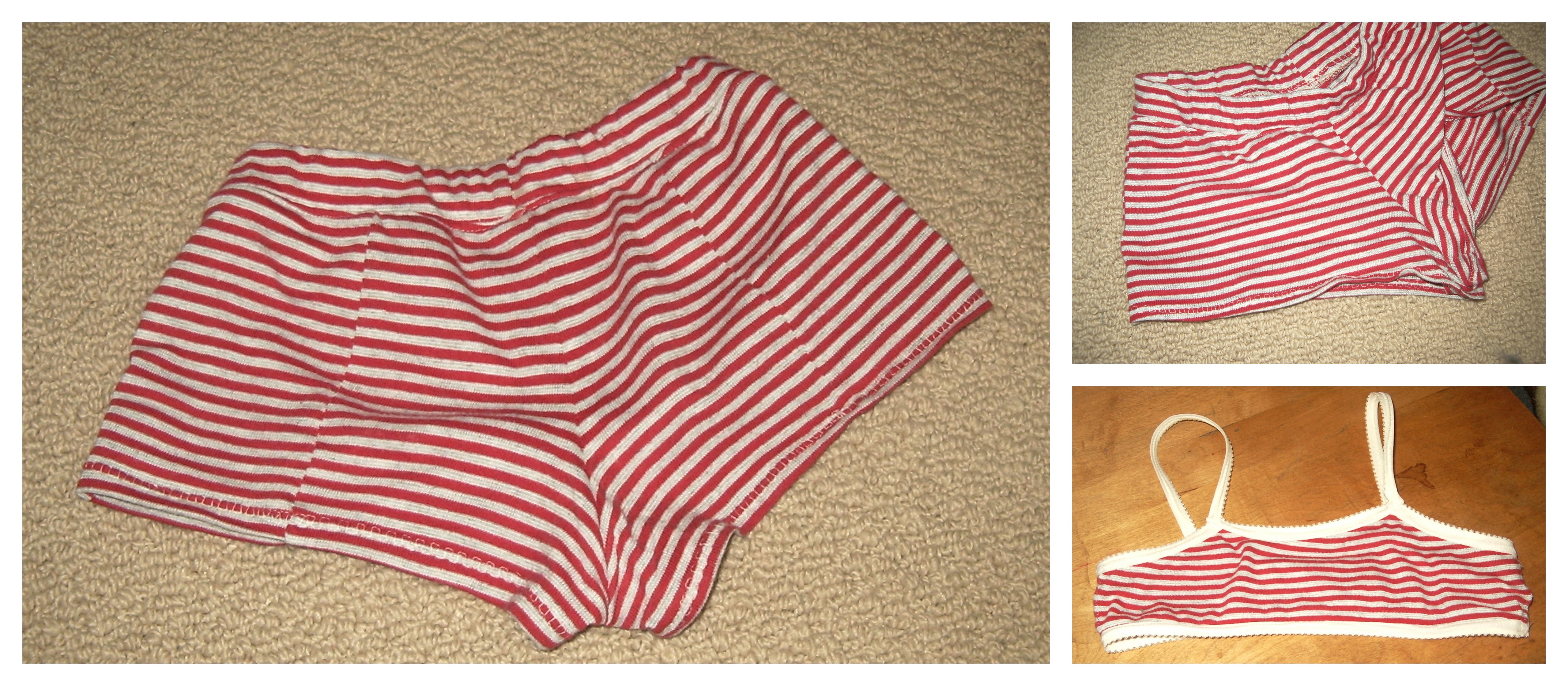
Having finished cutting the last bits for Tyo’s bunnyhug last night, I had about half a men’s XL sweatshirt left sitting on the basement floor, so I decided to cut the shorties (Jalie 3022) for Tyo out of it. It may be borderline in terms of stretch, but then so was the red striped fabric I used for Syo’s pair. I tend to round up the Jalie patterns for the kids, because I’d rather make their clothes a little loose and have them grow into them. (This does not always thrill my children.) On the other hand, I really need to re-measure them; Tyo grew something like two inches since Christmas.
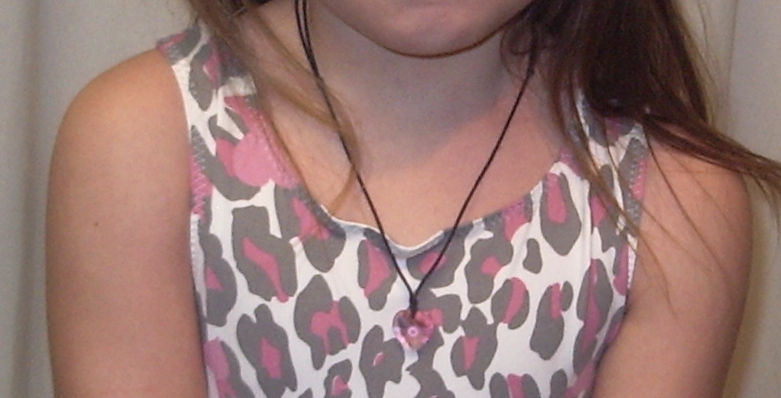
The photos pretty much all suck—black, y’know–but I think you get the idea. Though I think the shorts are much cuter in real life.
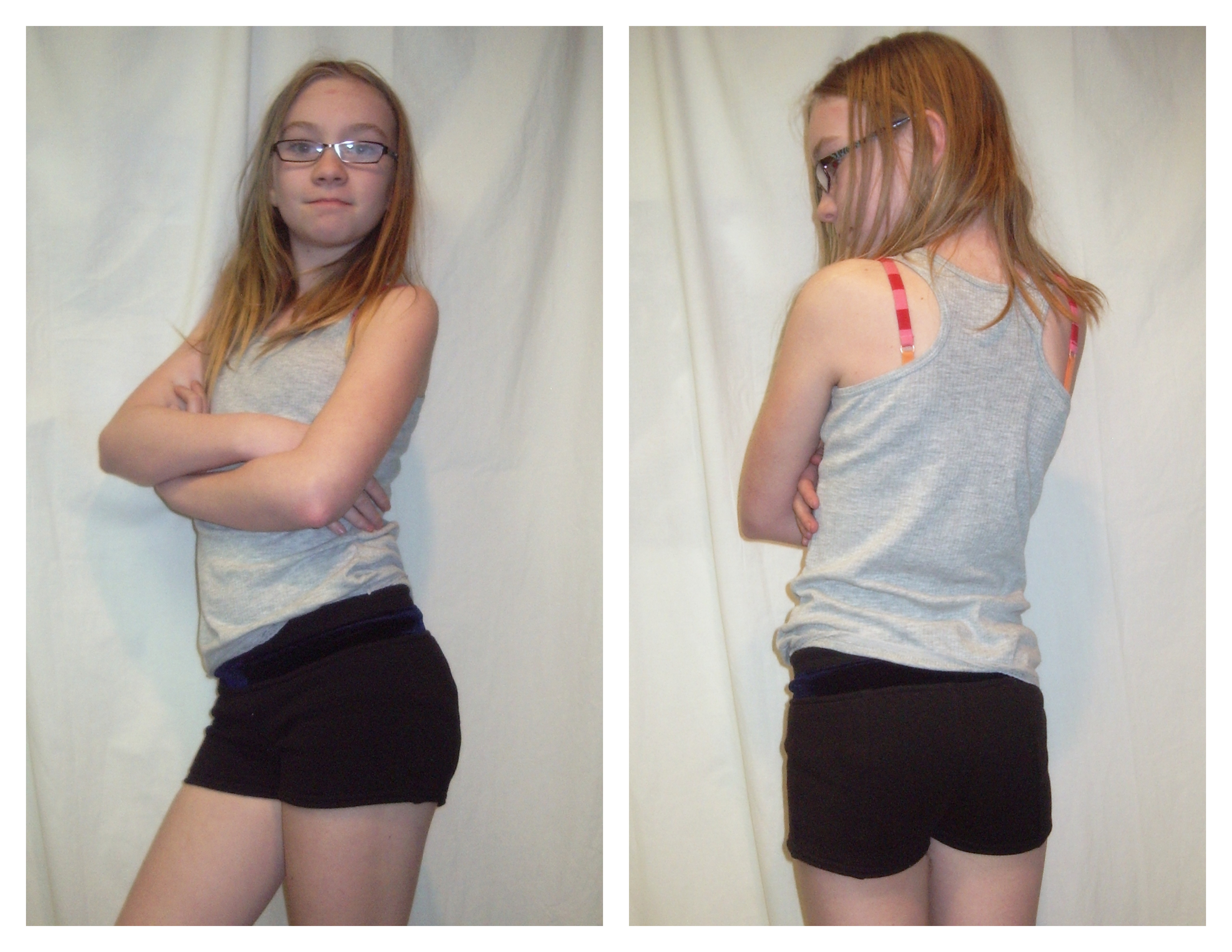
Tyo 'Tude
Knowing that Tyo’s derriere requires rather more room than Syo’s, I wanted to add more height to the rear crotch curve. Normally to do this I just add a wedge at the CB seam, about halfway up the curve, tapering to nothing at the side-seam. For this particular pattern, though, this is complicated by the vertical seam along the back of the leg. This incorporates a little bit of shaping at the top, and the potential for a lot more if you needed it. For this first try, I didn’t add any shaping on this seam, and they seem fine, but it’s certainly an option if you need it. Anyway, I basically added 1.5 cm in height all along the centre-back pattern piece (piece B), and made a wedge on the side-back pattern piece (piece C).
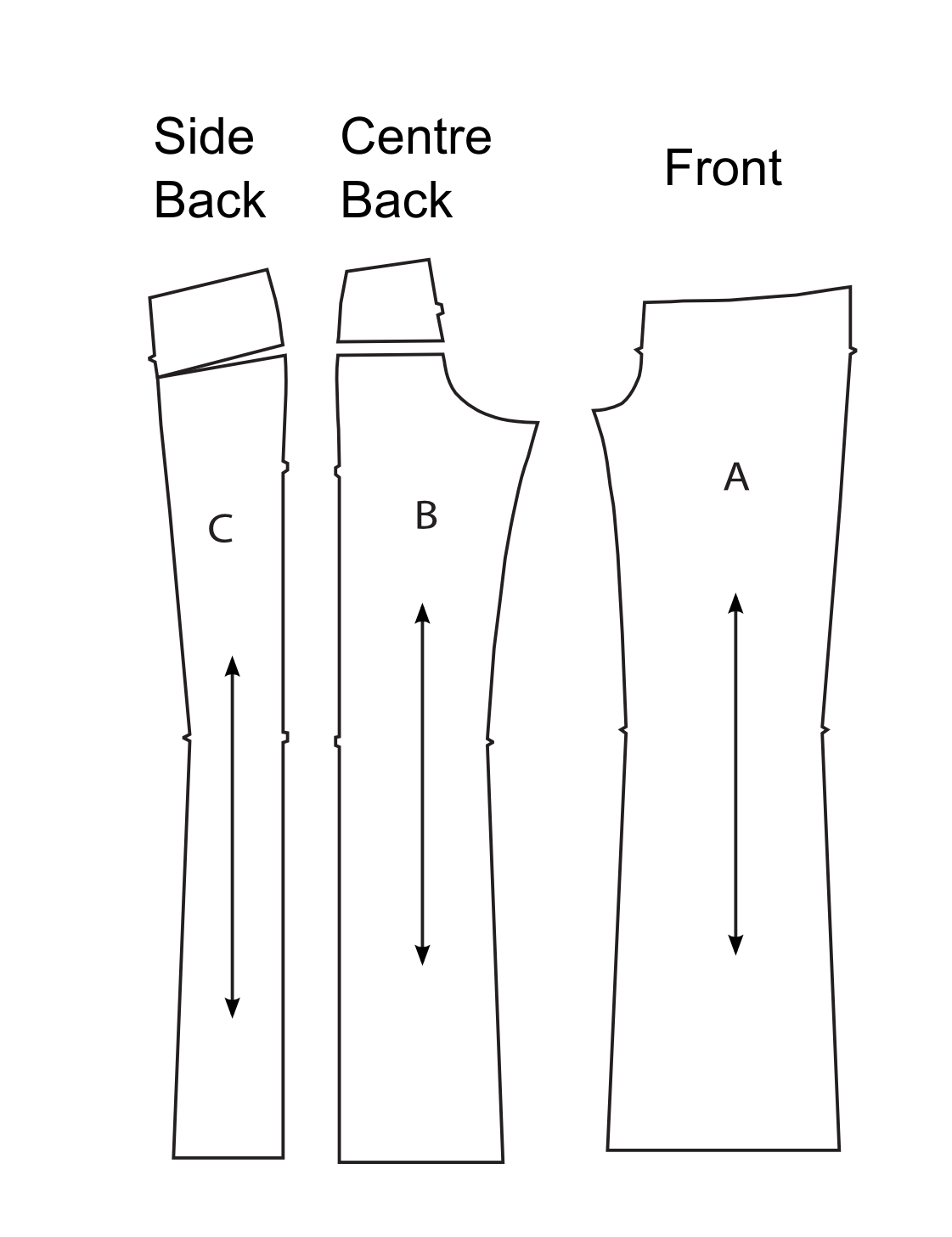
My changes
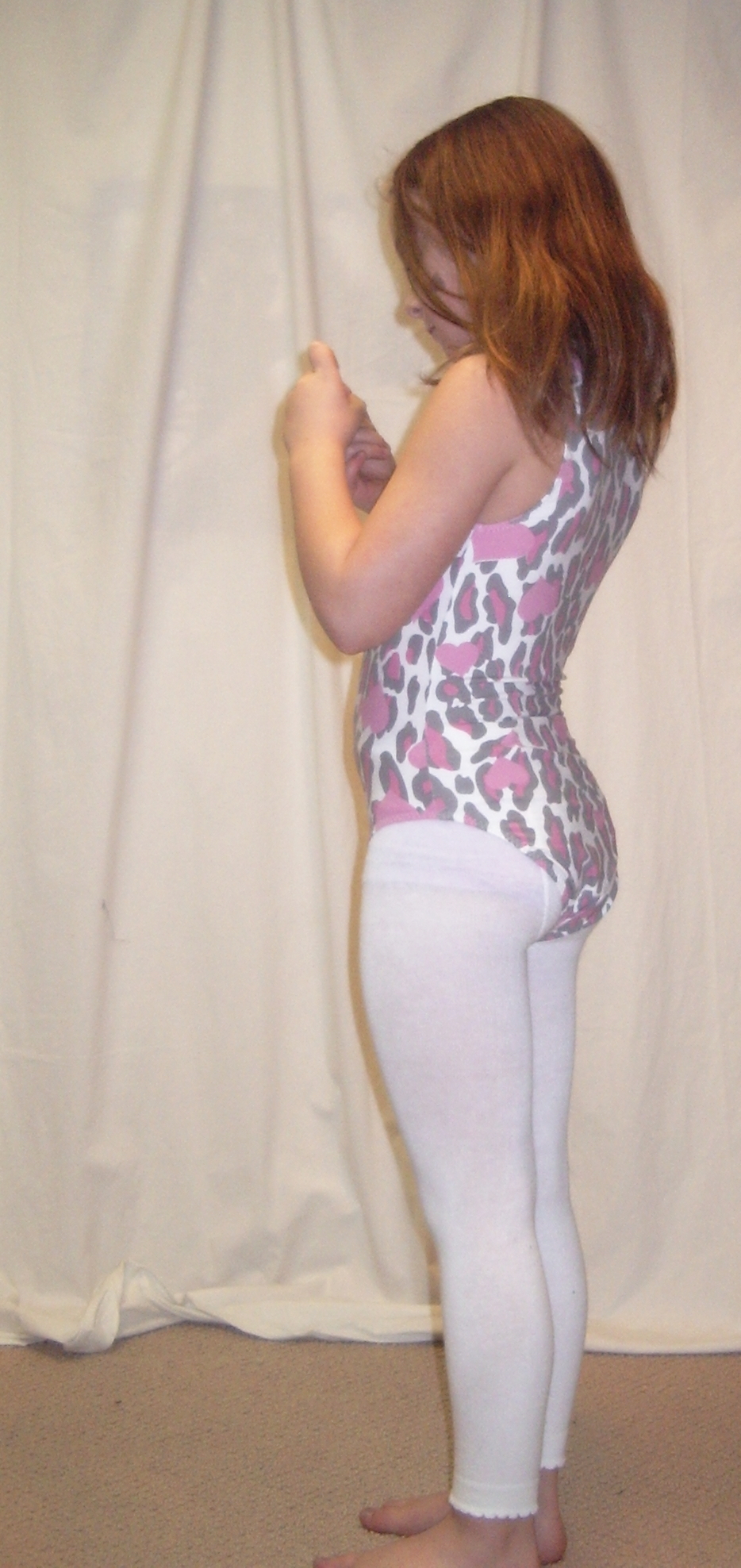
I am very, very, very glad I did this little alteration, as Tyo’s shorts cover very nicely—high enough at the back and covering her entire butt. Yay! Hence the modeled shots here. 1.5 cm may have been a bit excessive, but I’d rather be safe than sorry in this case.

Side view---great rear coverage
For construction I followed the Jalie instructions much more closely this time, especially for the waistband, which is the full height with the decorative “contrast” band—in this case it’s made of blue stretch velvet, from a tiny remnant I had to piece at the CF (in hindsight, it would’ve made much more sense to put the seams at the sides, but I wasn’t thinking far enough ahead.)
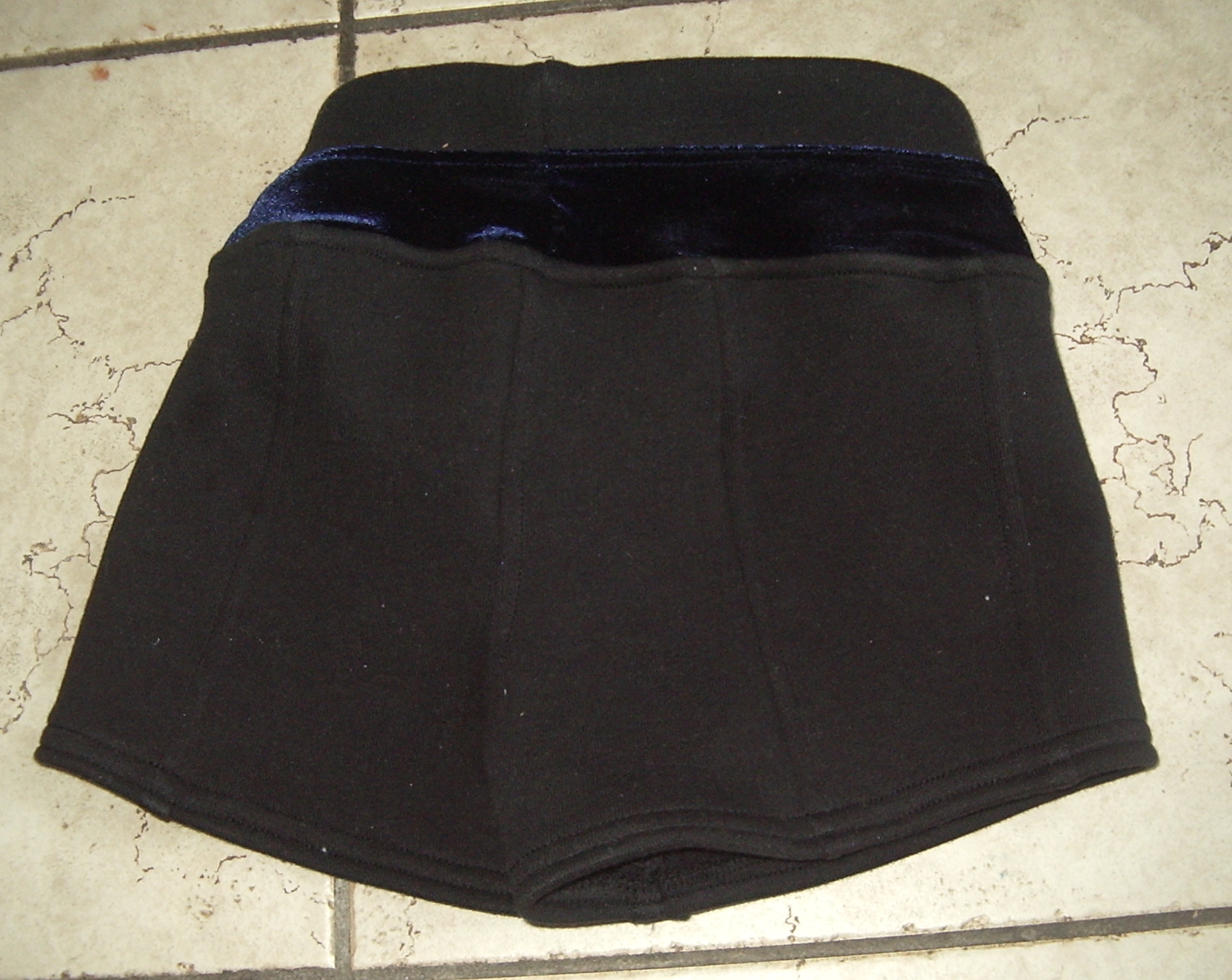
Tyo's shorts, rear view
I stitched all my seams in three passes, straight triple stitch for the seam itself and then using the serger to finish it, and then topstitching. It makes a much nicer finish inside than the overedge stitch on my machine, and with the topstitching the seam-allowances are flattened down nicely on the inside, which looks much more professional, if not 100% RTW.
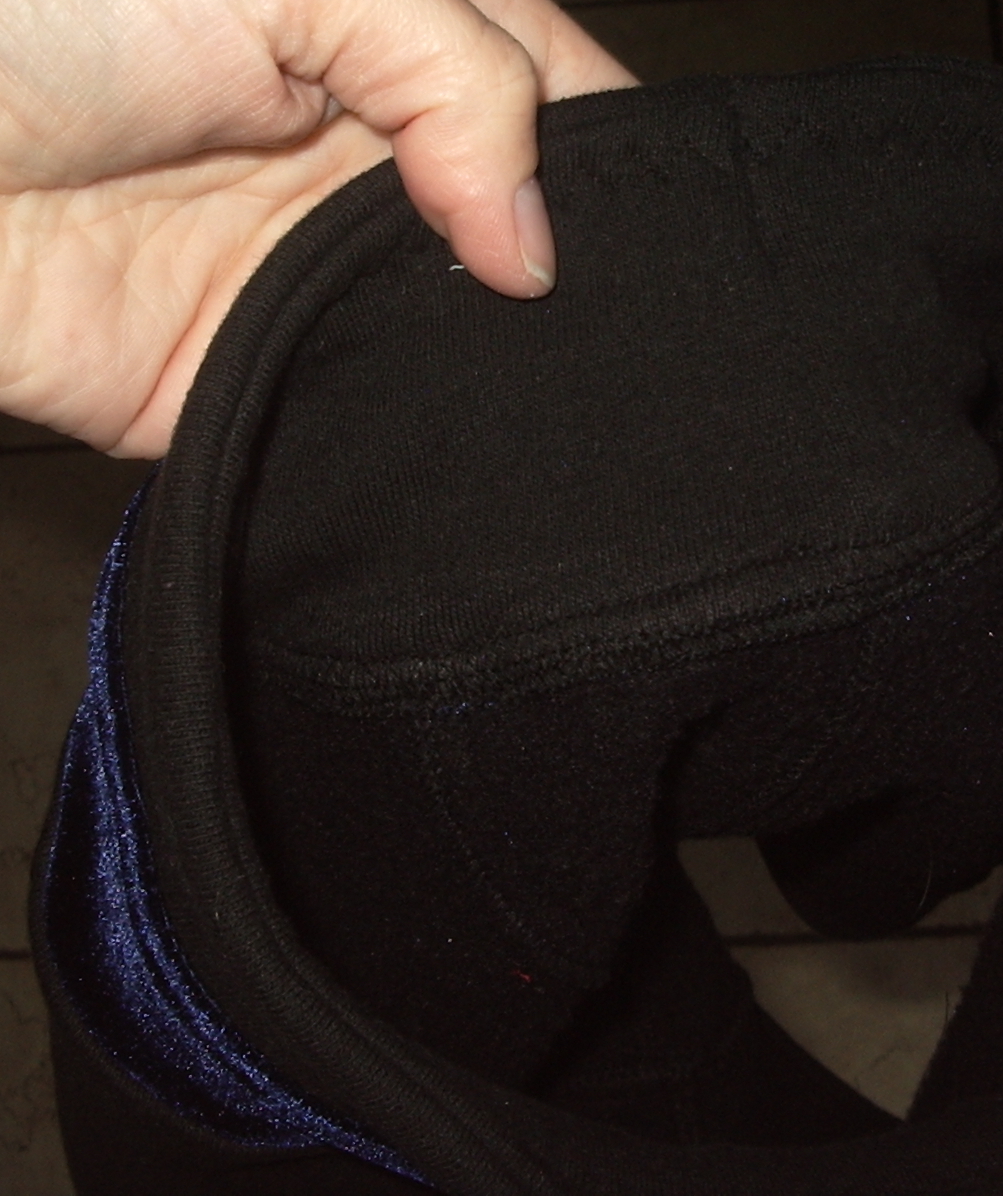
Inside waistband.
When I posted about Syo’s Leotard and using the three-step zig-zag to attach it, I got a lot of comments from people who found this stitch stretched out the elastic too much, keeping it from recovering fully. I didn’t find that at all on the leotard, but I was using clear plastic swimsuit elastic in that case, and I wonder if the commenters were referring to standard elastic instead—because when I triple-stitched the (regular) elastic to the inside of the waistband (basically understitching) with a three-step zig-zag, it definitely ended up longer than when it started. It’s fine on, but you can see the top of the waistband is a little ripply when it’s not being worn. So, commenters—have you had this problem with clear plastic elastic? Or is it just (as here) with standard elastic? I don’t know if I’d use clear plastic elastic in a waistband like this anyway, but it’s definitely something I’ll keep in mind when making my stitch-choices in the future.

Rear view---coverage!
Incidentally, I sewed the entire project with my 1/4″ edgestitching foot. This worked great, because the keel on the foot is right at the edge of the seam-allowance. I mean, it’s not hard to line up a 1/4″ seam allowance with the edge of the regular zig-zag foot, but this was practically brainless. It wouldn’t have worked if I’d been trying to use my over-edge stitch, though, because the edgestitching foot is a straight-stitch-only foot.
So, in conclusion, pretty definitely a win.


















 Tanit-Isis Sews