
Don’t say Mrs. Claus

I got this fabric from a local sewing friend who’s been in a low-key destash mode over the last couple of years. It’s a gorgeous textured linen/cotton. I originally wanted a dress but the 2.5m length was a bit minimal for the long, flowing thing I was imagining. So then I decided to opt for a skirt… But to minimize cutting into the fabric in case I change my mind later, I went with a skirt style lightly inspired by eighteenth-century petticoats—two rectangular lengths pleated to a waistband.
Now, this is frankly an ageless method of skirt construction, and it’s one I have a fraught history with. I don’t usually like how gathered rectangles look on my body, above or below the waist. It worked ok for this dress here, but it’s generally not my favourite. I’ve attempted to rework this dress for post-maternity wear and I kinda hate it.
But, wearing over a corset lets me get away with some clothing shapes I haven’t usually been comfortable with, so I decided to give it a try in this case. With pleats, not gathers.

I left a flat space (maybe too wide) along the middle of the front, and then my pleats are closer together in the front, a bit more spaced out in the back.
The most common method of making 18th-century style petticoats seems to be leaving slits at the sides and putting separate ties on front and back. This works great and is highly adjustable, but I wasn’t too sure I wanted slits at the highly visible sides since I’m not likely to actually wear it with 18th century upper garments that often cover that area. So really this is more of a Victorian take on the idea, which I’m sure existed and I could probably find references and directions for if I dug.
Anyway, I decided to make a slit closure at the centre back, using the same slit in a pleat method I used on my flannel petticoat, though I didn’t do a good job of illustrating it in that post either. Basically you cut the slit; make a narrow hem (tapering to nothing at the end of the slit) for the underlay side, and fold in a big pleat to make the wide overlap side.
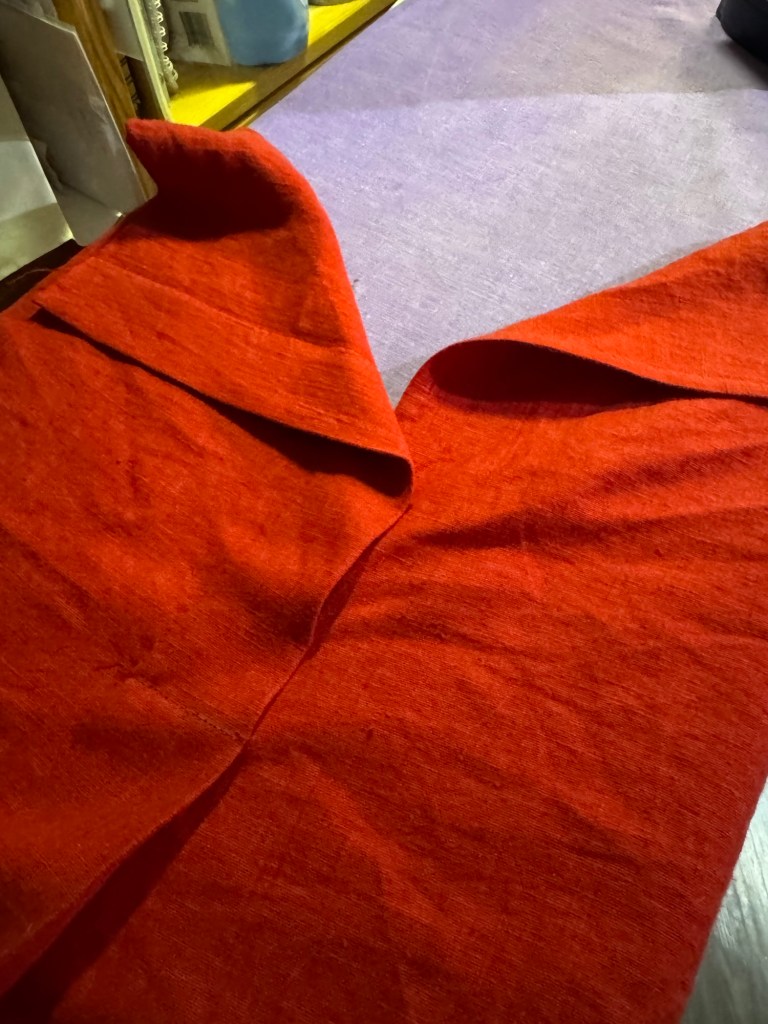
Stitch along the edge of the pleat that formed the overlap, and stitch across the pleat at the bottom of the slit portion to secure it in place, so above this line there is placket, and below it is pleat. Clear as mud? Thought so.
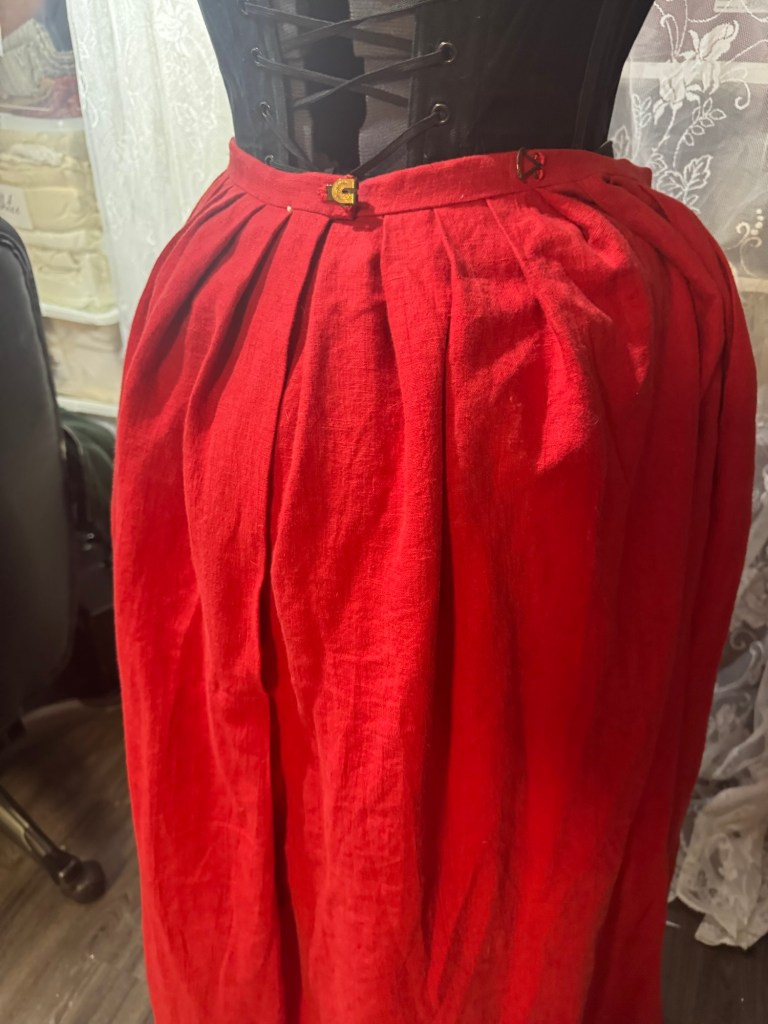
And that was the most complicated portion of the construction.
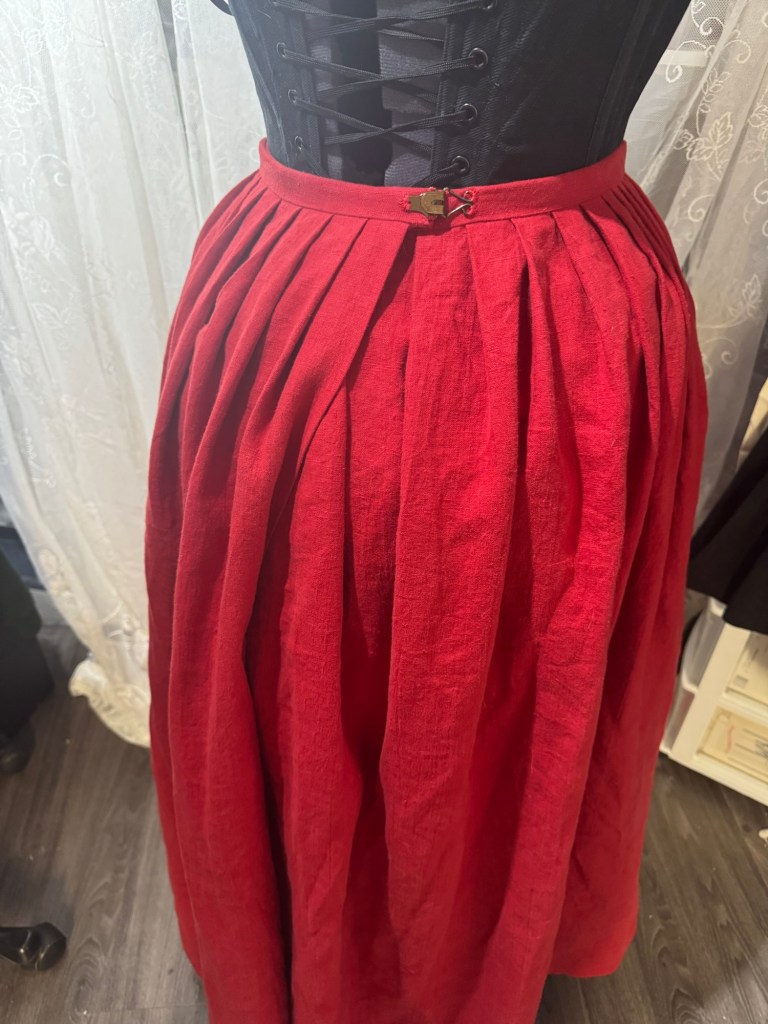
Except…I knew I was pleating it a bit loose for my corseted waist. I kind of wanted to keep my options open for wearing without corsets (even though, as previously mentioned, I’m not likely to like this skirt shape on my body without a corset). But it’s a bit too too loose. So when actually worn the too-big overlap creates a fairly weird spot where the upper placket pulls awkwardly across several other pleats. On the other hand, it’s in the back so I can’t see it and pleats are always shifting around when you move anyway.

I definitely still prefer the flared look of a gored skirt, and I think undergarments—corset and gored petticoats—are going to be key to the wearability of this skirt, giving it the illusion of more volume at the bottom. Also, I need to go in and add real pocket. (I added one about a week later. ) But I’ll have to find a coordinating fabric for that because this was an absolutely zero-waste project, which is basically unheard of for me. Oh wait I lied…. There was a short piece of the narrow rectangle I used for the waistband left over. (Edit: I used that leftover rectangular bit to make matching pocket facings on my quilting-cotton pocket, it is now fully zero waste.)
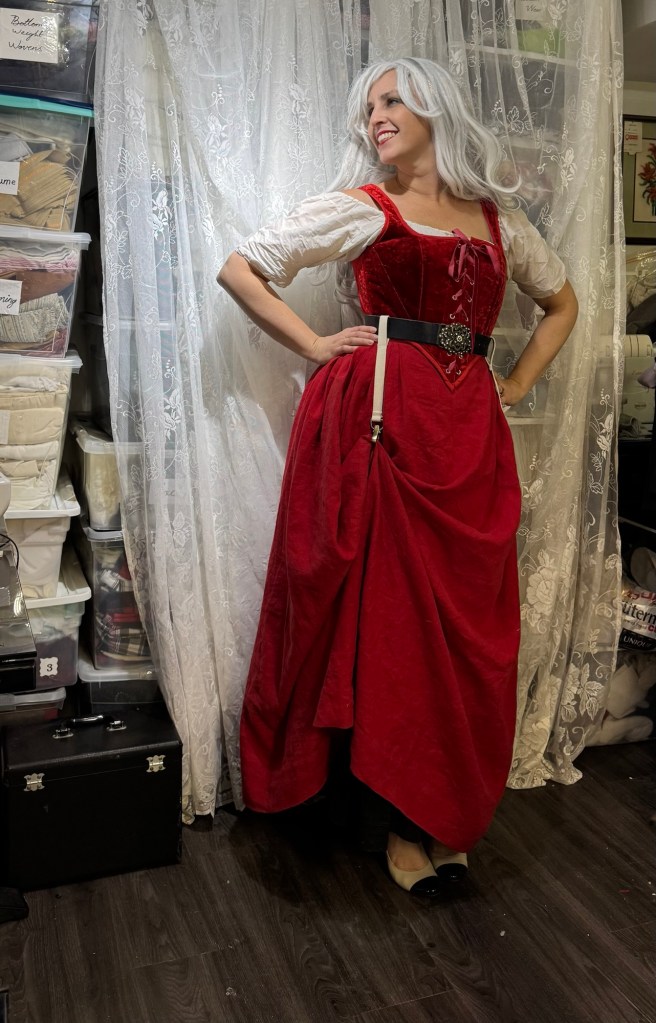
But I am excited to have a red skirt. Considering red is what I usually call my favourite colour, I don’t wear it much. So I’m pretty happy to change that a bit. And it’s definitely the season.

Now if only I had a red cape to go with it…


 Tanit-Isis Sews