Monthly Archives: November 2012

Wired

In lieu of actual sewing (which has consisted of two zipper repairs and a lot of daydreaming), I bring you yet another post on old sewing-related junk.

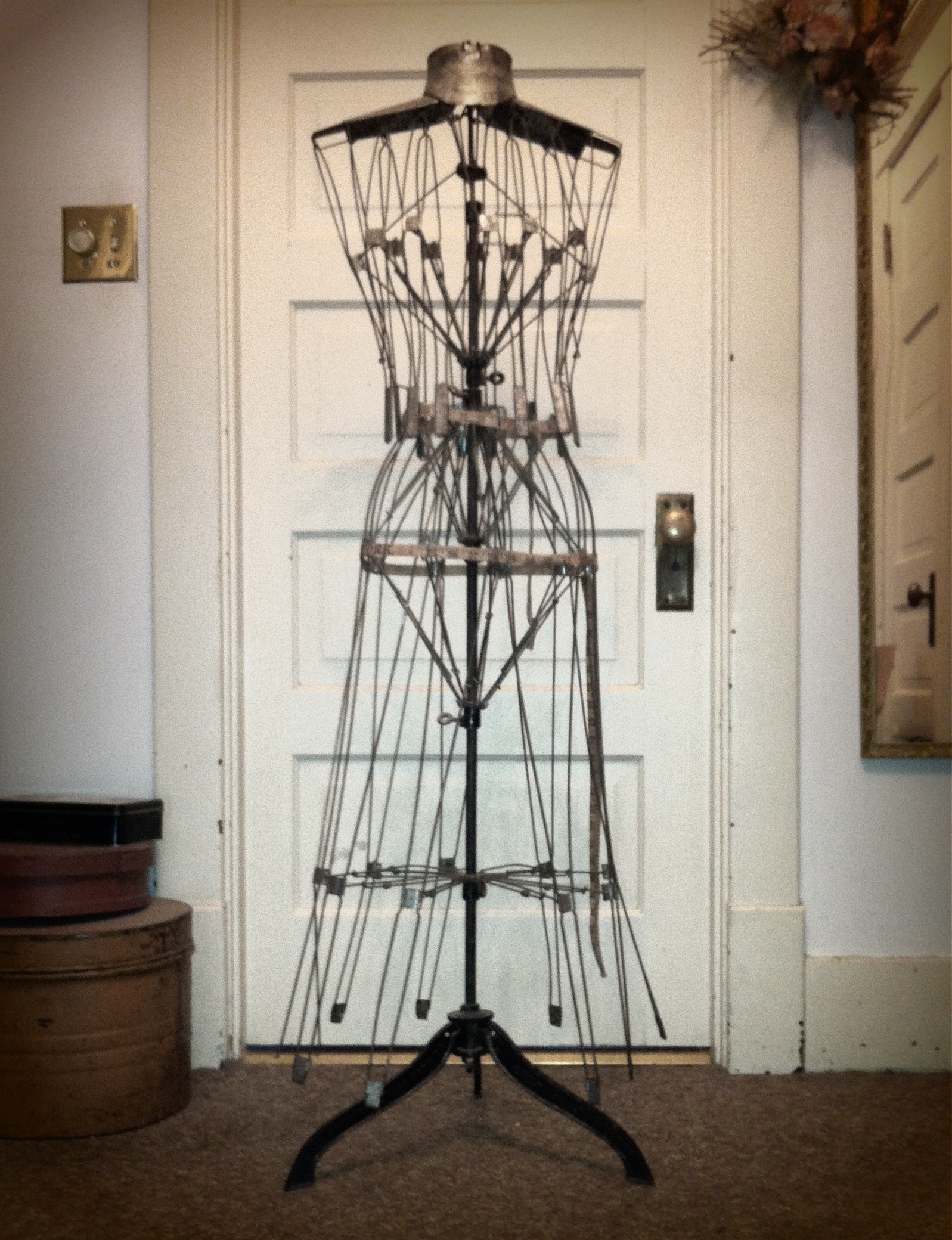
Antique Dressform

Another of those home-town resources.

A long time ago, my mother bought a dressform.

Of course, being my mother, she didn’t buy it because she was sewing, and she certainly didn’t go down to Fanny’s Fabrics and pick up some wobbly new thingy.

No, she brought this lady home from an antique store.

John Hall Dressform (The other leg says John Hall but the photo wasn’t as good.)

Some googling turned up a patent from 1881 for a very much similar form. Although not a whole lot else other than some exorbitantly priced ebay listings.

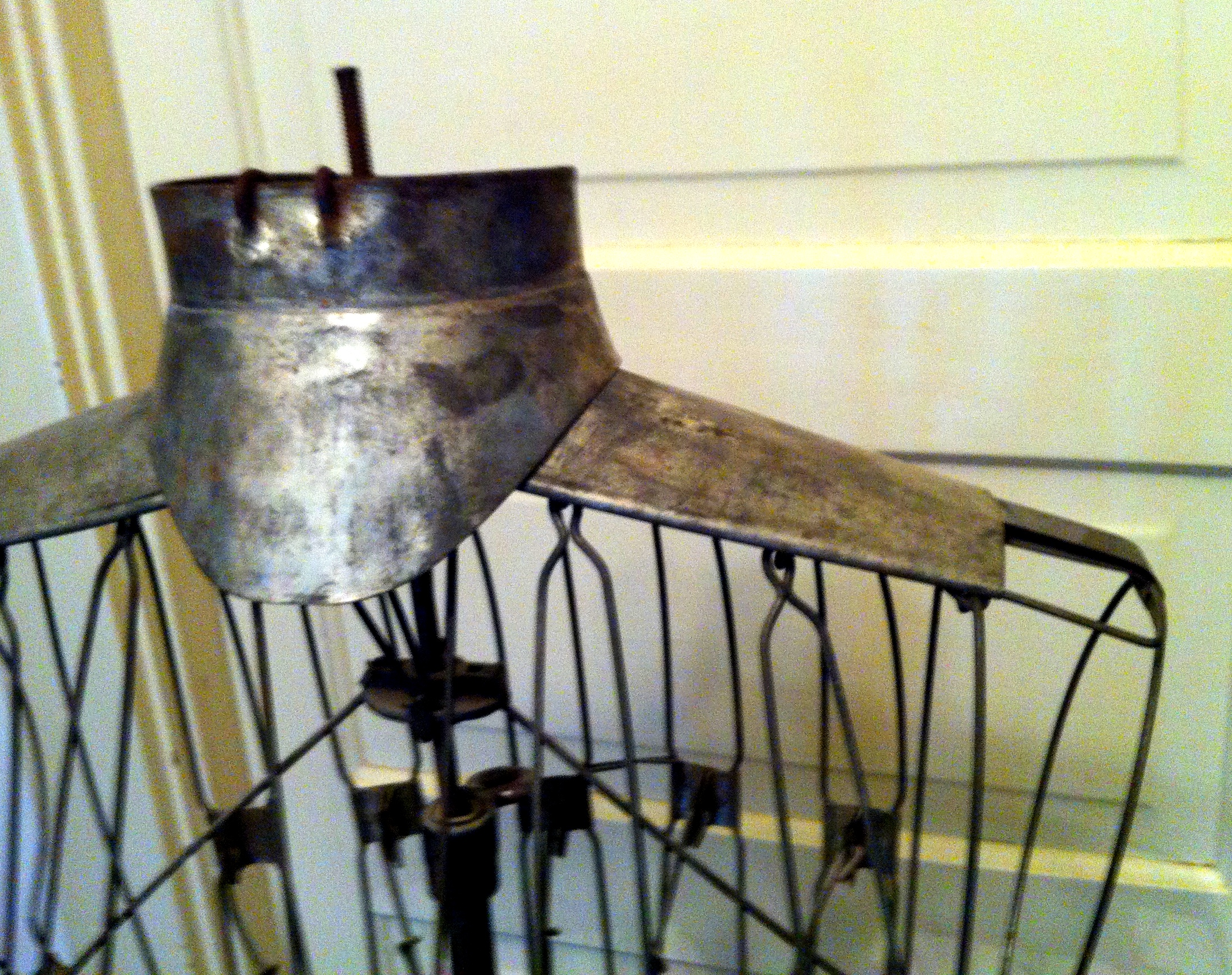
Neck & shoulder adjustable

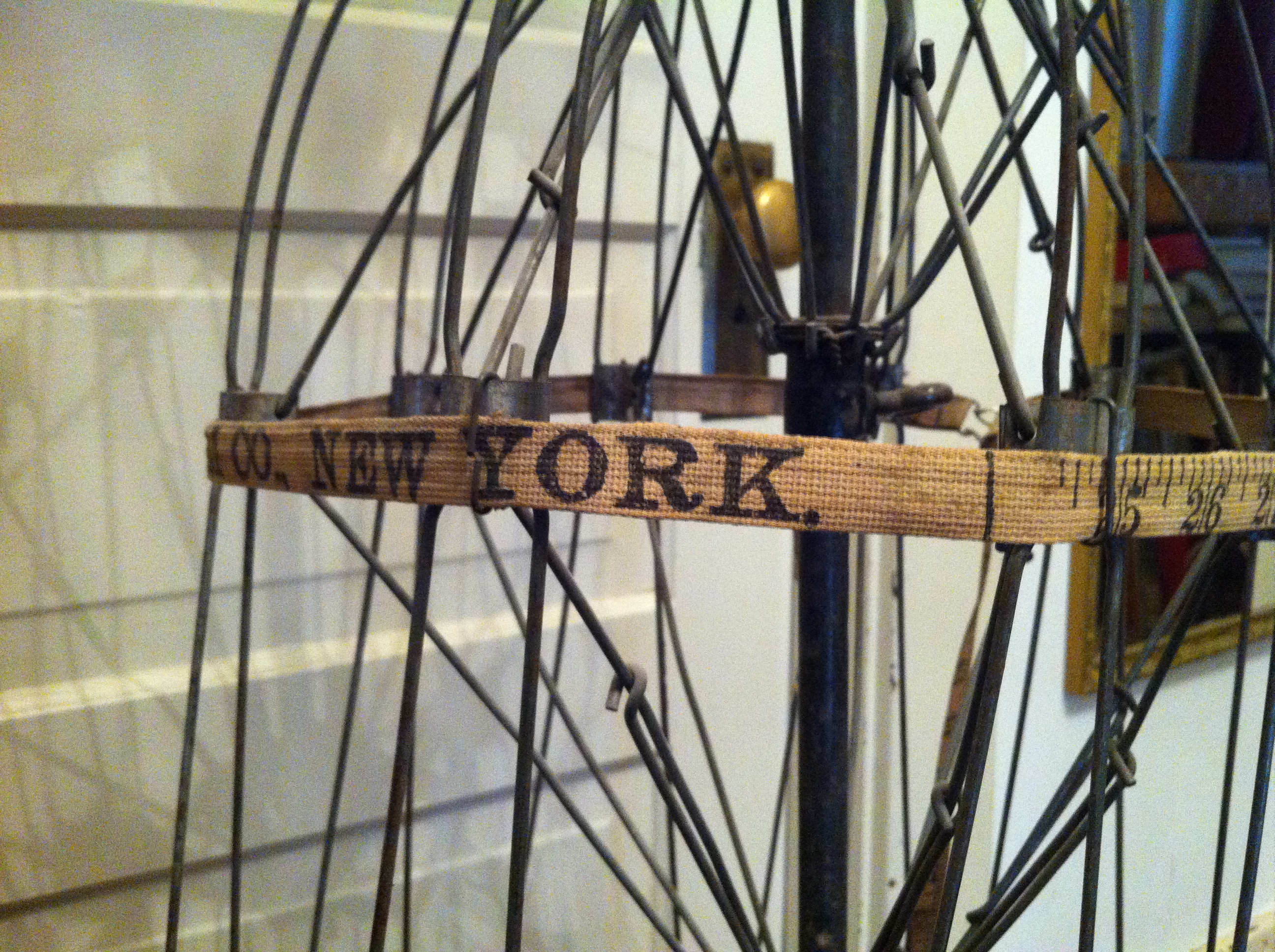
I’m fascinated by all the varieties of fitting you could get in this. Total height is adjustable (though short, at least at the moment.) Torso length is adjustable. The skirt could be umbrella’d in or out depending on the fashion. The shoulders are adjustable. The neck is a high, solid (but adjustable) piece, for aid in fitting high collars, I suppose. There are built-in measuring tapes at waist and hips.

Hip tape measure.

And, yes, she sits around in my mother’s upstairs hall, usually sporting a hat or something. I’d be too terrified to actually use her, that’s for sure.

If you dress it…

The patent has a further measuring tape at the bust, which makes me wonder if she might have lost one there, although there’s no obvious sign of one.

15 Comments

Filed under Sewing

A treadly weekend

20121104-205835.jpg

Ehm. I got a bit excited. The girls and I went to visit my mom again this past weekend, and I spent most of the afternoon upstairs playing with my treadle. Not the Singer (which belongs to Stylish), but the one my wonderful enabler mother bought me for my birthday.*

I gotta say, I can see how this treadle-collecting thing can become a problem. My mom’s boyfriend was mentioning one he saw in a pawnshop recently that had a cupboard-type cabinet, and I had to stomp very, very hard on the WANT. Bad want. Go to your room and think about what you’ve done. The electric machines were bad enough…

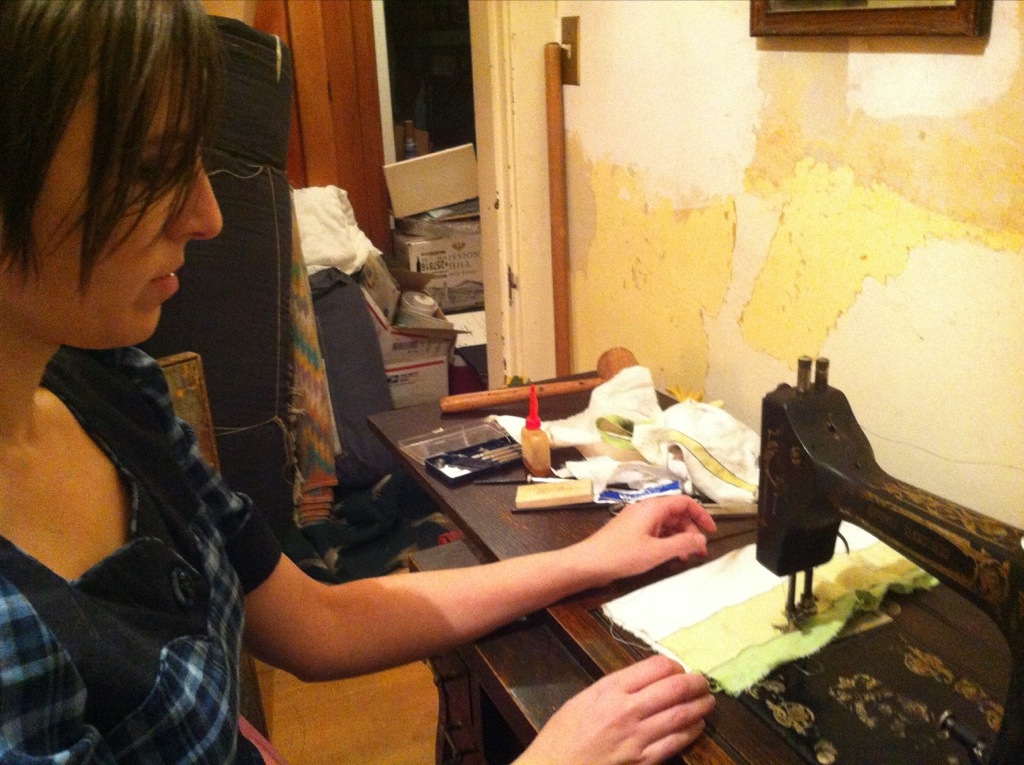
Anyway, I spent most of the afternoon ignoring my family and messing around with kerosene and oil and rags and an old toothbrush, and at the end of it all, when I should have been taking my kids home in time to have baths before bed, I threaded it all up and tried actually sewing with it.

20121104-205856.jpg

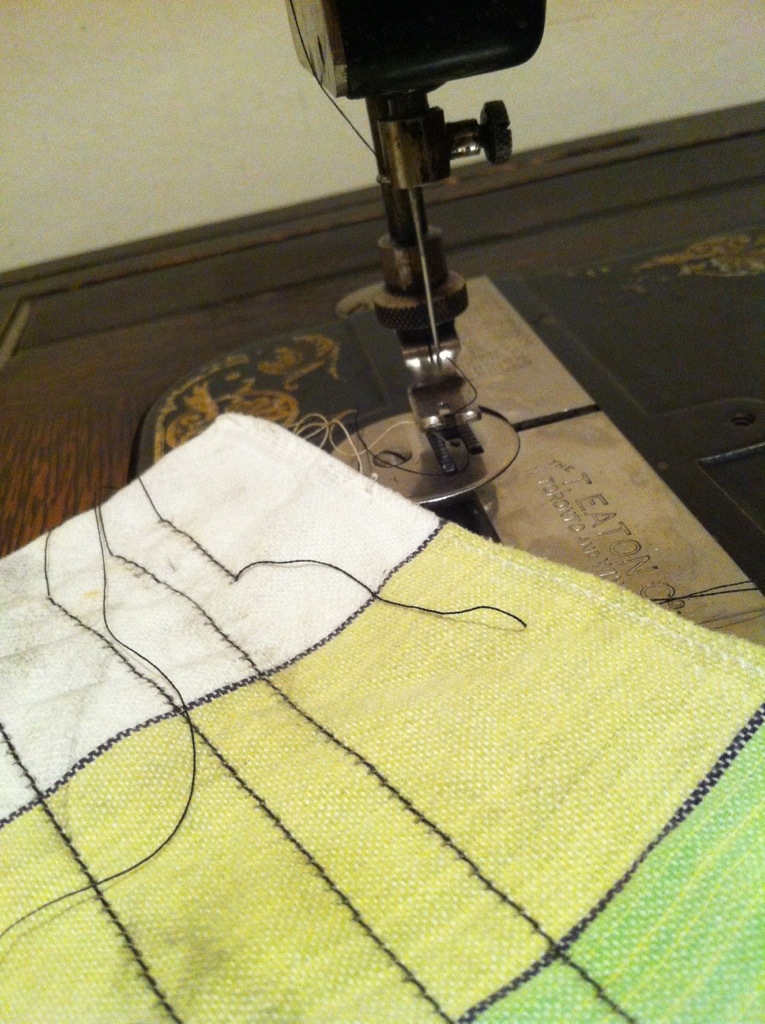
I didn’t have the almost-the-right-manual or any of the threading diagrams I’d managed to collect, so I was actually pretty astonished when I was 1) able to thread the bobbin into the shuttle, 2) put the shuttle in place, and 3) able to (half-assedly) thread the machine. I don’t think I’ve ever felt quite so triumphant about a sewing machine as when I spun the wheel the first time and was able to bring up the bobbin thread. Except possibly a few minutes later when I put the presser foot down and actually (by dint of careful handwheeling) sewed the first few stitches.

All is not perfectly well. I still haven’t gotten the faceplate off to clean in behind it. The tension is balanced but high (It’s also allegedly self-adjusting. I’m scared). The top thread tends to break, probably because there’s some sharpish bits in the threading (cheap, elderly thread doesn’t help). The needle is really, really big. They don’t use standard needles. There are about half a dozen in the attachments box that came with the machine, ranging from sturdy to harpoonlike. According to the NSMCO Yahoo group, you can usually use regular needles and just not push them all the way up… we’ll see. I made another “staple” to mend the broken belt, out of wire. It’s not quite as sturdy as the original staple, but it doesn’t seem to give the machine any problems. I used one of the already-wound bobbins, so I haven’t tried to wind my own yet. I am really, really lucky that this machine had bobbins and shuttle and needles with it, because I think I’d have a really, really hard time finding replacements. Note to self: always check if a machine runs, has bobbins, bobbin case, and needles. Well, if it’s not some weird old treadle you can probably skip the needles part.

20121104-205918.jpg

I am still not very good at treadling. I’m terrified I’m not going to get it “all the way over” (if you’ve ever treadled you know what I mean, and if you haven’t, well, if you ever try you will) and make the machine go backwards and then the Elder Treadling Gods will smite me.

So the other week I tried to get my Crafty sister-in-law’s old 70s kenmore zig-zagger running and couldn’t seem to get the needle position/threading right or something. It was pulling the kind of “I don’t want to make stitches” crap my Featherweight did when I had the needle in wrong way around, except that I tried every combination of needle direction and threading that I could think of. So anyway, the fact that I could get this old thing actually threaded and stitching kind of made my weekend. Yay me. 🙂

Now if only I could get the gunk cleaned off the outside.

In enabling news, Stylish bought herself seven patterns at the Simplicity $1.99 sale today. And I really will sew for myself one of these days…

17 Comments

Filed under Sewing

Sphinxology

20121103-102135.jpg

I was going to come up with some clever riddle about sewing machines, but then I decided I’d rather just get this post out.

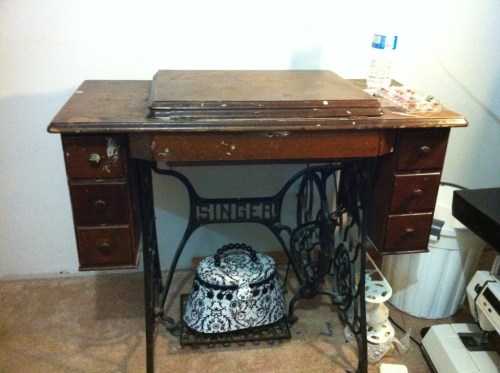
This is the treadle machine belonging to my husband’s family. As with a lot of heirlooms, it’s a bit tricky to say who it actually belongs to, but it currently resides with my Stylish sister-in-law, serving as a table for her Janome, which I’m happy to report is sewing just fine the vast majority of the time.
20121103-101935.jpg

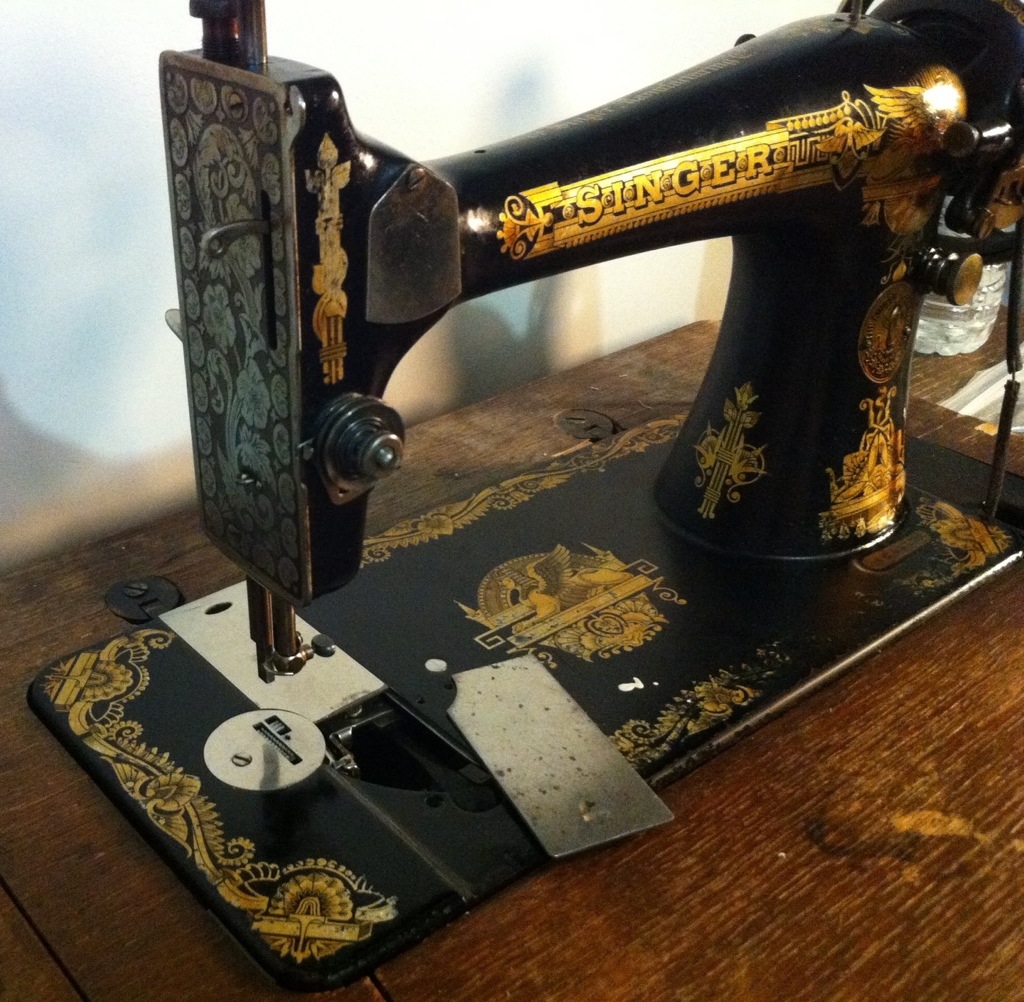
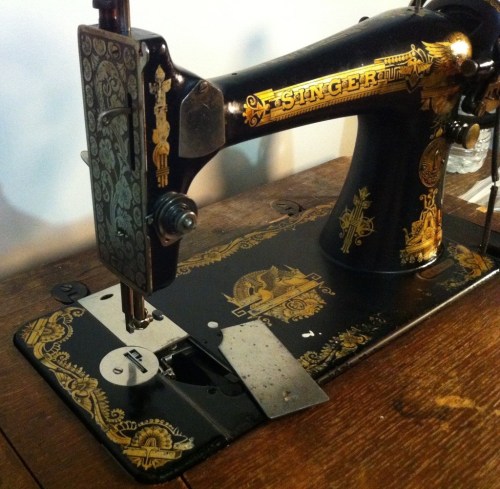
The machine is a Singer, I think a 127, with handsome if slightly worn Sphinx decals. It
was last used by Papa, Stylish and my husband’s great-grandfather, who, I am told, used it to stitch harness and tarps and other manly things. Before that, Nana (my husband’s grandmother) says it belonged to her mother, Papa’s wife, although I don’t get the impression she was a serious seamstress (Papa outlived her by a good forty years, hence the horizontal transfer of “ownership”). Nana seems to think it was likely a wedding present, as its manufacture date, 1924, is pretty close to the time of Papa and Kokum’s marriage. (For those hoping to date your own Singer machine, you can look up the serial number either on the Singer website or the ISMACS one.

The machine lives in a rather plain but sturdy six (seven?) drawer cabinet. The cabinet is a bit beaten up, with veneer lifting on the top and the odd splash of pain over the surface. While the drawers contained many treasures, including plenty of thread, vintage zippers, and what I think is the never-used rolled-hem plate to my serger, it did not contain any accessories or feet for the Singer.

20121103-102105.jpg

The single most obvious problem, when I first opened up the machine, was that it was missing a presser foot. It’s amazing how sad and deformed it seems, just lacking that one little detail. However, my sadness was swiftly relieved when I realized it took just a basic low-shank foot—much easier to find than a replacement for one of those top-clamping types.

20121103-102120.jpg

On first opening, the machine moved (YAY! I don’t think I quite have the chops to tackle a truly seized machine.), but various bits (like the slide cover plates that hide the shuttle and the stitch-length screw) were seized. Although the running was pretty rough at the beginning, once I had dribbled oil in all the oil holes and on everything else I could see that moved, top and bottom, it was running just fine, except that I still couldn’t get the slide plates open to get at the shuttle. It was at this point that my principles went out the window and I grabbed the WD-40. Internet Opinions are split on the evils of WD-40 for restoring old sewing machines, but the most measured ones I found seemed to be that it’s OK for a solvent as long as you remember it’s not a good long-term lubricant. So I’ve mostly tried to wipe it off once I got the bit working, and added sewing machine oil. Perfect? Probably not, but also not the first time I’ve angered the Sewing Gods (it seems to me that the Great Elder Treadling Gods may be more wrathful than the Younger Electric Sewing Gods, but I’m just going to hope that lack of worship for the last few decades has diminished their power to smite me.)

20121103-101921.jpg

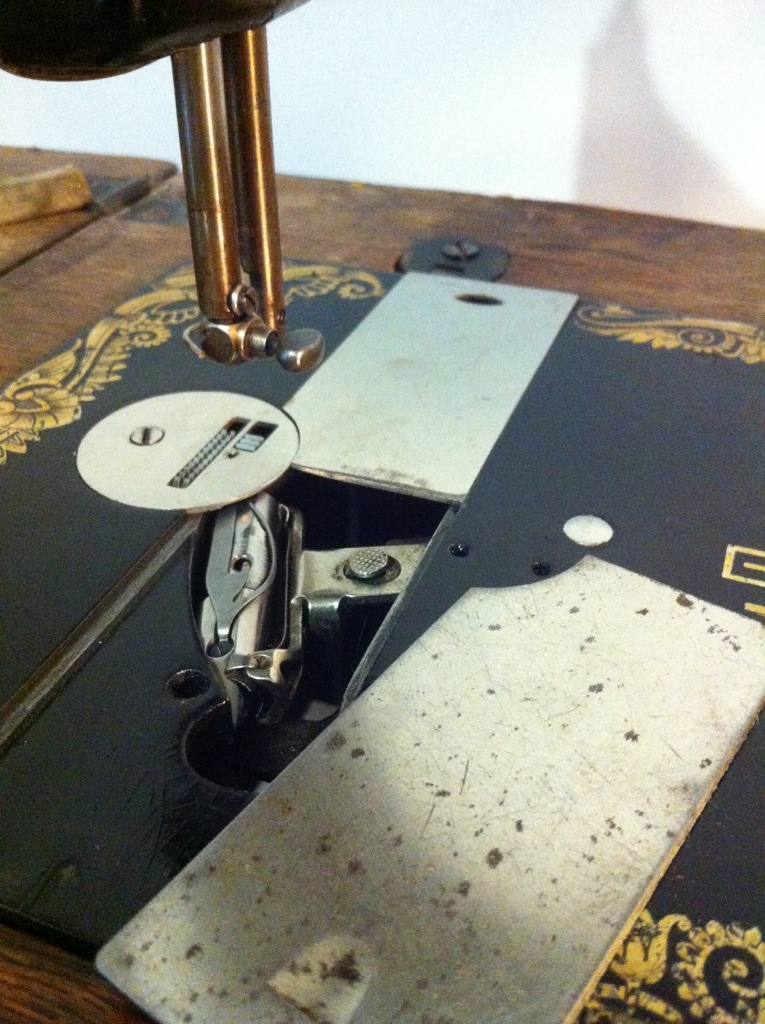
Anyway, injudicious application of WD-40 and judicious application of a mallet and wood dowel (AKA unsharpened pencil crayon) eventually got all the bits off that should come off (needle plate and the front and back slide plates). Unfortunately, the slide plates are really, really tight even after being wiped down; I tried to scrape along the grooves they fit into and clean out any gunk, and I oiled them, and I’m still afraid to put the front slide plate back in lest I end up unable to get it out without pulling out the hammer again. While things like the needle plate and the front plate on the left of the machine only really need to come off for cleaning (and there was really not that much crud behind either), the slide plates are how you get at the shuttle, which holds the bobbin, so really needs to be readily accessible. I’m not sure what to do about that—there’s no rust and doesn’t seem to be much gunk. For those of you as new to treadles as I am, this machine (like my Eaton’s Seamstress, actually) has what’s called a vibrating shuttle. Rather than a short, fat bobbin and casing that goes around like a wheel (OK, I know that’s a simplification), this is a long, thin bobbin and casing that goes back and forth. I’m assuming the rotary version is an improvement, although these vibrating shuttle models were still being made as late as the 50s.

Anyway, after waiting three days to get at the shuttle, of course, I discovered that there was no bobbin within the shuttle at all. Curses! Now, this was not as simple as swapping in a foot from one of my other machines.

Fortunately, a quick nose around Sew Classic revealed a stock of new VS bobbins for Singer models including 127. Woot woot! This is the upside of old Singer machines—you can actually find the bits for them. So, as we speak, this order is hopefully winging its way towards us… and then I get to find out if I can actually make it sew or not. I’ve been watching youtube videos on treadling and how to wind vibrating shuttle bobbins… so here’s hoping. 🙂

21 Comments

Filed under Sewing