A friend mentioned this pattern (off Etsy) and it was cheap and had that cottagecore/hobbit/dirndl look I’m all excited about these days, so I jumped on it.
And… it’s ok.
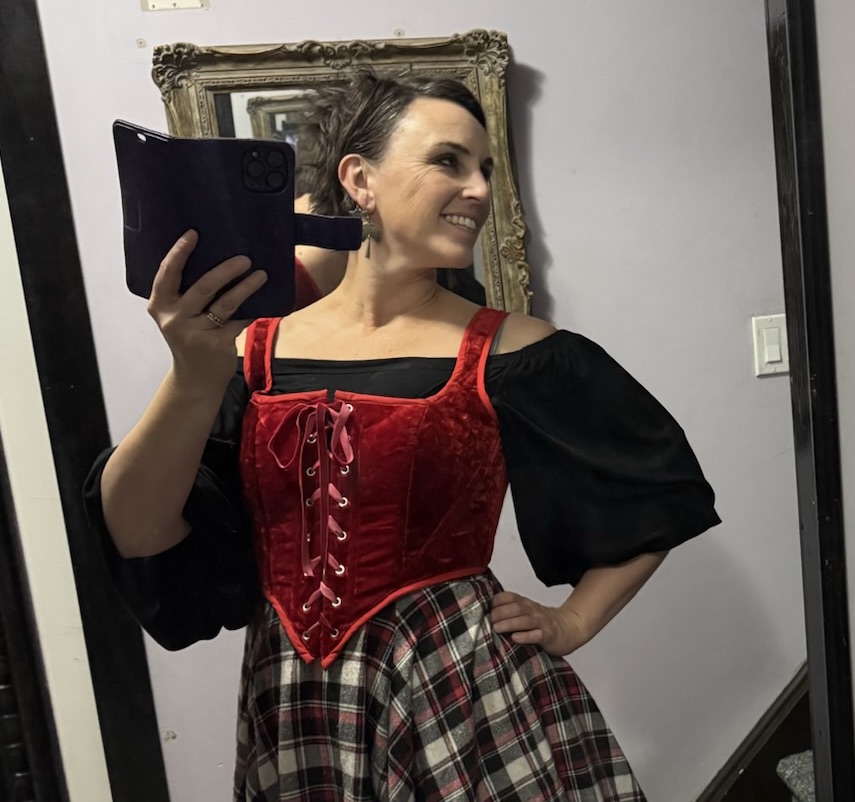
The sizing I would say was true. I was between two sizes and went with the larger, and I think it is a bit large, in that I might like to have a bit of lacing gap in the front, and it laces closed quite easily right now. Other than that I made only minor tweaks, shortening the shoulder straps and reducing their angle, and trimming a bit off the bottom of the back for my swayback; all typical for me.
The pattern has fairly detailed instructions for assembling the PDF if you printed at home… but no actual instructions for the sewing (on looking back at the Etsy listing now I see it mentions a video for sewing instructions. Where that video is I’m still not sure….) Now, it’s not a hard sew, but I’m always interested in the construction choices patternmakers suggest, for corset-type garments in particular. So I guess I should hunt down that video.
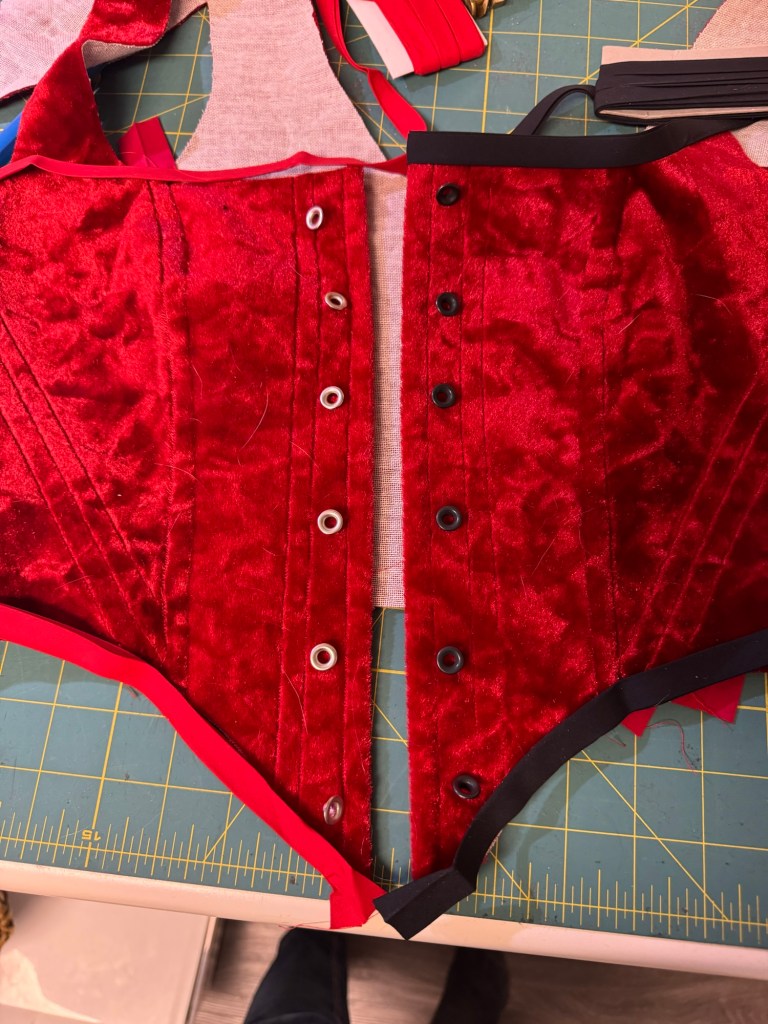
The fabric I picked was scraps of some kind of crushed red velvet upholstery fabric that’s been lurking in stash for aeons, I think a hand-me-down from someone else’s stash. I picked it because I wasn’t too attached if the project didn’t work out, and part of it was already blockfused to interfacing. (Other parts of the scraps are not… I suspect this fabric has its own fascinating story as the interfacing looks like it was applied industrially)
At any rate it made for a quick and easy way to test the pattern out. I allowed for some extra seam allowance in case of fitting issues but didn’t end up using it except for adding boning to the seams. The 1cm seam allowances the pattern comes with aren’t wide enough to put the boning in using the seam allowances, it’s designed to have boning channels added or have the channels stitched between two strength layers. (Not sure which because I didn’t see the instruction video)
I spent some time agonizing over the finishing, neutral silver grommets with red binding or vampiric black grommets and binding. In the end I went the neutral route, hoping for a more flexible garment, although it feels perhaps just a little Mrs Claus. It still pairs nicely with black so I’m mostly content though.
River was very helpful with the grommets.
Construction-wise I did a terrible, half-ass job with the binding, which may have coloured my original impressions of the product. I didn’t want to use the velvet for a self-binding as it’s quite thick, and since this was mostly a quick tester I went with commercial bias tape. The colour match is good but the material itself just didn’t spark joy and I did my second pass attaching it by machine which led to a fair bit of rippling. But it’s bothering me less as I get a bit more distance from it, though I might fix the ends at some point, especially at the front bottom where the angle isn’t at all right.
I might tweak a couple of things if I did it again, like lower the neckline a bit, maybe tweak the curve in the back to be a little wider, and maybe play with the princess seam curve at the bust. And take it in a wee bit. But, all in all, not a bad addition to the more frivolous side of my wardrobe.
She already had a costume, mind you. We’ve gotten into the habit of getting them some fancy storebought costume dresses for their birthday. This year was “winter fairy princesses”… velvet, long sleeves, hoop skirt. Tiny wings that Velcro on the back.
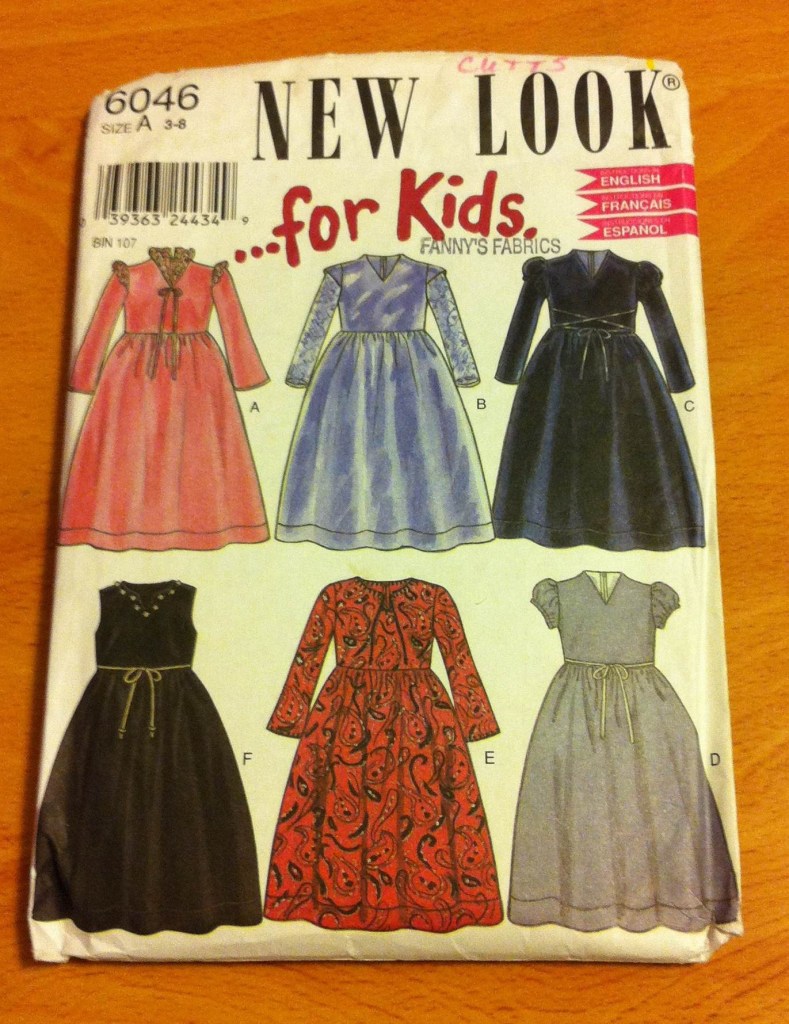
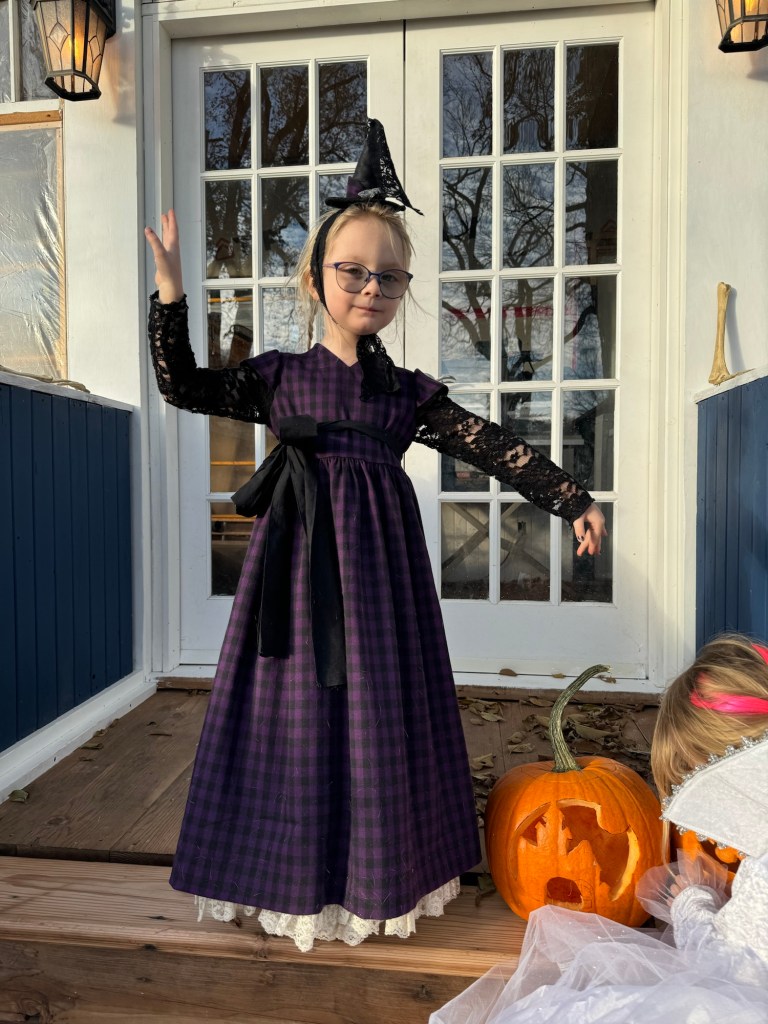
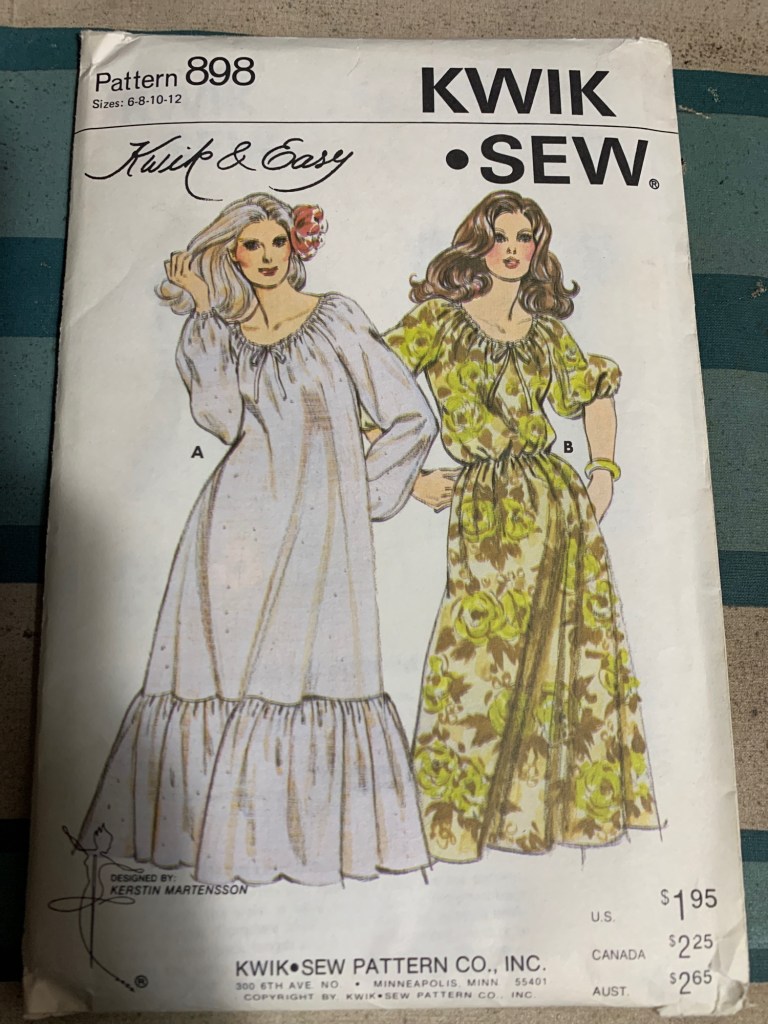
But, sometime in September, she got it into her head that she needed a Hallowe’en dress, and with some bargaining we settled on this Kwik Sew pattern (a hand me down from a friend of my mom’s—thank you Evelyn!), and a purple and black plaid that I think I originally wanted to make pants out of. Or maybe that was a different fabric. It’s a little hazy (which I guess is inevitable given the size of my stash but I always feel like I remember every single piece of it… until suddenly I don’t). In particular, she wanted view B, and my cautions that our fabrics would be a little different didn’t quite seem to sink in.
Waiting for sleeves
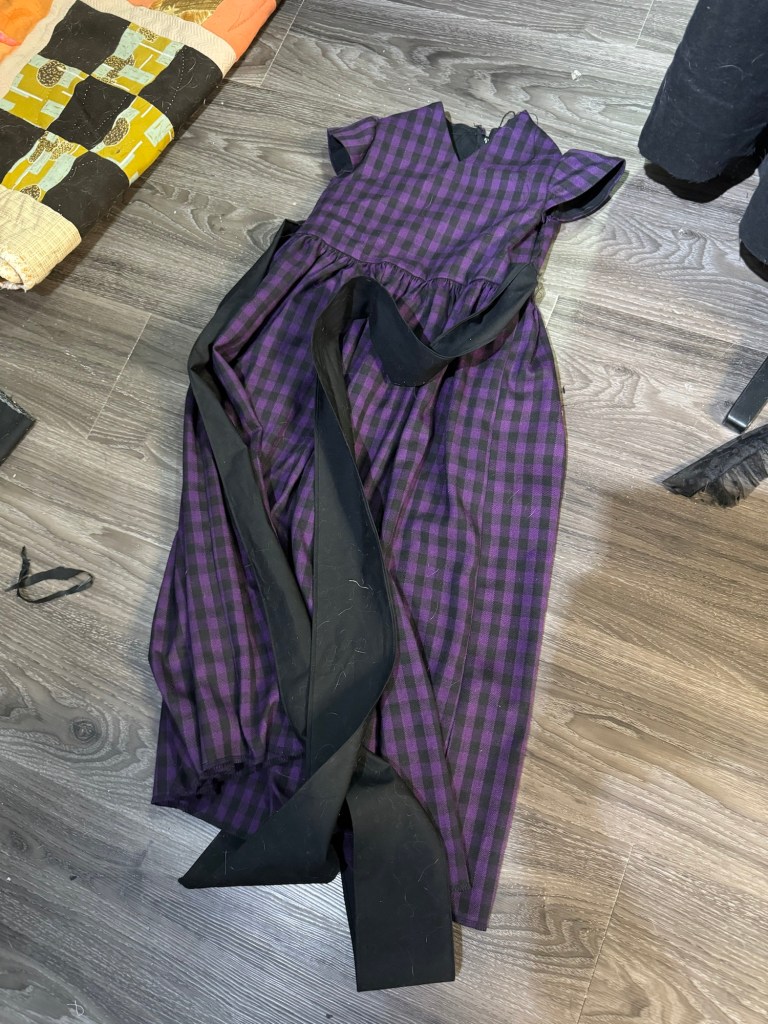
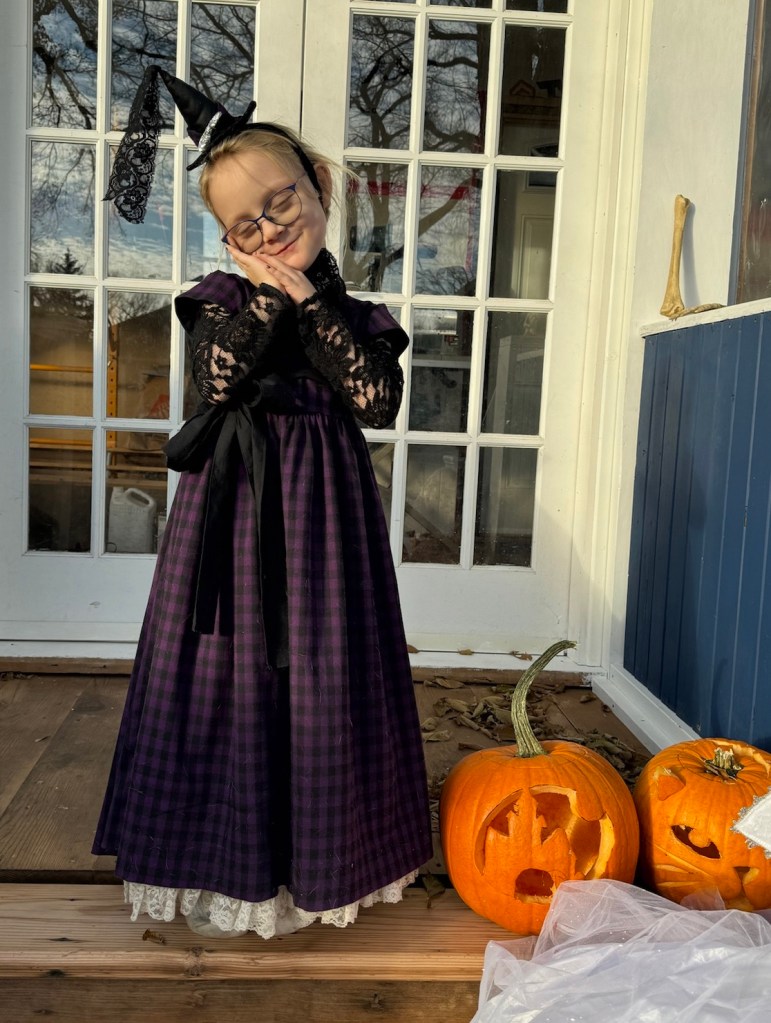
And black lace sleeves. I didn’t get much for construction pics. I used the size 4, roughly, but tried to add length to the sleeves and skirt. The amount of the plaid fabric was very limited, so the skirt is probably a little less full than intended. I’m glad I added the sash ties as otherwise the bodice would be really wide and blocky. I sewed the sleeves with some massive seam allowances to narrow them down, also.
The bodice is lined with black broadcloth, the same fabric I made the ties from. Except I really only used the lining to finish the neckline, which is that unusual standing slit shape, and then the other seams are serged and exposed. I could’ve done a little better with the lapped zipper, but also it’s been an eternity since I did any kind of zipper so I’m just happy I (mostly) remembered how.
The skirt was pretty limp on its own. I’ve been meaning to cannibalize the hoops from their costume dresses to make a nicer hoop that could be worn with multiple dresses, but haven’t gotten there yet. So I grabbed my old, and sadly compressed, fluffy ruffly petticoat, tightened up the waistband elastic, and it’s the perfect length for a five year old. Well, maybe a smidge long.
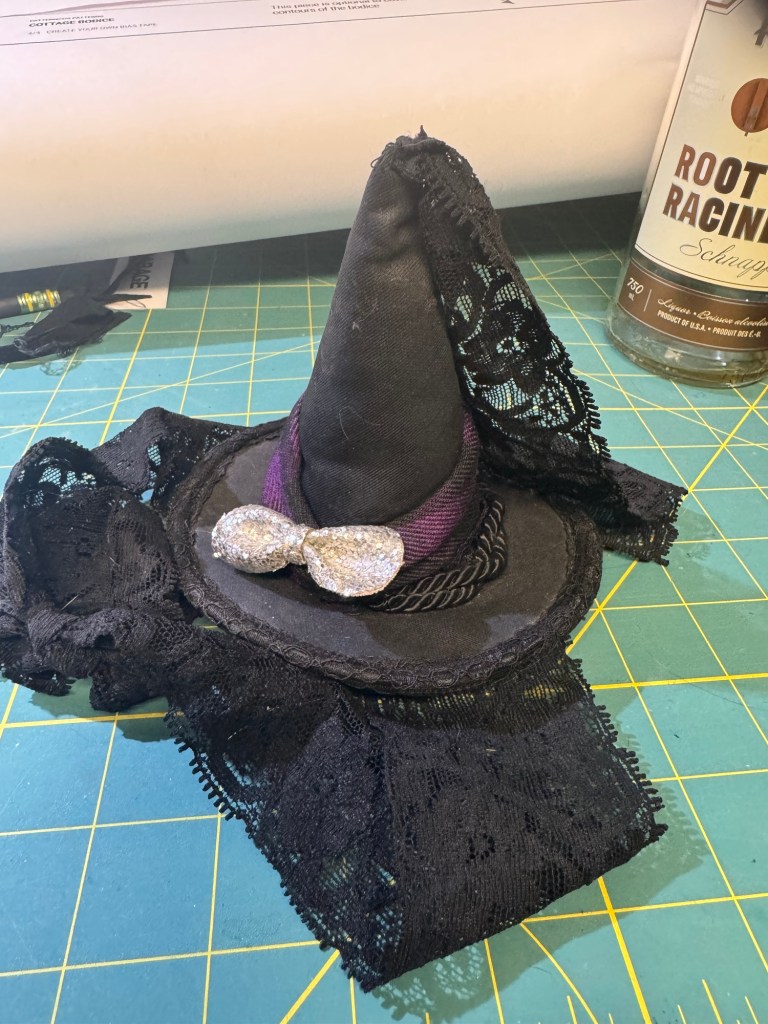
To really sell the witch look I added a scrap of the purple fabric to the teeny witch hat I made for my Hallowe’en outfit a decade or so ago, and the real miracle here is that I could actually find the little hat. Tris would probably have preferred a full size witch hat, but considering how little time I’ve had to sew this fall, and the dress itself was finished at 10:30 at night the day before Hallowe’en (despite being started in September) that was not going to happen.
I do think it turned out pretty cute, though, and she wore it all day at school (since I wouldn’t let them wear their hooped dresses to school.)
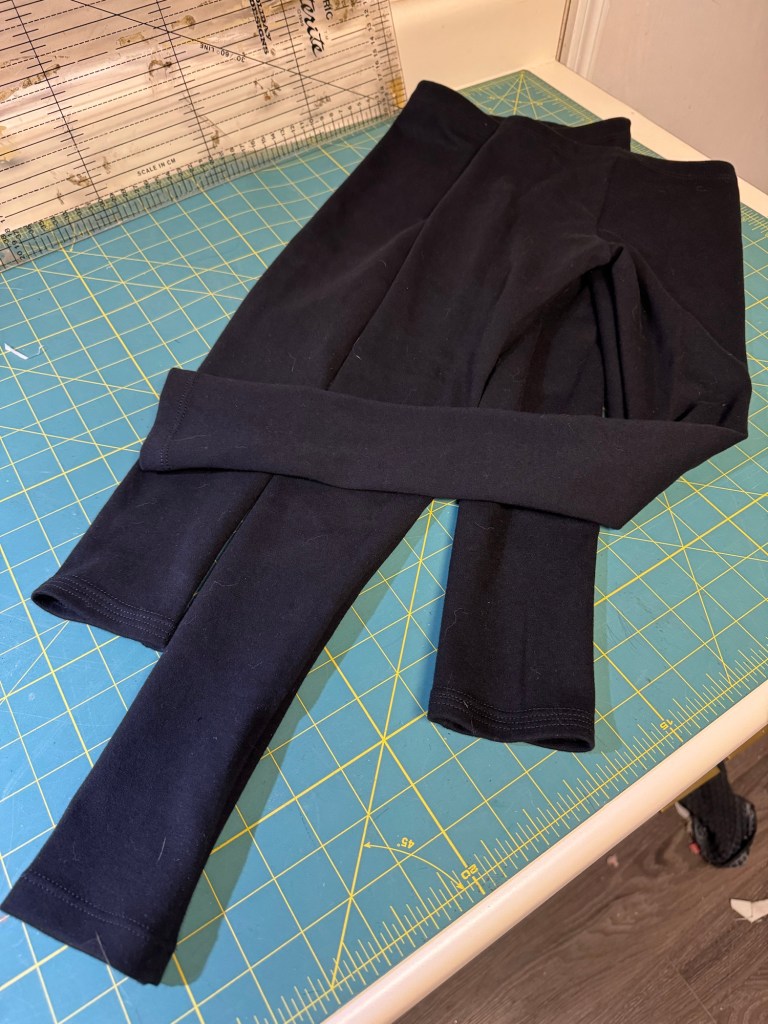
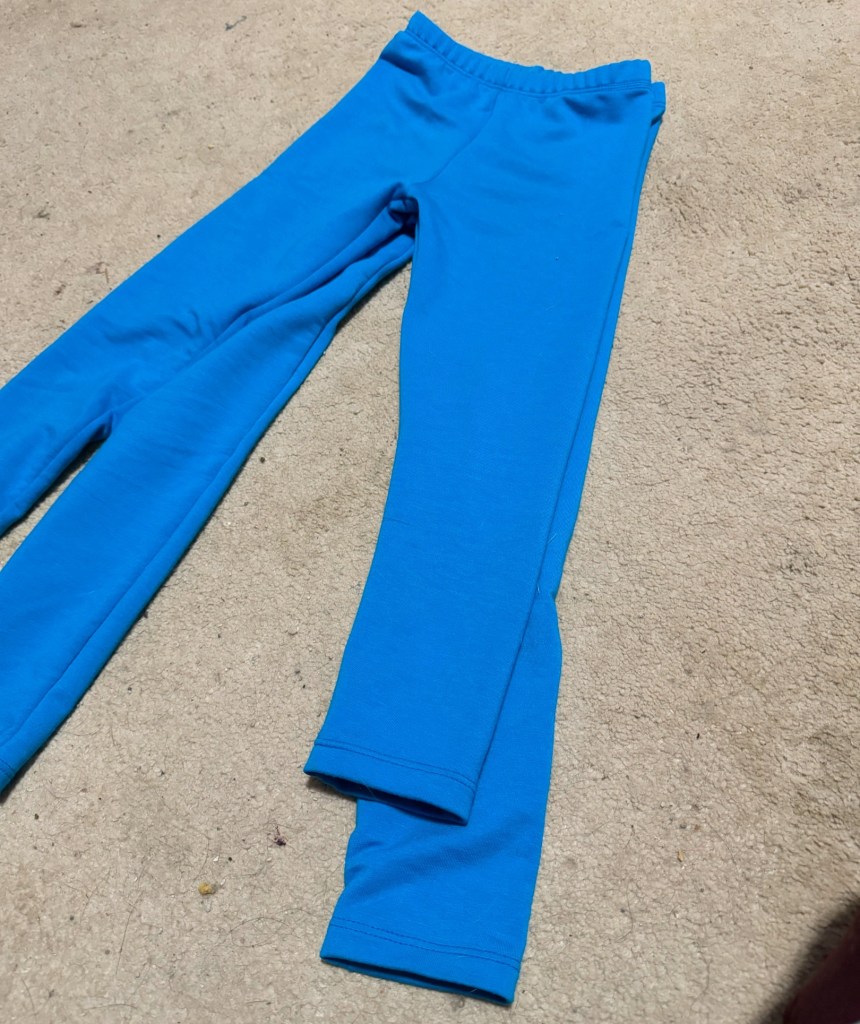
Other than that I’ve been making them leggings. Tris is apparently all leg, so the storebought ones aren’t really cutting it, at least not for keeping ankles warm. These were all made with my old standby, Jalie 2920, with a substantial amount of extra length added.
While making leggings is a bit underwhelming in terms of creativity, they remain pretty much the only thing it’s faster to sew than to shop for, and getting to choose nice beefy fabrics (the black are some kind of heavy cotton interlock and the blue are a super-stretchy French terry) and knowing they’ll reach the twins’ ankles is more than worth it.
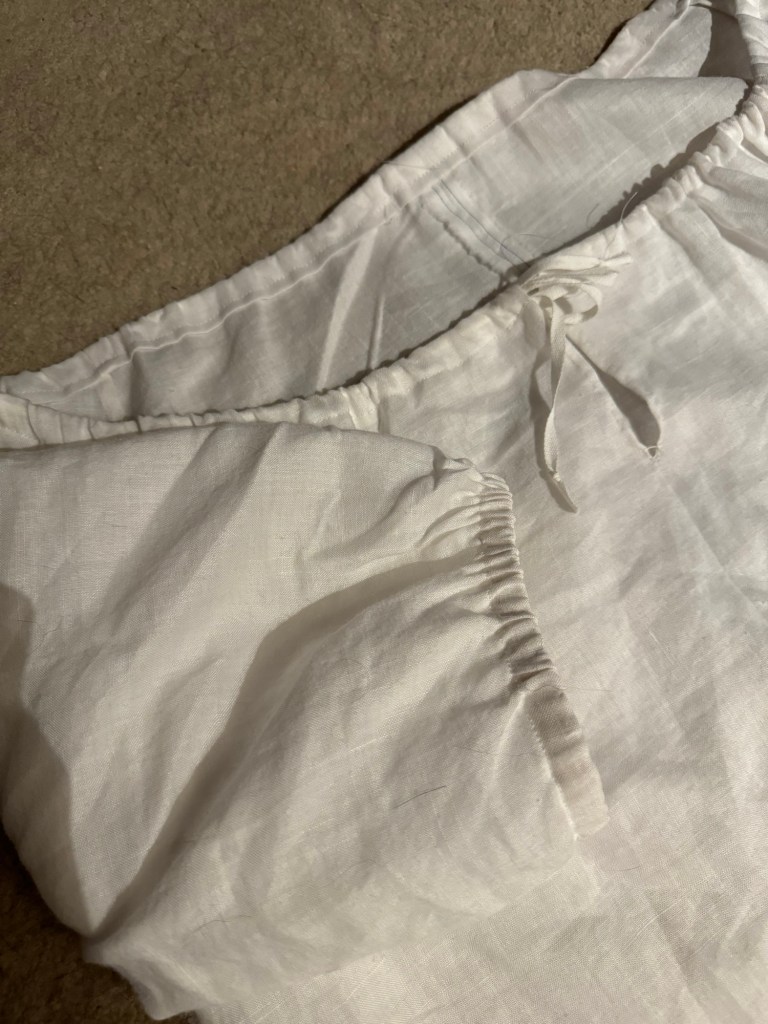
The first commercial pattern I ever sewed, the first thing I sewed for myself, in fact, was a peasant blouse. I’ve made the occasional one since then, usually for costume purposes, but none are in my wardrobe currently. But as soon as I made my corset-stays, I knew that was what I wanted to go under them; most of my other shirt necklines just weren’t quite right. So I dug out my stash of lightweight white linen, found a chunk left over from some other project (it actually might be the ramie left over from my Fiona dress, but visually it’s indistinguishable from the mass of featherlight linen I have hoarded over the years, just maybe not quite as soft in feel), and went to it.
The pattern I selected was the vintage Kwik Sew 898. Now, you will observe from the illustration that a) this is a dress, and 2) the illustration looks far more voluminous than my final result. The envelope I have only goes up to a size 12 (which I am larger than), but when I opened it up it turns out it was also cut, to a size 8 (which is not only smaller than my current size by about 10”, but is smaller than I’ve ever been as an adult.) So obviously some on-the-fly grading was in order.
However, I had pretty much decided I was only going to sacrifice the one remnant (not much over a metre) of fabric to this project, at least until the pattern was tested and I knew if I liked it. So, without thinking to hard about it, I cut the sleeves as is from the irregular “had another project cut out of it” end, and then fitted the front and back body pieces onto the remainder, opting for a back seam to minimize any fabric waste. I “graded” the body simply by putting the pieces as far from the edges of the folded fabric as I could, which probably got me an extra 4” or 5” over the width of the whole project. Enough that it’s not skin tight, at least, but not the full 10” I’m lacking. So the lack of volume probably has more to do with inadequate grading. Oh, I did raise the underarm seam about two cm, but that’s pretty much a habit for me.
Once the cutting was done, the construction was simple, although it didn’t get accomplished quickly as I didn’t have much time. I French seamed the seams, and overlocked and then folded over the sleeve hems.
My main departure from the pattern was adding a short slit to the front, which I hand-finished, including adding that little thread-bar near the bottom that you see in 18th century shirts. This let me avoid adding eyelets or buttonholes to the neckline channel to let my drawstring (my favourite 1/4” stay tape) through. I also folded the neckline down rather further than the 1cm the pattern suggested, to create a more open neckline.
I added elastic to the ends of the sleeves, and that, pretty much, is that.
The total shirt length I ended up with, dictated purely by the length of fabric I had, actually comes to about my knees, almost a chemise length. I have toyed with the idea of adding some gathered tiers to the bottom to create a built-in petticoat effect, but I feel like I might just be better off making a separate linen petticoat/skirt (something that has been on my mental list all summer, in fact). Either way, I have to work up the stamina to tackle gathered tiers.
But in the meantime, this was a fun quick little project, and I think the result will actually fit quite nicely into my wardrobe.
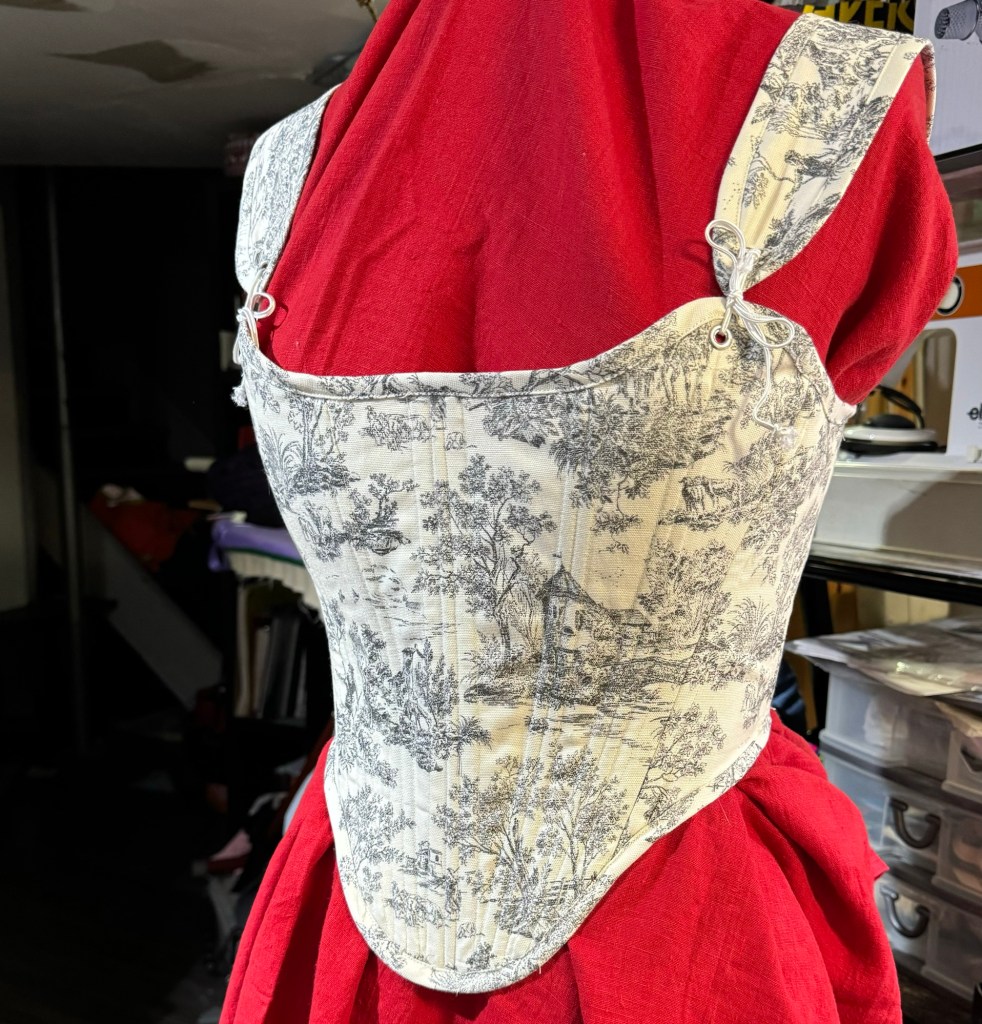
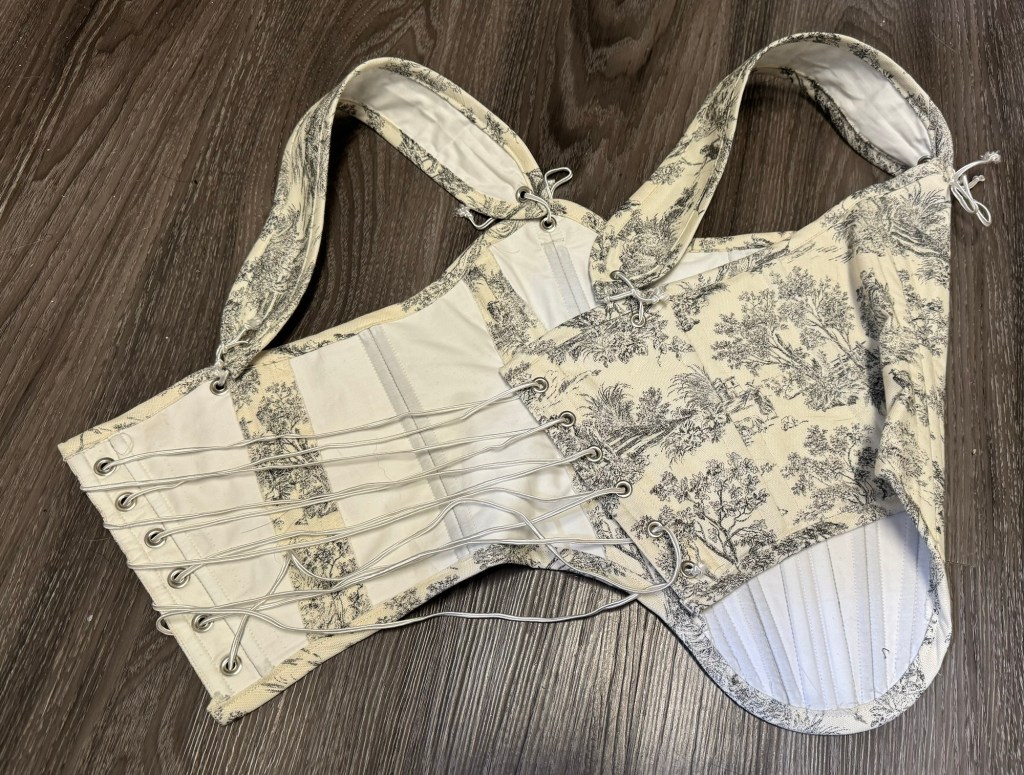
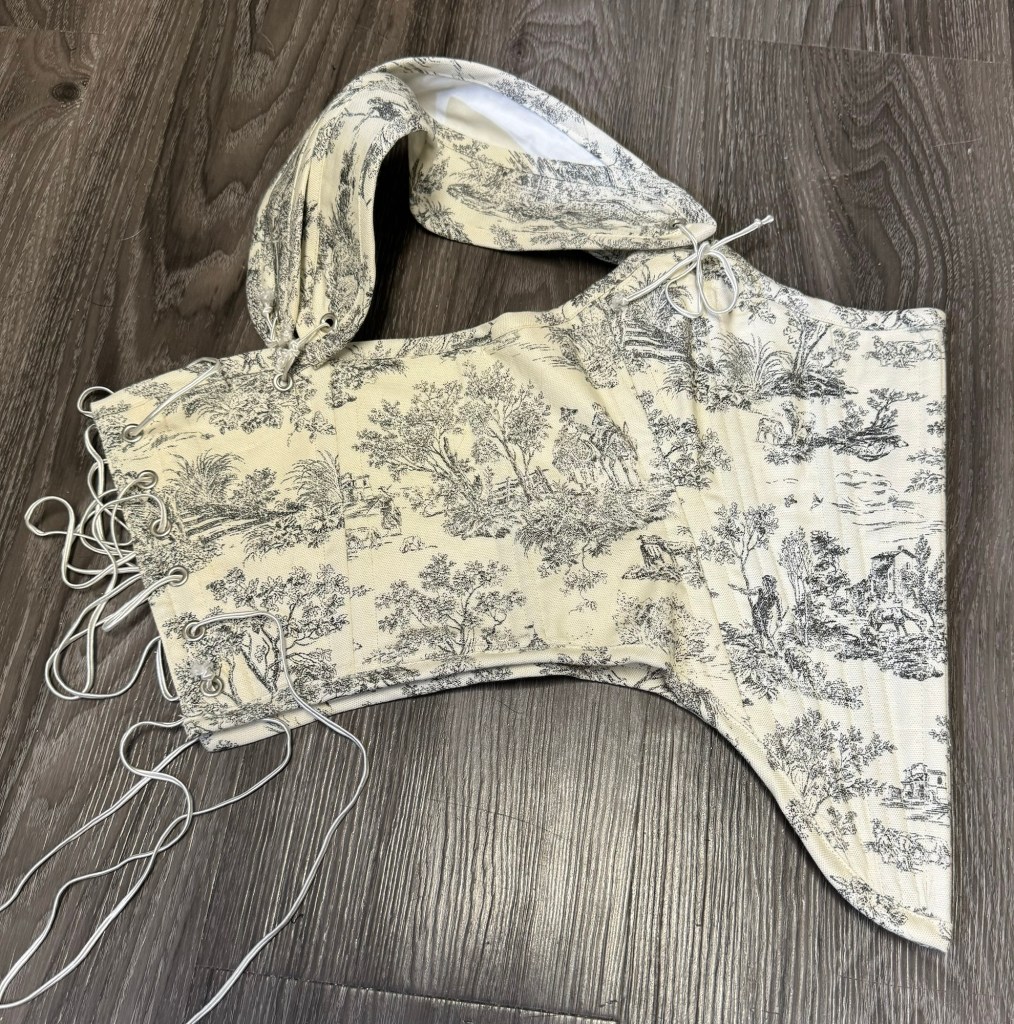
For the last year or so an urge has been building. To make… not exactly a corset, not exactly stays, but a boned, fantasy bodice. A little mediaeval tavern wench, a little bit Ren Faire… and, let’s face it, a lot cottagecore.
I couldn’t quite settle on a plan, however. What pattern? How historical do I want to be? I have Butterick B4254, the 18th century view of which I haven’t made. I have the Scroop Augusta Stays, which the internet at large seems to agree is an excellent pattern. But what I really wanted was something a little more romantic and whimsical. Outer wear, not underwear. Something a lot like the creations of French Meadows, whose Instagram posts help keep my feed suitably aspirational.
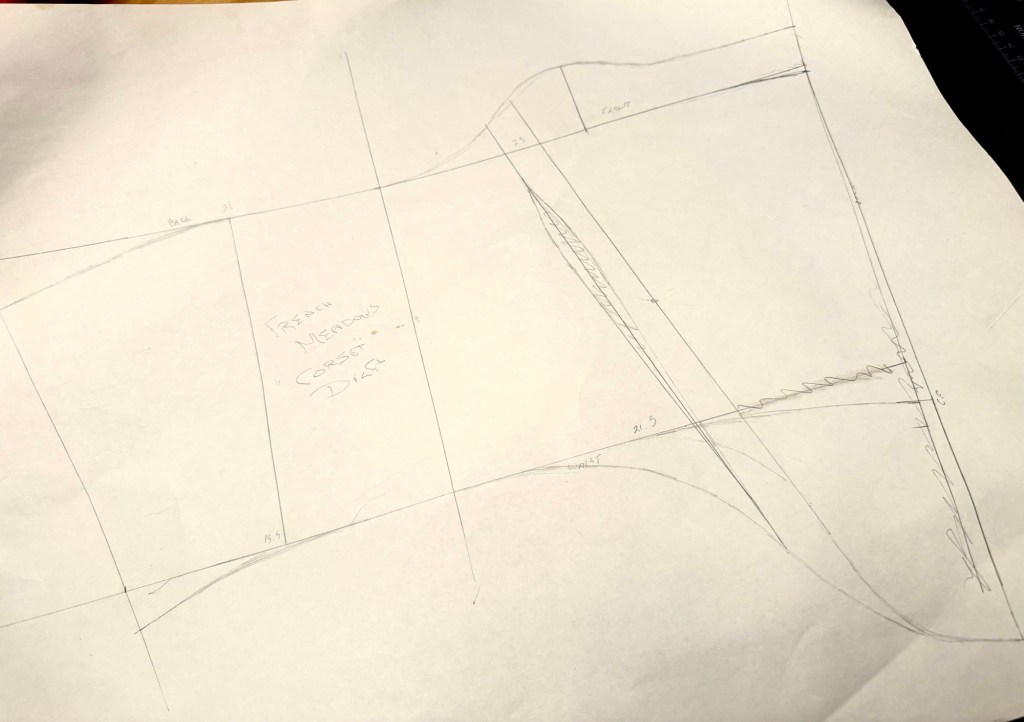
I have to say, her method (based apparently on instructions in Janet Arnold’s Patterns of Fashion 5, not one of the two volumes I own), worked pretty well. There’s a fair bit of art mixed in with the math of it all, but I can’t say I mind it. The draft itself just produces a kind of flared curve, which you then add details such as the front V, nubs for strap attachment, and other seams as desired.
Once I had it drafted out (which took a while since I have been so time-poor this summer), I decided to dive right in. I made extra-wide seam allowances and just went for it, figuring I could tweak the other features as I went.
As it turned out, my tweaks were quite minor: I added a bit more shaping to the side/bust seam, and I took in the side/back seam by about 1/4” on each side. When I make it again, I think I would narrow the front piece (and widen the side correspondingly) so that the seam is closer to a princess seam so I could add the shaping right there. It’s not historical but I do like the look for a fantasy piece like this. And I might add a bit of a swayback adjustment (raising the bottom of the center back), something French Meadows mentioned as an option but which I didn’t try.
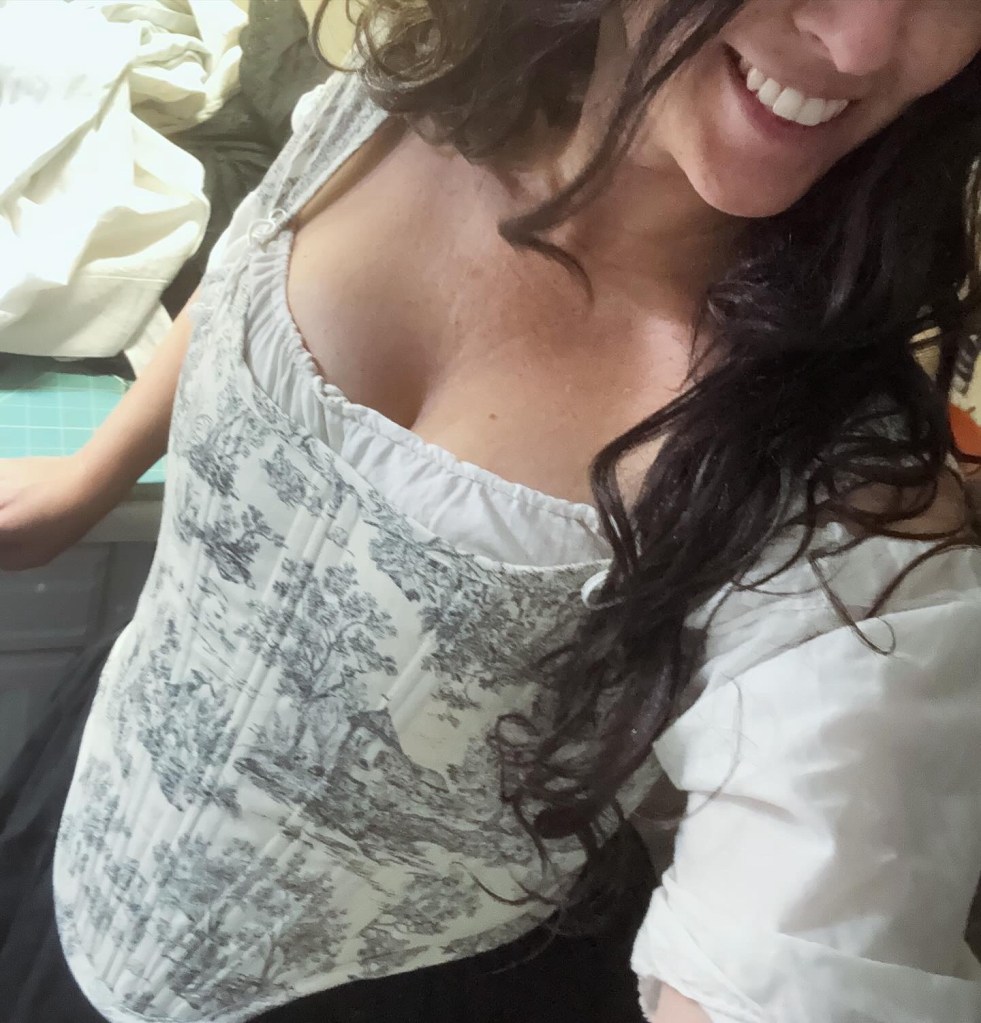
But all in all, considering how arbitrarily I added my style elements, I’m pretty darn happy with it. The nubs where the straps tie on are in a good place and the front V only needed very minor reshaping. I had initially raised the front about 1” above the bust line but I did drop it down a bit between the strap tie nubs.
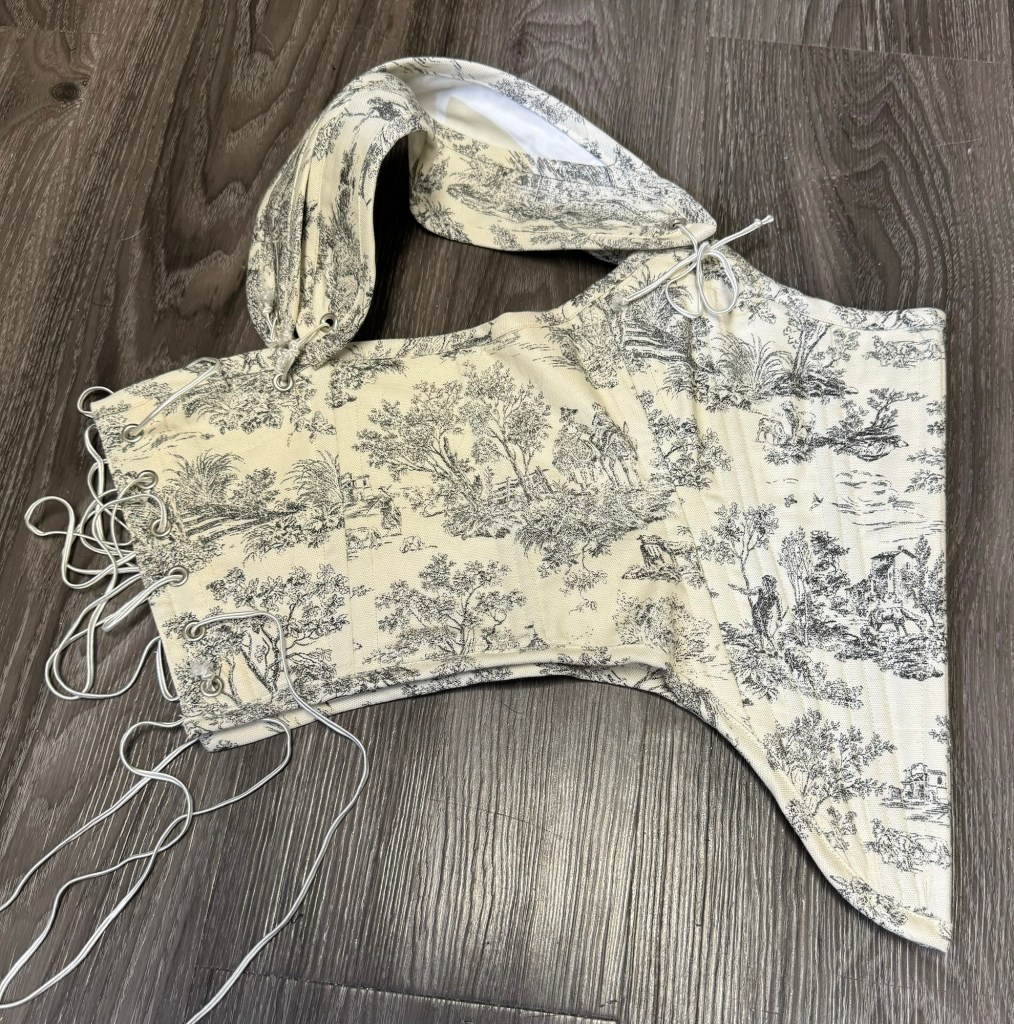
In terms of construction, I wanted to make something cute but not too precious. I opted for this toile de jouy print upholstery fabric (I thought it was cotton but it’s pretty soft and slippery and frays pretty badly… I should maybe do a burn test), with two layers of ticking as a backing. Ticking is nice for lightweight corsets and mockups as it doesn’t stretch, and two layers meant I could sandwich bones between the layers and add more channels on the fly as needed. (Turns out I needed an extra set of bones in the front). I used the same fabric for the bias binding, which I just attached in a single machine pass, rather than attaching the front by machine and finishing the back by hand. Again, for this fantasy piece the topstitching doesn’t bother me. And I managed to catch the back almost everywhere, which is always nice.
I did manage a decent mitered corner on binding on the front of the straps, so that turned out well.
I did initially play around with a wooden busk (aka ruler) for the front, but it seemed bulky so in the end for this non-historical piece I went with some of my heavier 6 mm spring steel boning for the front, which keeps it nicely flat, and spiral steels for the rest (except around the lacing, which is also spring steel, as usual).
I would like to swap out the soutache currently serving as strap ties and the back lacing, as it’s a little too slippery to hold how I would like. And I should make some slightly shorter versions of the straps so Syo and Tyo can wear as desired.
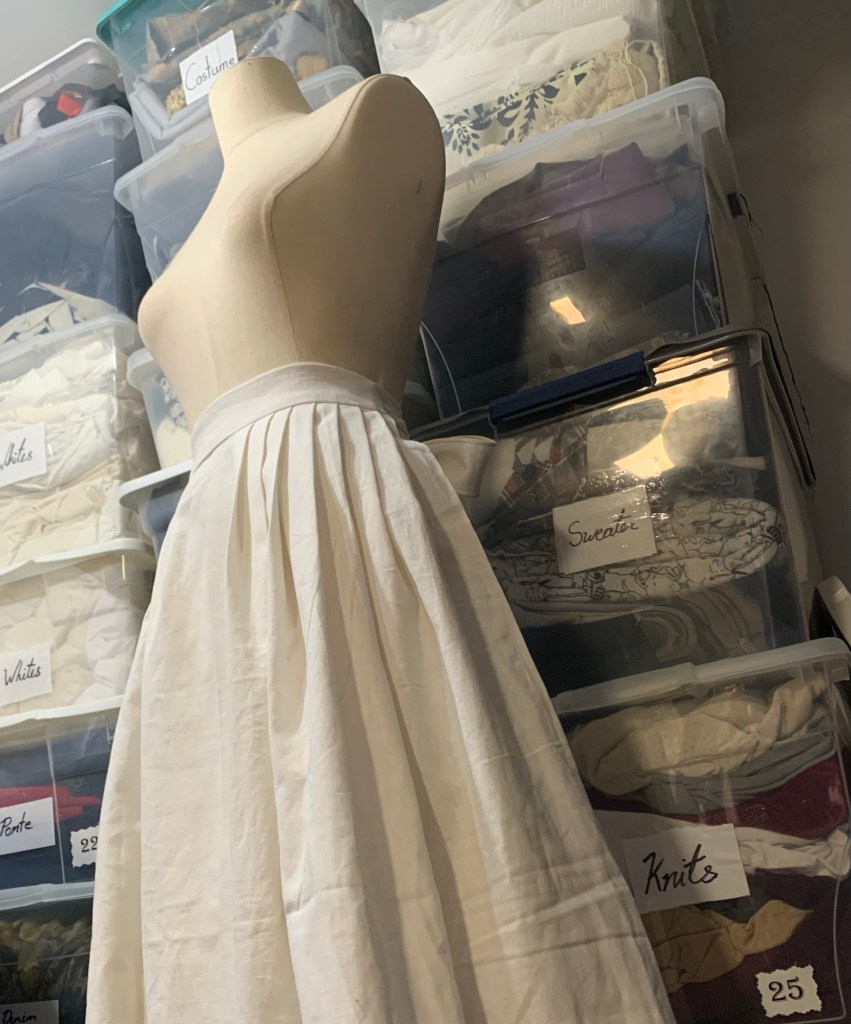
I am faced with a conundrum, however. For basically the first time in my life, I’m wanting skirts that are either gathered or pleated at the waist, as that seems to be the style that goes best with this kind of bodice. Mind blown. It’s not a style that works at all with my uncorseted body.
Oh, and I had to make it its own blouse to go underneath, but I’ll give that its own post.
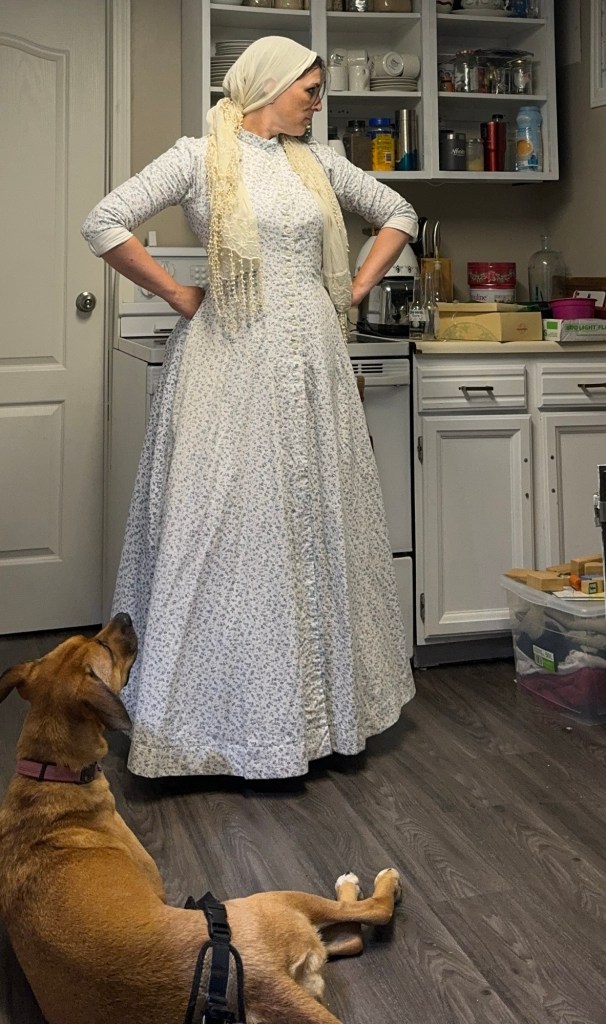
My Victorian Sewing Circle group put on a “Victorian chores” day back in July, so I needed some Victorian work clothes.
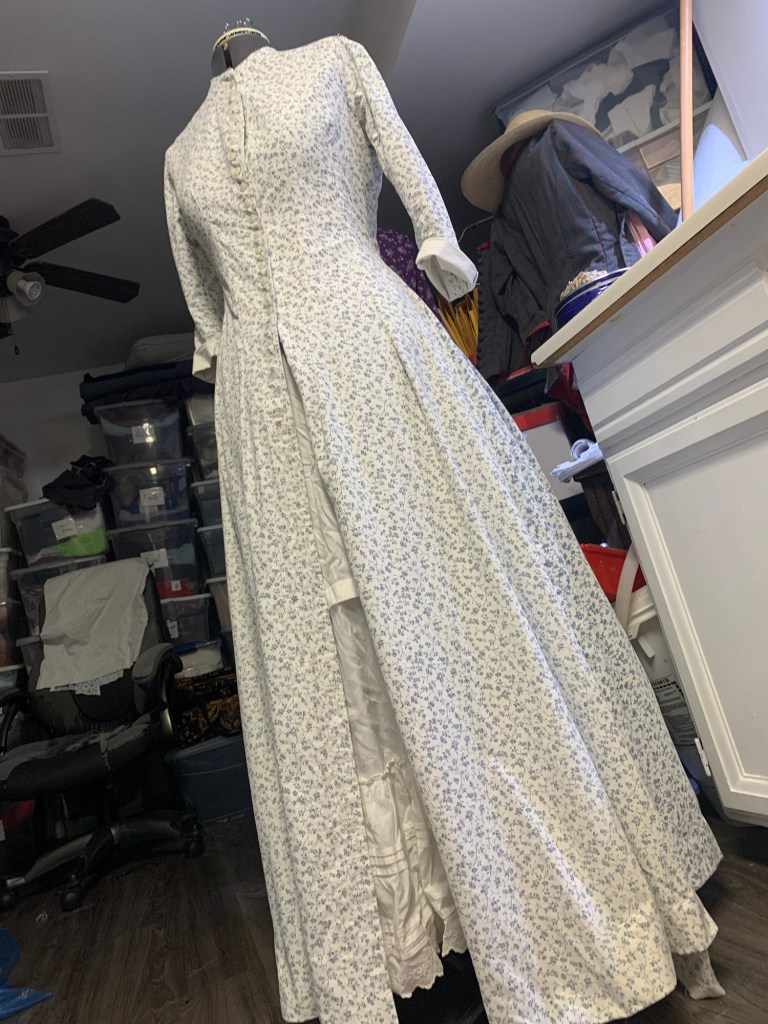
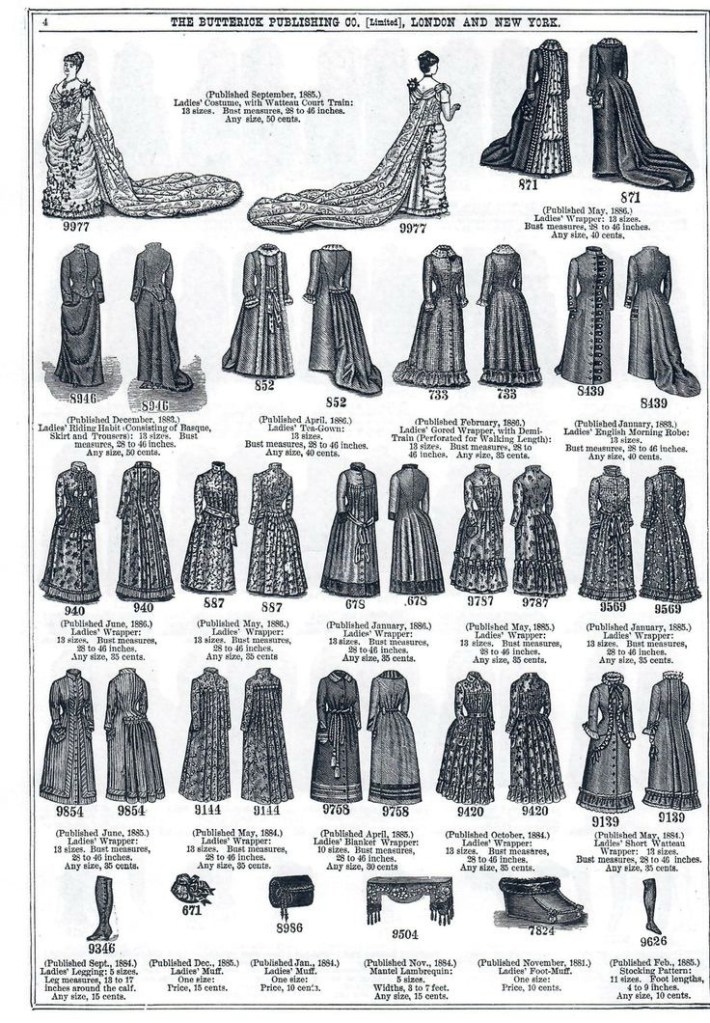
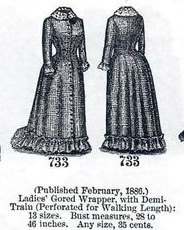
I could’ve gone with the Folkwear Prairie Dress of course, or even the pattern I worked out for the tea gown’s undergown, but instead I decided I needed a “Ladies gored wrapper”… something along the lines of #733 in this Butterick pattern catalogue page.
Ok, a kind of pared down version, anyway. I have a few scraps left that I could maybe turn into ruffles if I get ambitious.
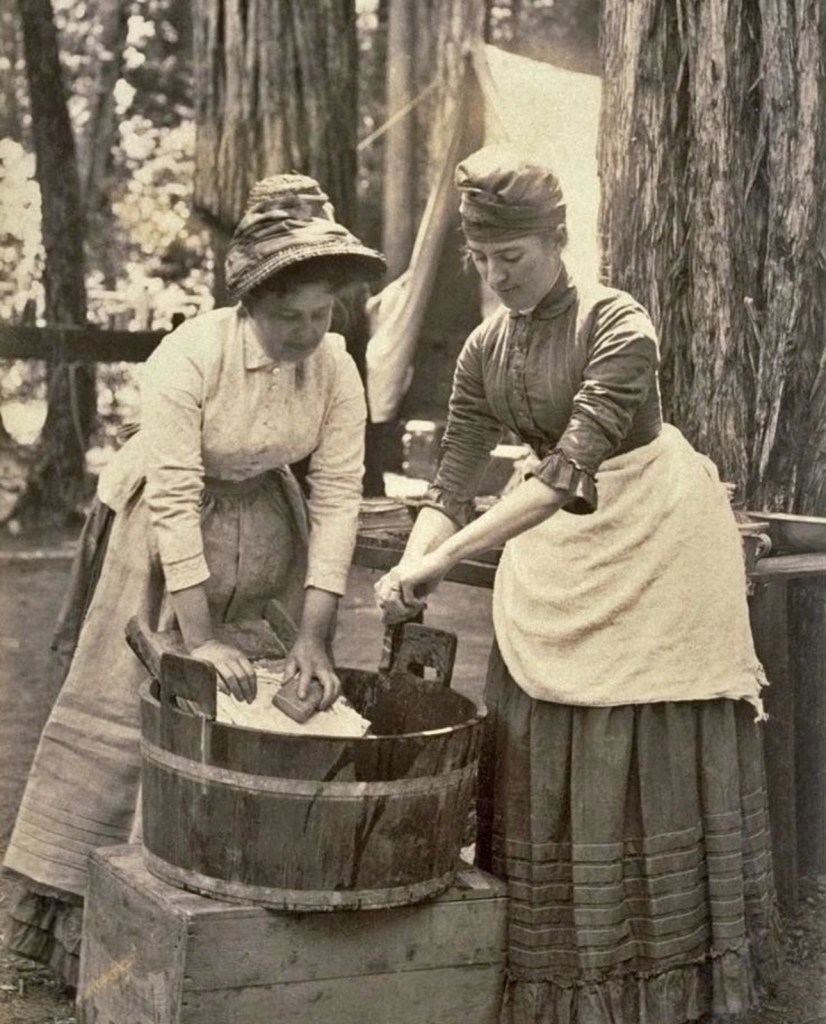
So, a work dress but not a complete sack. I’m inspired by this image, though again I can’t find a very good source:
(Though, I don’t think either woman is actually wearing a wrapper)
(But what is a wrapper, you ask? Well, aside from the things labeled “wrappers” in the advertisement above, this article has a quick section on them. Basically, it’s a one-piece dress, front fastening, looser than a going out dress and often adjustable. Key for my purposes, they are intended for wearing during breakfast and morning chores. They could also, probably not coincidentally, be worn easily while pregnant, although not so much the style I went with.)
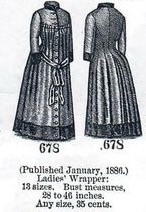
For my pattern I used my same Truly Victorian bodice, but extended into a skirt like I did for the Elven tea gown. I used the diagram above (both pictures are off Pinterest with no particularly helpful source) as inspiration, except looking back I only used it for the front piece, for the back I basically used the tails of my pattern but extended into a full skirt length. (Like #678 in the page above).
The outer fabric is a cotton Tyo found me a couple of years ago (I think at a thrift store). It came in the form of two panels (bedsheets? Table cloths?) someone had made from regular, probably quilting, cotton, by seaming two widths of narrower cloth together. There was some pretty marked wear on portions of the panels, and while it’s a pretty print and colour and old-fashioned-looking enough to be plausible (at least to me) I wasn’t sure how I would be able to use it for a “real” dress. But for a costume of a work dress it’s pretty much perfect, even if the worn patches don’t really line up with the kind of wear you’d get from being a work garment.
I realized 0.5 seconds after I cut it all out that I could’ve just as easily had the back pleat come all the way up on the outside and had a wateau back like several other dresses on the Butterick page… but anyway. I didn’t. Which probably makes it a better work dress, but a little less fun.
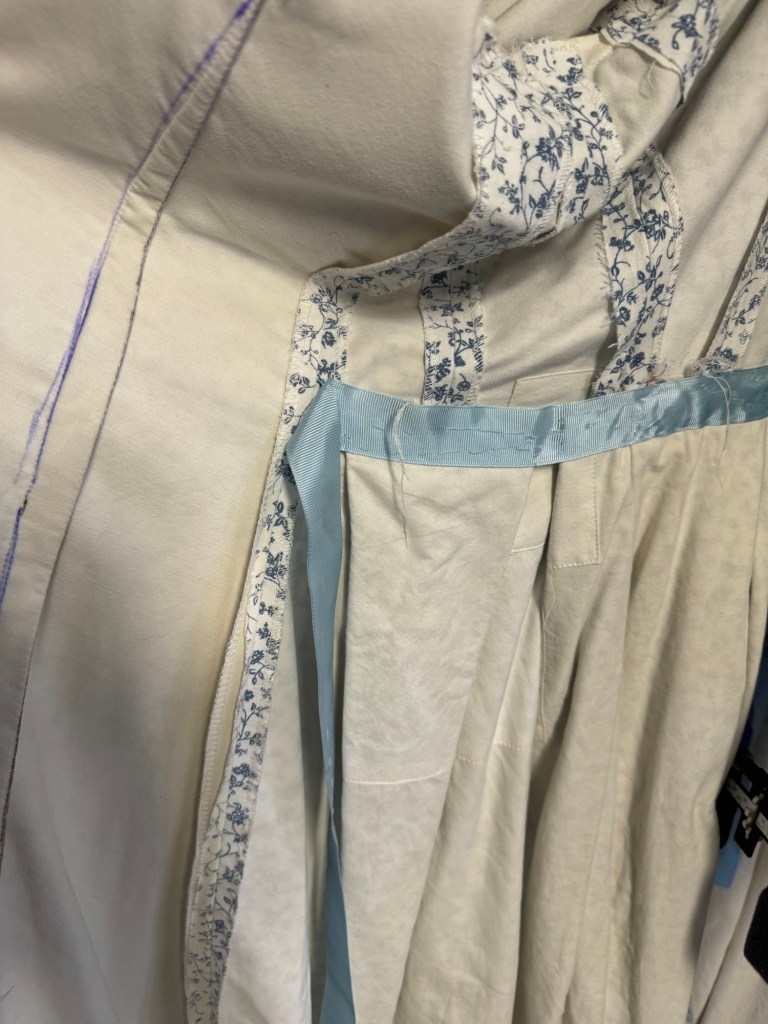
For my lining I used some old (and very, very worn) bedsheets that were really fit only for making muslins and then rags. There was a lot of piecing involved there due to tears and holes in the sheets, and I imagine this will be an ongoing issue in the life of the dress, or would be if it were an actual work dress instead of an impression of a work dress.
I was under a real time crunch making this dress so a lot of things I would normally finish by hand I did by machine, including the blind hem and the front facings, which I topstitched down. It isn’t noticeable on the busy print, fortunately.
I even attached the buttons by machine, something I almost never do. I spaced the buttons pretty closely, which is period but I feel like I could’ve gotten away with just slightly further apart. I put on 24 buttons just between neck and hips (and then decided I would just wear my apron so the skirt could stay buttonless for now. Apparently leaving your wrapper skirt unbuttoned to show a bit of fancy petticoat was also a Look, although maybe not a work dress look.)
Unlike my other Victorian dresses, there is no boning in the seams, as this kind of dress needed to be washable. I did add a waist stay, as much to cover the raw insides of the skirt pleats as anything.
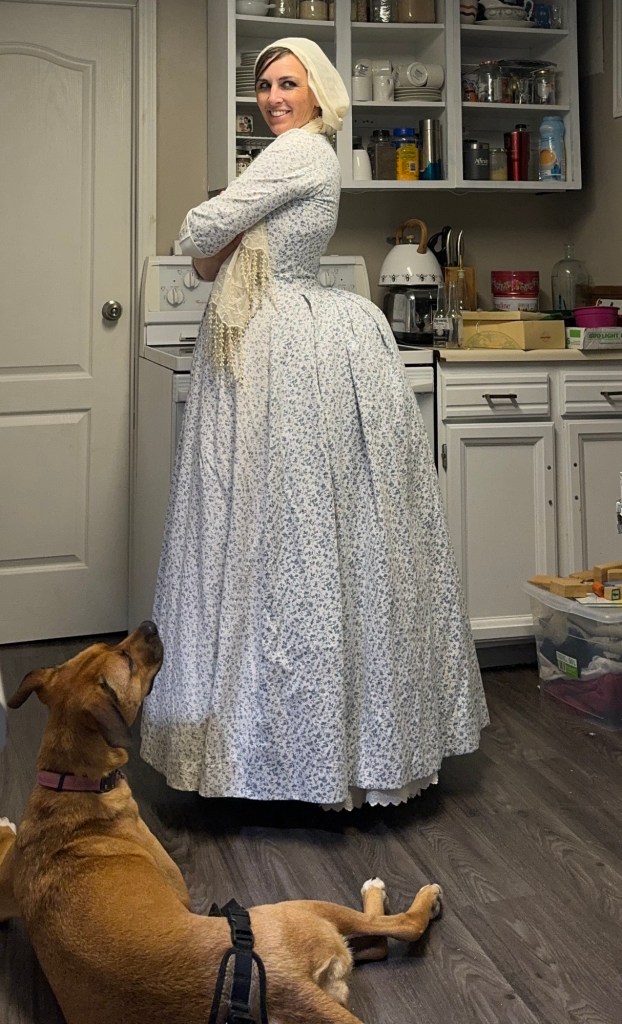
The dress as a whole does fit (snugly) without a corset, but I vastly prefer the look with corset. I also hemmed it to go over the bustle, since I mostly favour 1880s looks. Or I thought I hemmed it for a bustle, it looks like it curves up a bit in the back in these pics. While wearing a wrapper over all the undergarments you would need later in the day was apparently correct, I do rather wonder if a woman on laundry day would’ve bothered.
Other casualties of the hurry: I need to readjust the gathers at the tops of the sleeves. They are concentrated a little too far back which is creating some pulling. Also I didn’t have time to put in a pocket (unforgivable in a work dress), and the sleeves aren’t even hemmed, just rolled up. There is a moderate-sized rectangle of fabric left that I would like to turn into a little ruffle, for the bottom of the skirt if possible but the sleeves if not. (And yes, you’re reading this no earlier than September, so obviously some time has passed since I finished the dress. And have I gone back and fixed these niggles? Of course not!)
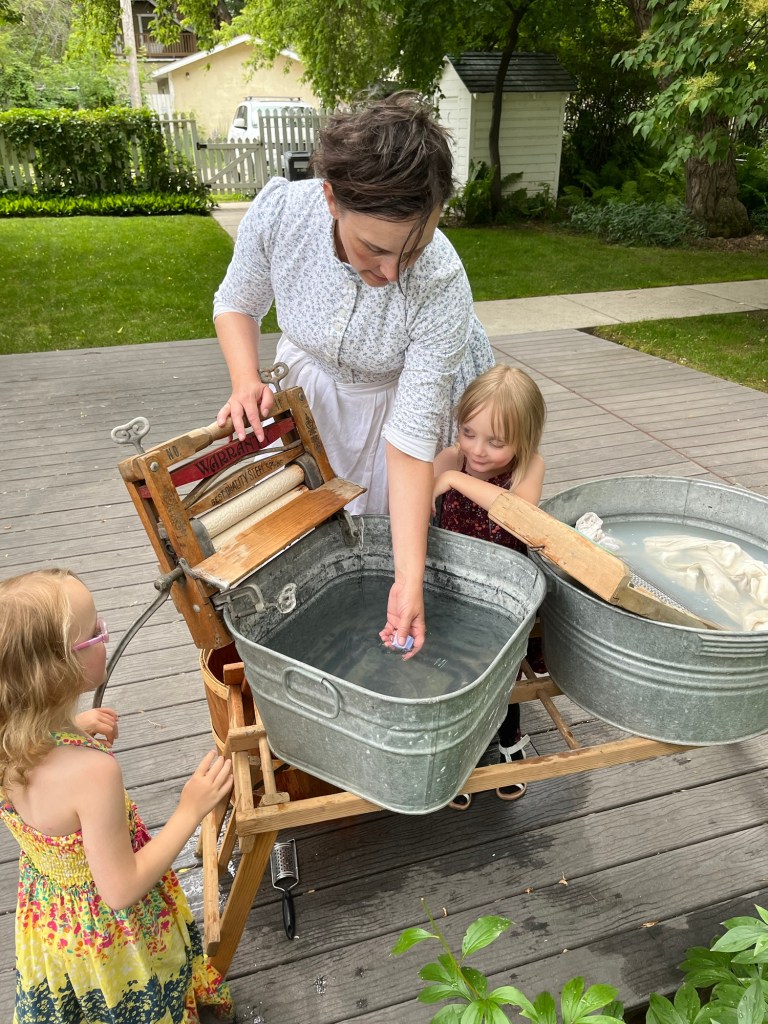
Laundry day itself was fairly successful, at least in that most of the stuff came out cleaner than it went in. It was the first laundry day done at the Marr Residence in ten or more years, I think, and there was a lot of cleaning of the washtubs and other equipment before it could be used to clean clothing. The mangle has a bit of rust in the mechanism that kept dripping reddish water across the rollers, so we had to be sure that was wiped away before running clothes through.
Adding bluing, sewn into a cloth, to the rinse.
The twins had the most fun, running a couple of rags through the mangle endlessly, as well as grating soap and scrubbing on the wash board. Several years of dirt got washed out of my petticoats, particularly the flannel one that I’ve been wearing in real life the last couple of winters. I also did a bit of starching, including testing out a “coffee starch” on my black petticoat, although I didn’t get as far as ironing any of it.
So all in all a successful day, and a nice addition to my 1880s wardrobe. Now I just need a work bonnet.
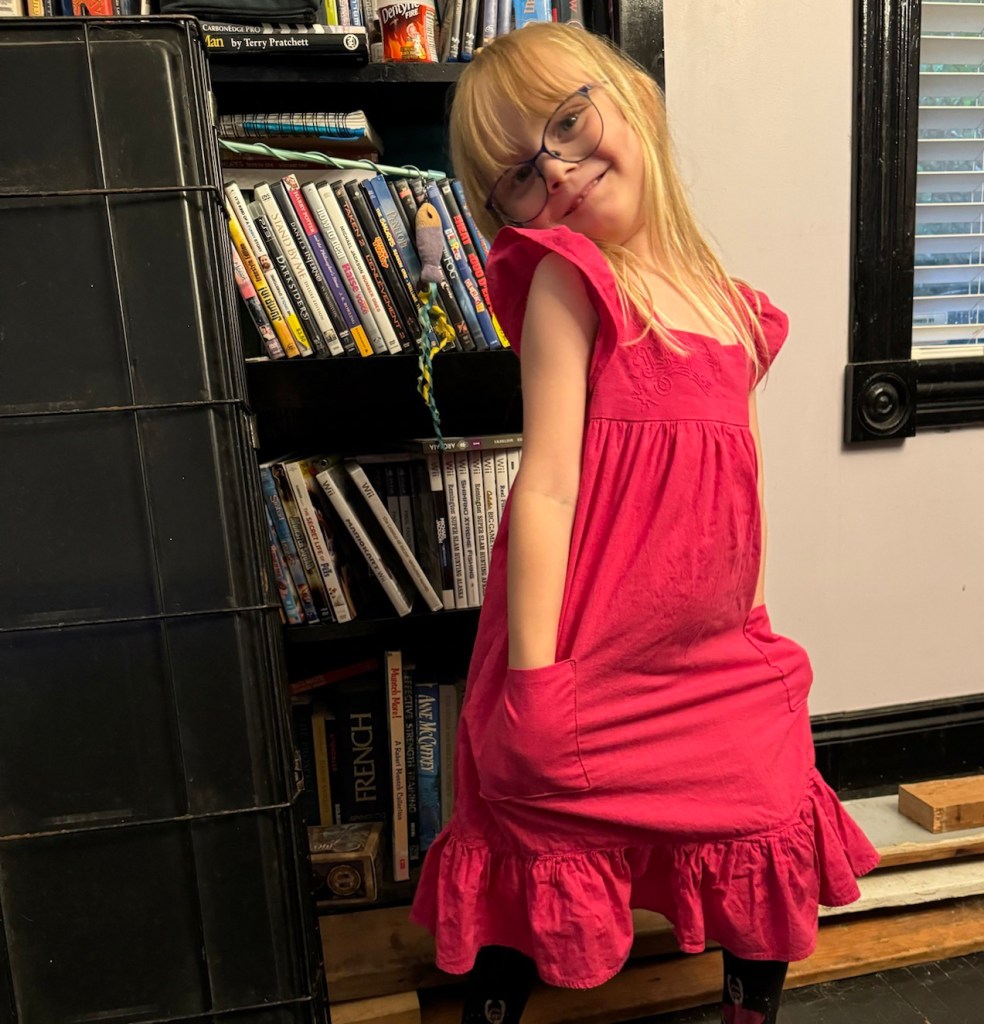
A few weeks ago, I had to entice Tris back from her auntie’s house with the bribe of sewing.
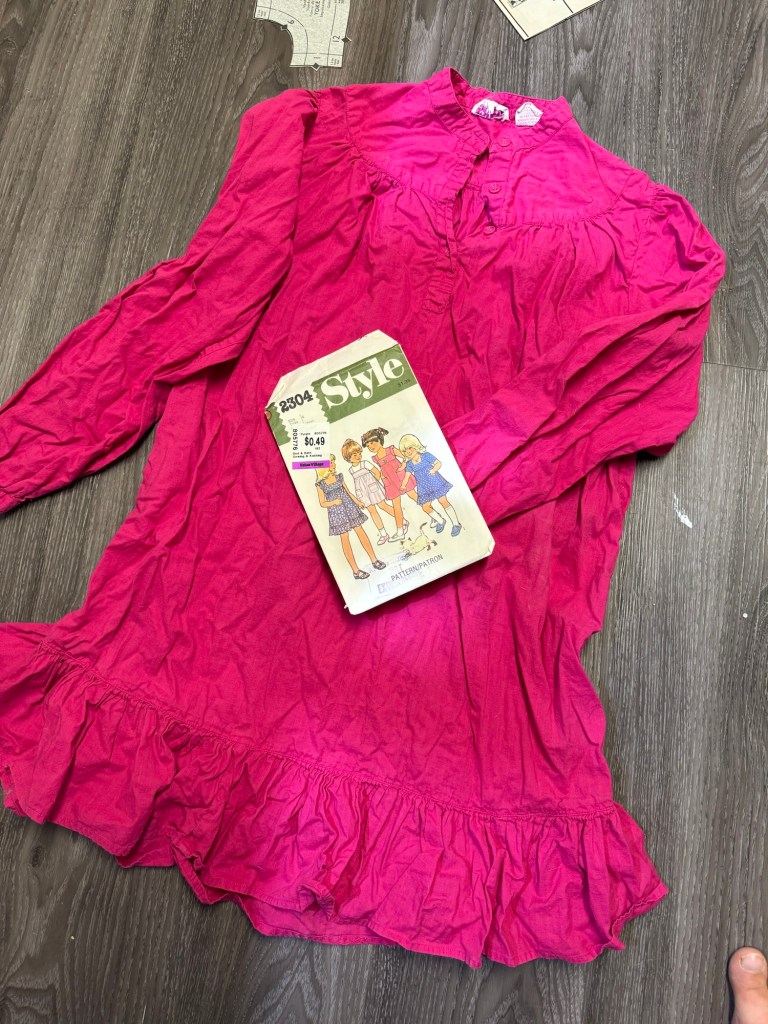
We settled, after much wrangling (four year olds are highly creative in their project concepts, but very low on practicality and, well, taste) on transforming this old, eye-wateringly hot pink, blouse (donated to the cause of children’s wear by my aunt), via a 1970s Style pattern:
I thank that long-ago pattern illustrator for including a bright pink version otherwise I would not have gotten her to go for it, I think.
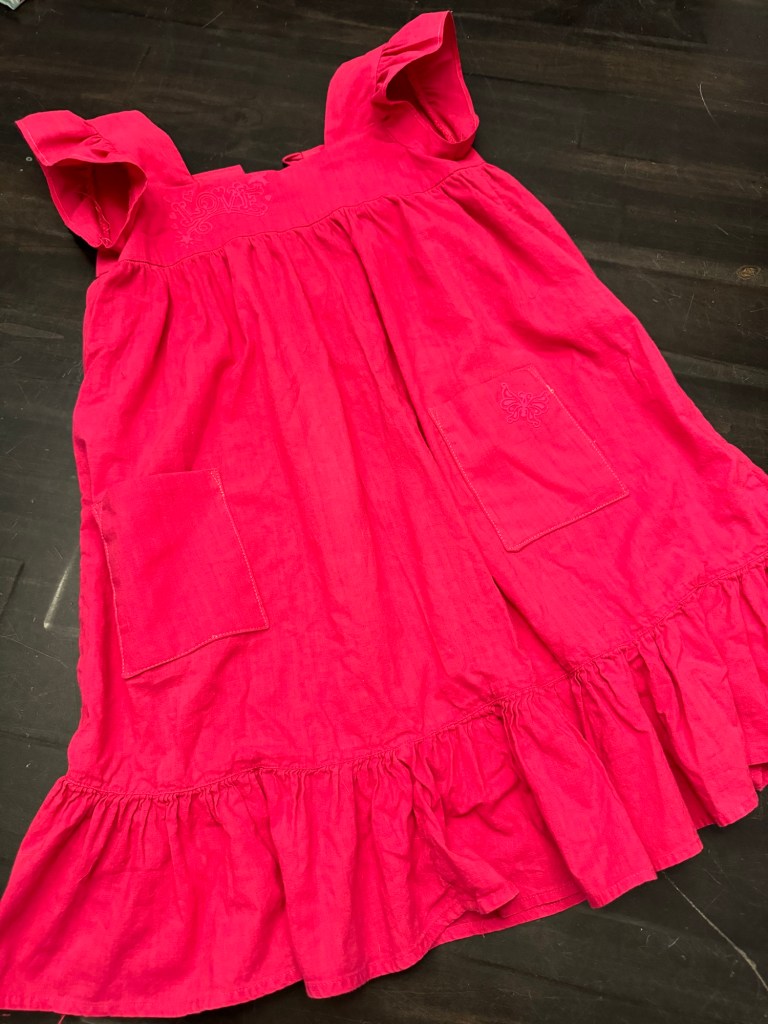
I started by cutting the blouse off just below the armpits. This gave me a nice chunk for the skirt, with ruffle already attached! All I had to do was cut the bodice pieces out of the sleeves and remaining portion of the upper shirt. The fabric, by the way, is a really lovely soft light cotton, otherwise I would be far less excited about tackling this project. It was lovely to work with.
The colour hurts my camera sensor
It’s been a while since I sewed a 70s pattern and they really are the peak of pattern making. A zillion notches to keep everything lined up perfectly. Meticulously detailed instructions. (Can you tell I’ve been sewing with Victorian-grade instructions for a bit?) This pattern even has each seam numbered on the pattern pieces so you can sew them in order.
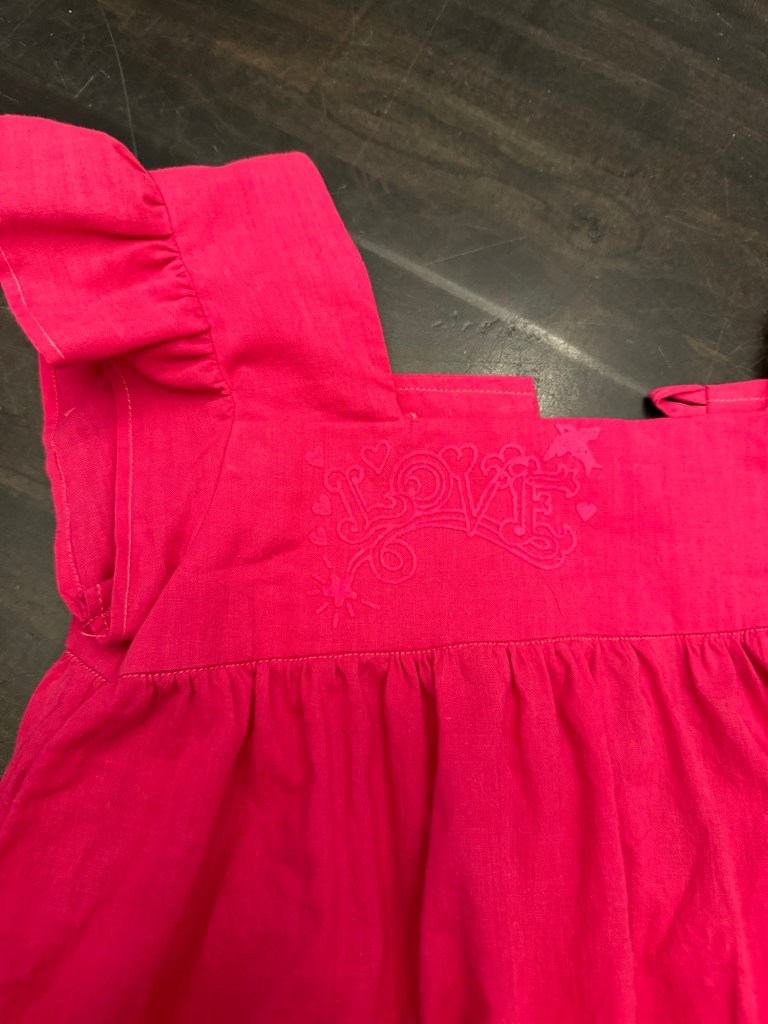
If you look close you can just barely see the hot-pink iron-on flocking motif on the bodice.
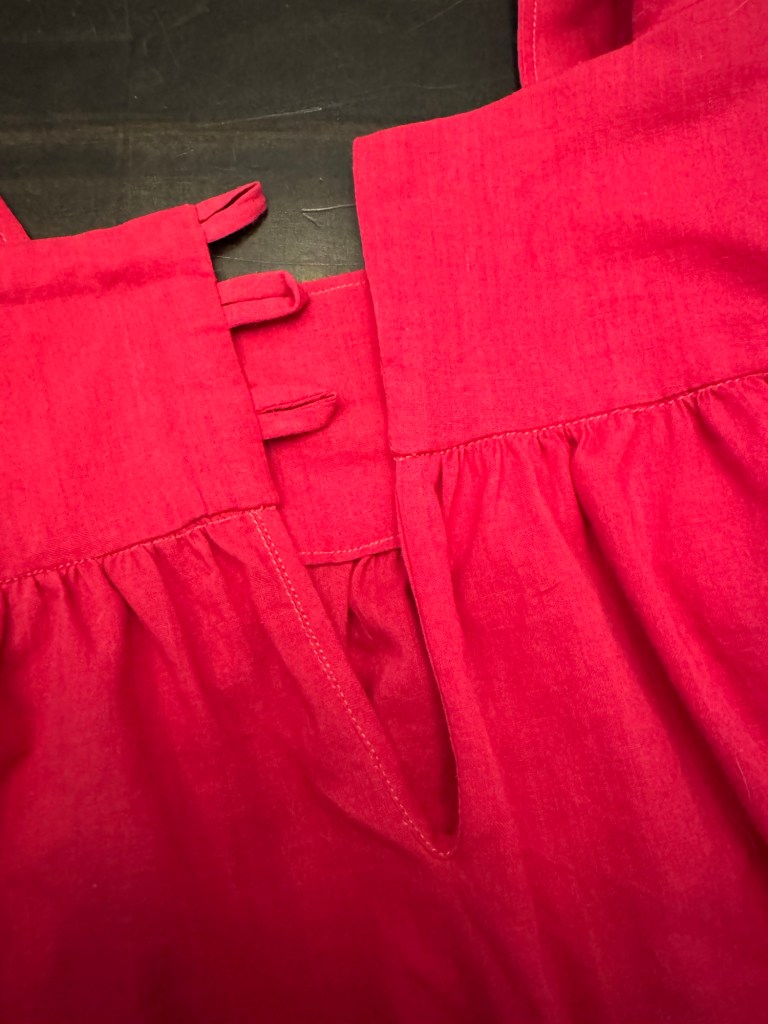
Now, I won’t say I followed all those instructions, but it’s lovely to have them. I spent a bit too much time trying to settle on the best way to line the bodice with the little ruffle sleevelets, which I originally thought were just shoulder ruffles but actually go all around the arm. In the end I did mostly follow the pattern, except for adding the button loops to the back instead of a zipper.
And, since my skirt didn’t have the back seam, I cut a little slit with a tiny bias placket to give it a little more opening room.
And then when I tried it on Tris (who is nearly five!) this size 4 pattern was massive! So to bring it in just a bit, I sewed the buttons on way over to the side, overlapping the back panels substantially. This looks a bit funny but the improved fit is worth it so it’s not constantly slipping off her shoulders.
Offset buttons create a bit of a pleat in the back. Worth it. And theoretically I can move them over as she gets bigger.
Also the button selection process was contentious. Tris was campaigning for purple buttons. I was looking for some cute little sugar skull buttons a friend gave me eons ago, that I think I may have foolishly destashed in last summer’s sewing room purge. In the end we settled on these sparkly white buttons. I didn’t have three in the larger size so the middle one is a bit smaller. Fortunately this dress is for Tris and she isn’t fussed.
More flocking!
I was able to just squeeze in the double-layered pocket pieces. It’s not my favourite method of making a patch pocket as they’re harder to get square, but double layering this fine fabric seemed like a good idea. You can, alas, see how my use of whatever thread we have on hand becomes a bit more of a problem when there is topstitching to be done.
At any rate, the recipient is happy with it and I’m not going to fuss over it any more. The pattern is used. The long-neglected shirt is living life as a functional garment again. Some of the iron-on novelty flocking got used. (Hopefully it holds up and doesn’t come off in patches on the first wash). And now I can move on to more fun projects for ME!
For the underneath portion of the tea gown of my last post, I waffled a bit. The classic tea gown (or at least, what those of us a century late to the party think of as a classic tea gown) looks as if it has an under dress and over gown (along the lines of a nightgown and a robe), but is actually a single cunning garment. But… 1) this is fundamentally a fantasy gown, 2) it might be fun to have different options for underneath, depending on the occasion, and 3) making an integrated half-garment actually seemed like as much or more work as doing a full separate garment.
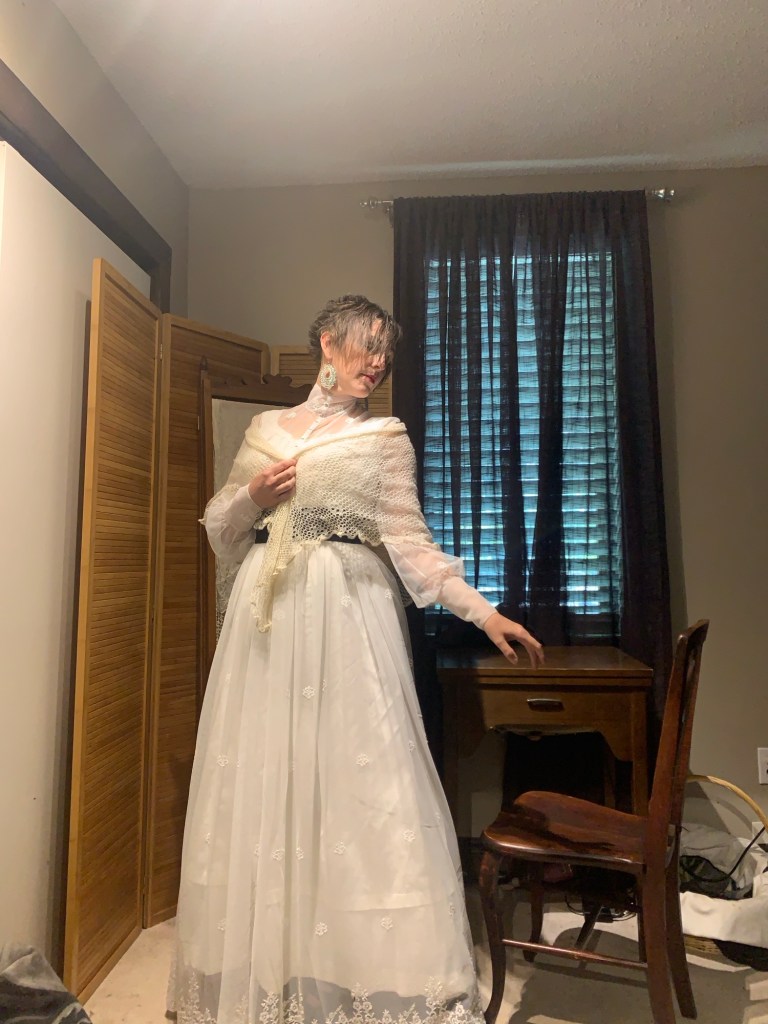
So, eventually I decided to do an entirely separate nightdress, along the lines of a Victorian nightgown.
I could have gone with any number of patterns, not least among them the Folkwear Prairie Dress that I actually own (thanks to my mom having purchased it back in the 80s!!!). I also seriously considered the Sophie Dress from Ora Lin, but it doesn’t seem to come in A0 format and I’m not capable of that much cutting and gluing right now. But style wise it was exactly what I was looking for, with a pointed yoke front and back.
On the other hand, the pattern I used for my Edwardian blouse also had very much the right shape of back yoke, and it seemed like a pretty easy change to add a front yoke. I wasn’t terribly happy with my fitting the first time around, but surely that could serve as a bit of a wearable muslin, whereas a different pattern would be starting all over again.
In the end I don’t think I saved myself much (any?) labour, as it took me quite a bit of work to get the shoulder and collar fit right. I ended up making about two and a half muslins of the yoke and collar and tweaking them to fit. My shoulders are more square than standard and I was trying to hit that delicate balance of the collar between close fit and strangling myself.
I did however take a fair bit of inspiration from the Folkwear pattern as well, for the width of the final dress and the sleeves and armscye. I liked the cuffs from the Edwardian blouse, but was intrigued by the shaping and rear-thrown underarm seam of the Folkwear pattern.
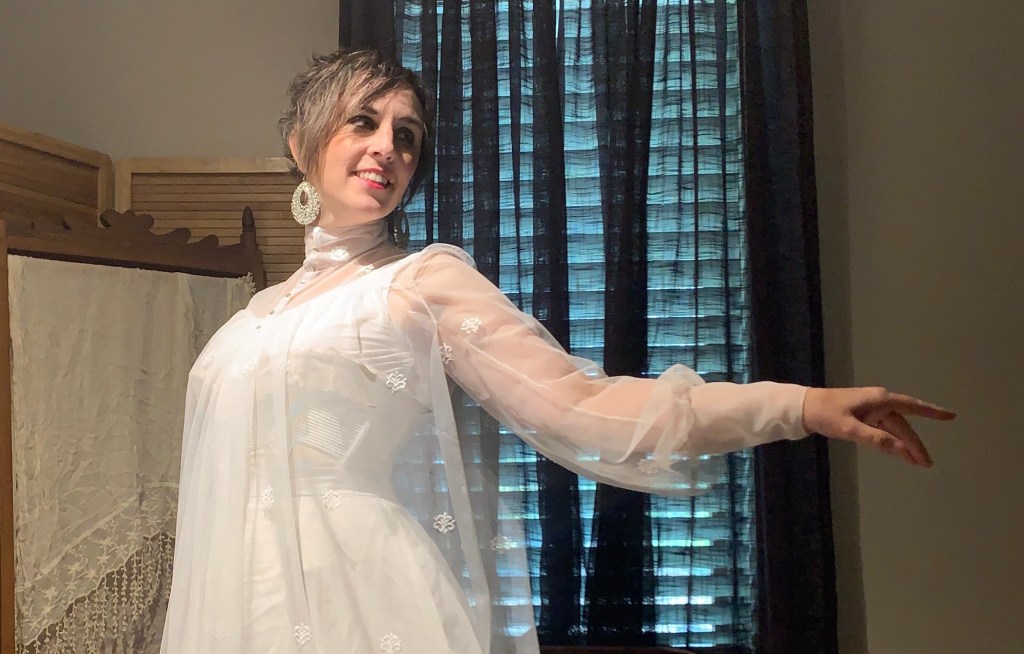
The fabric I chose was also from stash, a gorgeous drapery lace again from my Fabricland days. It’s a fairly soft (polyester or nylon) mesh with scattered lace motifs and an intricate border. The sheerness isn’t historically accurate for any tea gown I’ve seen but is a lot of fun.
I spent some time playing with seam treatments, and also waffling about which portions to line. I was going to do a double layer for the yokes, for strength, but unpicking embroidered motifs from the net so as not to have them showing through was both incredibly time consuming and tricky to do without damaging the base net. So I only lined the collar and sleeves cuffs, smaller pieces where I could cut the inner piece to avoid or mostly avoid the scattered lace motifs.
For the seams, I determined I could topstitch right next to a seam and then trim off the remaining seam allowance. It looks fairly tidy.
The buttons I chose are these tiny mother-of-pearl ones that were some of my first online purchases back in 2007 or 2008. I think I bought a pack of 100 for decorating a dance costume, then discovered how much I don’t enjoy sewing on buttons. Anyway, it was exciting to finally use them as buttons. There was no way I was ever going to try putting this fabric through the machine for buttonholes, so I did them all by hand. They’re so tiny they didn’t take very long, especially compared to hand-tailoring the over robe. I didn’t fuss too much over them; the fabric doesn’t fray so they will do their job.
I left the front seam open, but will maybe stitch it up at some point.
And, since the lacy border means there’s no hemming, that’s about it!
I am enjoying the sheerness and whimsy. And it’s exactly right for the underneath portion of the tea gown. I might have made the sleeves a little more full, but on the other hand they’re mostly hidden in the sleeves of the over-gown anyway.
Compared to the over gown, this was a quick and easy project. I do love how it came out, though. Now I just need the rest of my elven accessories…
A while ago, maybe a year, maybe more, Cation Designs dropped three words into my brain: “Elven Tea Gown”
And I suddenly couldn’t think of anything else.
In particular, she was thinking of a particular House of Worth tea gown from the early 1900s… but make it Elven. My own inspiration was a bit more all over the place—but I’m not at all mad about it.
Anyway, it’s been a minute since Cation and I sewed joint projects (like, I think, our Spider-Man dresses in 2012, which was basically a lifetime ago for both of us). And we took our time ramping up to this one. But finally, after last Christmas, we took the plunge. If a dive were to play out in the most excruciating slow motion you can imagine, anyway.
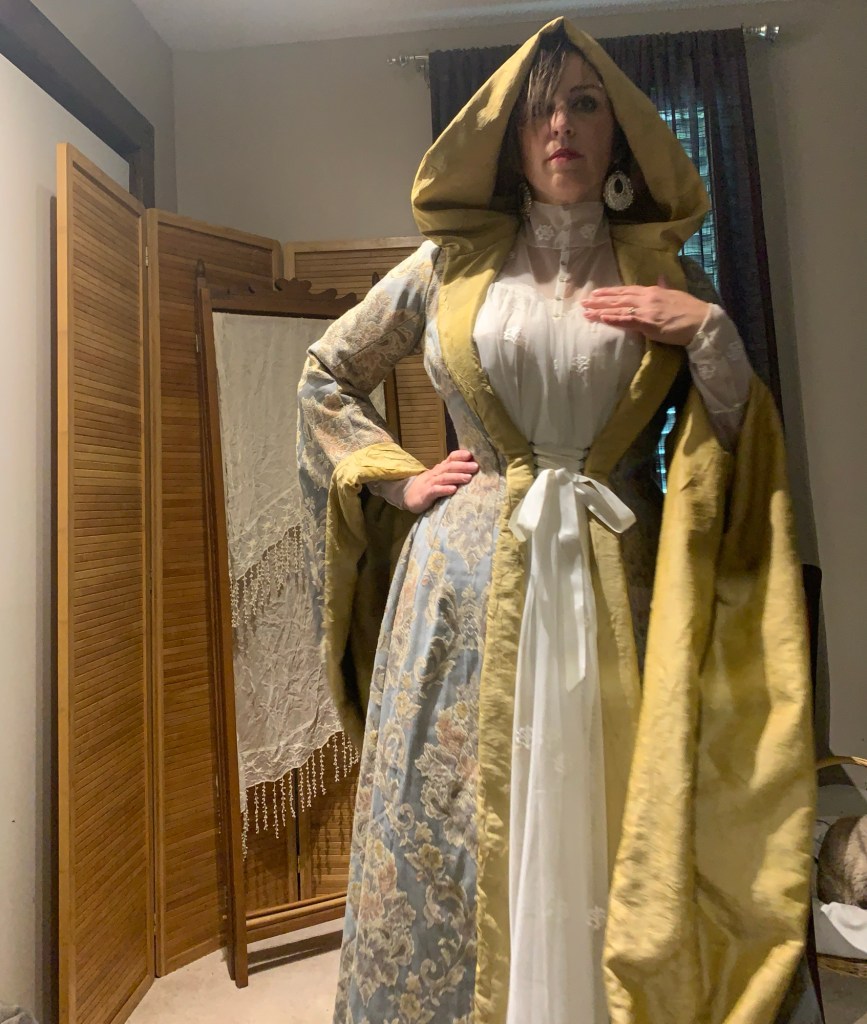
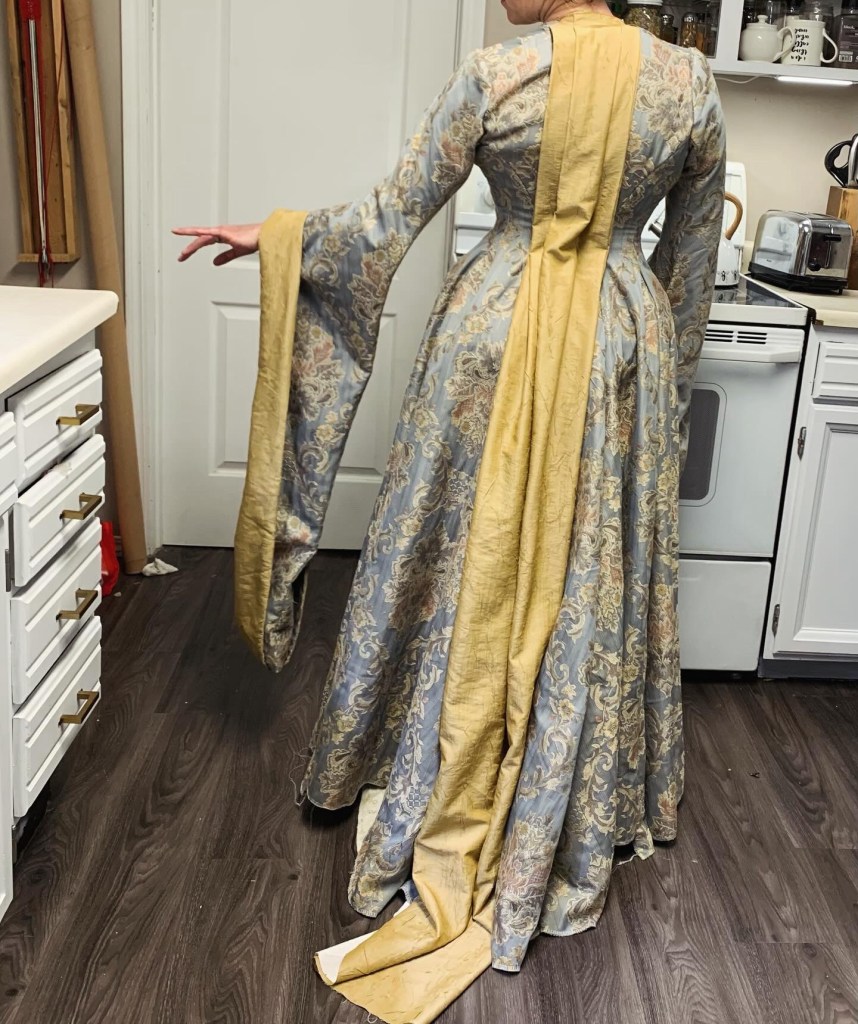
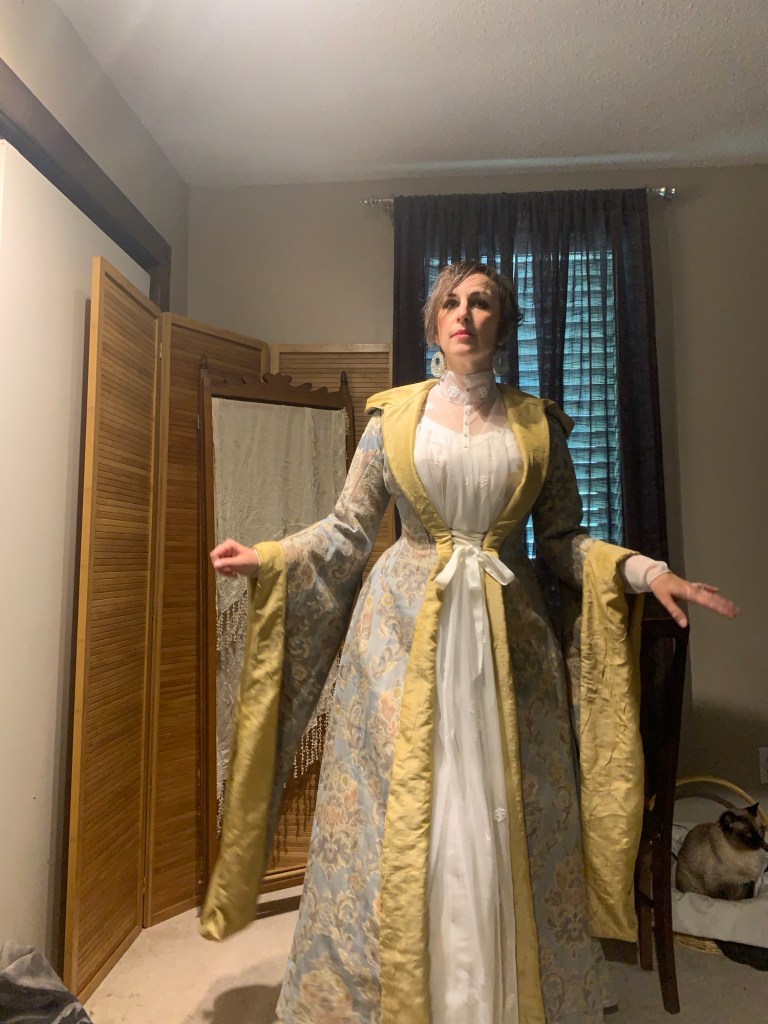
For fabric, I went with this gorgeous blue-grey upholstery jacquard I have been sitting on for YEARS since I got it on a steep sale at Fabricland back when I worked there and haunted all the sales. I did, however, have to go back to find a pale gold lining fabric, which I found in the bargain centre for three dollars/metre, so I’m not going to complain about that, either. The crinkly texture is utterly ahistorical but it’s fun and this is first and foremost a fantasy costume so we’re not going to dwell on it.
It’s all polyester, so this is in no way a light summer project, but it is what it is.
The first phase of planning, for me at least, involved a lot of Pinteresting of original tea gowns with features I liked, on the one hand, and costume things that come up when you search “elven dress” and things like that.
For the tea gown side of things, (and if you’re wondering what or why a tea gown is I’ll direct you to the Dreamstress’s excellent write-up) I wanted a princess-lined over gown using a classic Victorian pattern. After much waffling I decided to just run with my already-fitted Truly Victorian bodice and add a skirt to it. I wanted a slight train (my first ever!) and a Watteau back.
For the elven side of things I whittled it down to the following features: large dramatic sleeves, a laced closure across the front, and a dramatic hood.
Original tea gowns usually (always?) have the look of two garments, an over-robe and an under-gown, but are in fact one garment with the illusion of layers. After a fair bit of waffling I decided to construct mine as two separate garments, mainly for the flexibility of changing up the look in the future. Also because adding the second set of sleeves and collar and front yoke seemed like not significantly less work than making an entirely separate under-gown, although it would have saved me a bit of fabric. So this post will mainly discuss the over-gown.
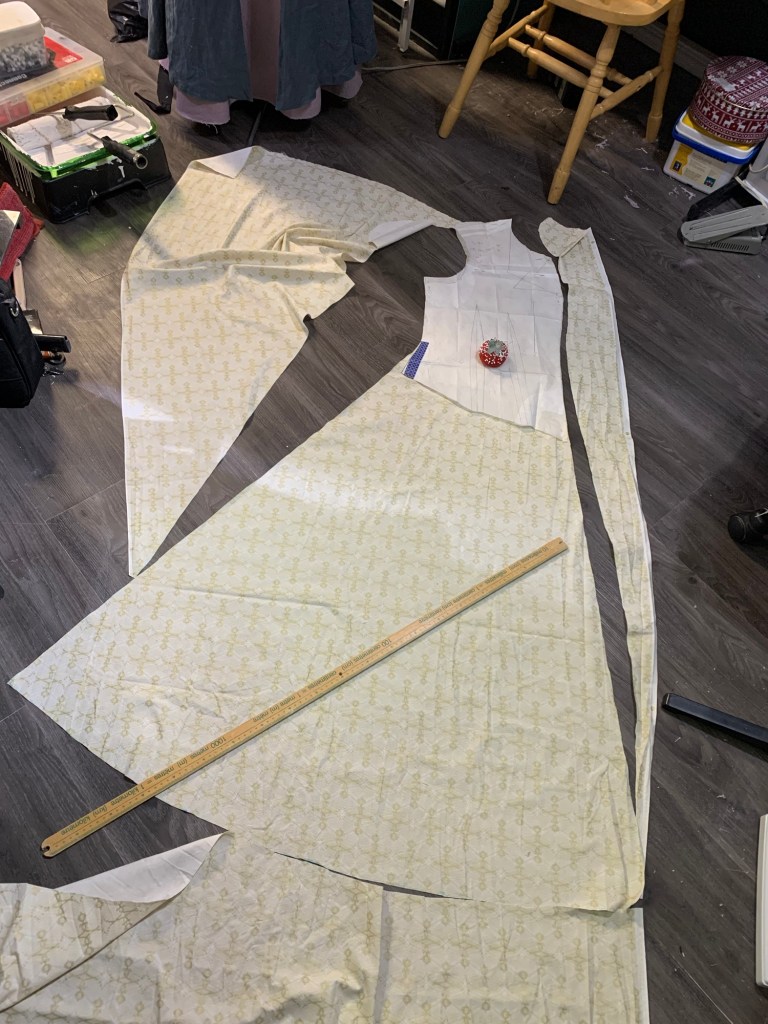
I decided to live dangerously and cut my skirt directly on the muslin fabric (which I was also hoping to use as my lining.) This worked out fairly well, except that my draft was a little short at the sides; I added extra fabric there when I cut the outer layer, figuring the gap would be covered by my final hem treatment. BUT, then I messed up: to save fabric I had pieced the side-back pieces of the muslin. No problem, except that then when ripping apart the muslin, the bodice portion of the piece got ripped off the skirt portion, and since I didn’t have notches or anything, I re-attached it wrong way around (since I made my gores historically asymmetrical). So I wound up adding my length in the wrong spot, or at least I would’ve needed twice the length I thought I did. So the whole damn thing just isn’t quite as long as I would’ve liked. And I was STILL short of fabric—I pieced several parts (so delightfully historically accurate!) and still had only scraps left. Anyway—-note to self, add 2-3 extra inches everywhere when drafting a skirt, at least you can trim it later!
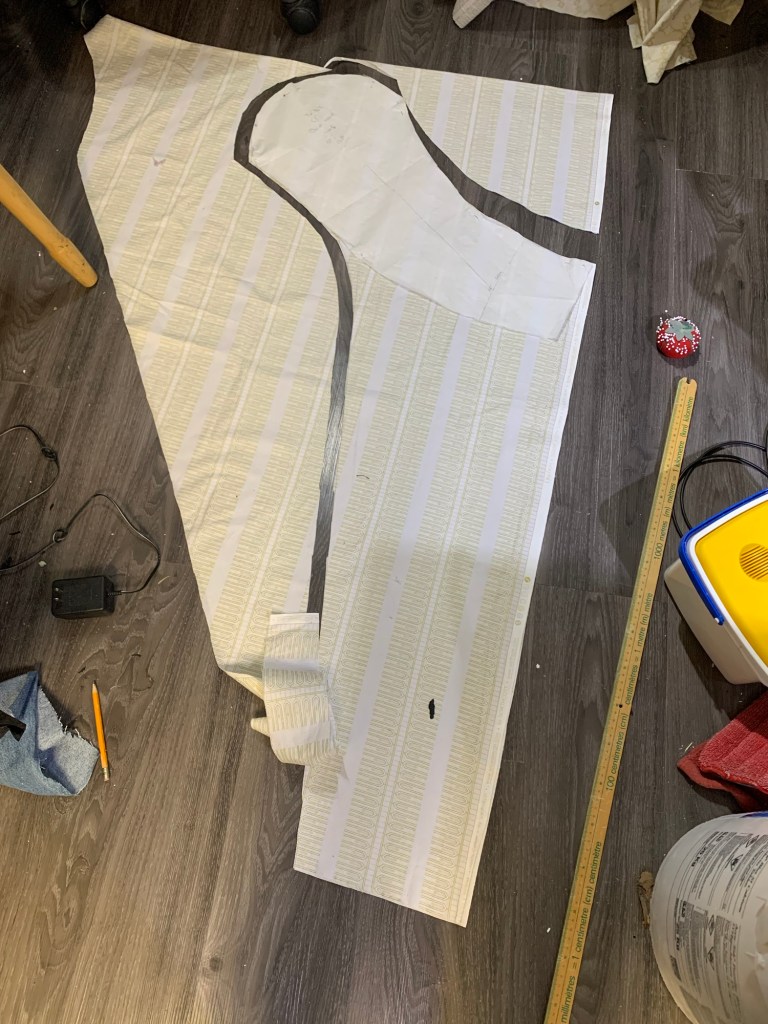
I drafted the draping mediaeval-inspired sleeves using the two-piece sleeve that goes with my bodice, but extending it down to a long, tapered rectangle. I was completely making this part up, but with some tweaking to the top seam I was able to get it to sorta work, though I’m pretty sure sleeves like this are never actually drafted this way.
I borrowed the hood pattern piece from Simplicity 5794 that I made last fall, but one of the other views, which had an exaggerated point to the back of the hood. I usually avoid these but it felt appropriate for the elven thing. I would still like to find a nice heavy drapery tassel for the point.
I originally wanted it to blend smooothly into the lapels, the way I rather accidentally got the hood of my denim M6800 jacket to sit. Arguably I should just have dug out that pattern and used that (surprisingly excellent) hood, adding my own point if desired. Although I’m not sure if the issue is the hood itself or the angle of the lapels. Either is possible. Anyway, it’s not quite what I achieved but I have decided to embrace it for what it is.
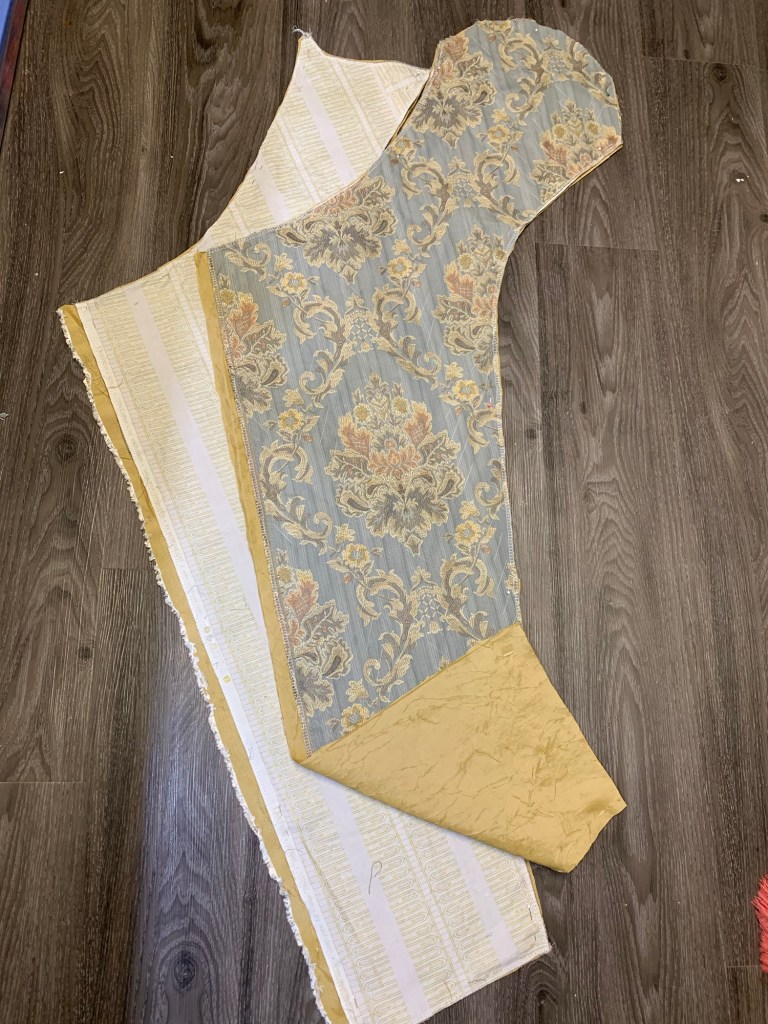
As I cut out my main fabric, it became tragically clear that I wouldn’t have enough for the Watteau pleating I so desperately wanted. However, some perusal of originals identified a few examples where the accent fabric was used to create the pleats, so once I had obtained my gold lining fabric I decided to use that. Initially I went with a full fabric width of pleating, because more is more, but eventually I decided that was just too much.
I ripped out the back seam, cut the excess fabric in half, and added an underlining of some kind of cotton sheeting to it to give it a heft a bit closer to other exterior fabric. At the moment I have the pleats hand-tacked down to keep them well-behaved (which seems typical of a lot of the originals I’ve looked at, or maybe it’s just how they’re arranged on the mannequins) but I might let that out at some point just to see. The only problem is the opulent hood covers a good chunk of it when it’s down.
I haven’t even started talking about all the handsewing I did on this project! Somehow I convinced myself early on in the project that I had to hand-baste the lining (aka underlining aka my muslin) to the outer fabric for construction. Then I talked myself into hand-tailoring the lapels, which meant hand tailoring a truly HUGE swath of hair canvas, since I wanted the lapels to go all the way down to the hem.
While I’m pretty sure these methods are period appropriate for tailored garments (give or take some quibbling—I should’ve used canvas, not hair canvas, but the canvas I have on hand is all really heavy), I’m not at all sure they’re appropriate for a tea gown, but anyway. I haven’t done a crazy amount of padstitching in at least a decade so I was due?
Pad-stitched, with taped edge and roll lines.
It took forever, but I love the shape I got, especially how it let me shrink in the edge of the turned back portion along the waist so that the roll line could bend to fall “properly”
Once the padstitching was done (which only took, oh, two months?) progress sped up a bit. Sewing up the actual garment didn’t take long. Adding in the lining pieces on the sleeves and the fronts took a little more time, especially hand-felling the front lining to the side seams.
Tea gowns are typically soft garments and are often completely un boned, but of course I wanted boning in mine, because I’m going for a dramatic and structured fantasy look. So I added boning to the various side and back seams. And the waist stay, which runs underneath the front lining all the way to the roll line where the lacing eyes are anchored to it.
Extra width in the front lining because I didn’t sew the darts. Will probably just do a little tuck to control the fullness.
For the hem, I knew I didn’t have the length for a turned up hem. I was planning to use my leftover lining fabric for a facing but after the lining was in there actually wasn’t much left, and I decided to save the remainder for a dust ruffle for the train.
So I dug out some sturdy white polyester that I was happy to sacrifice to a purpose like this and made about a million miles of 5” wide bias tape and added a hem facing. It’s still shorter than I’d like in the front, but we’ll cry about that later.
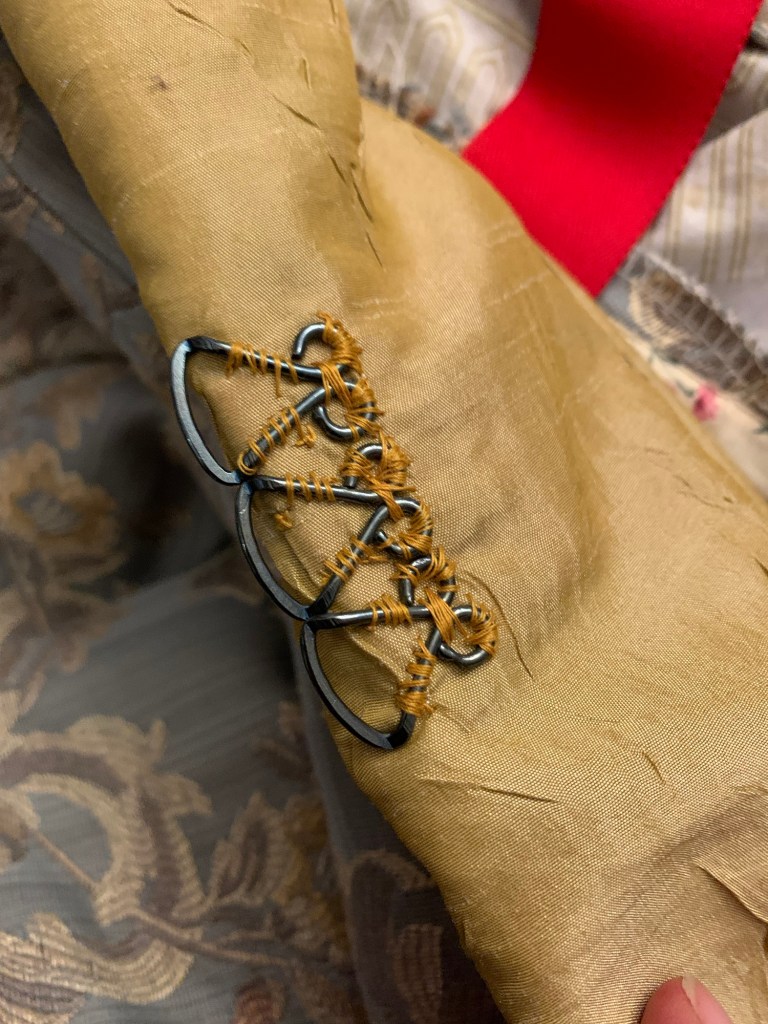
For the laced front, I sacrificed the “eye” side of some gorgeous ornamental hooks and eyes from Farthingales. Hopefully I can use their corresponding hooks with thread bars, or even make my own from wire. Or maybe I’ll find different eyes and swap them out sometime.
For a final touch, I broke out my pinking wheel to make a bunch of straight grain lengths of the lining fabric, gathered up and loosely tacked to the underside of the train as a dust ruffle.
And that, basically, was that. There are a few other touches I might add in the future—a tassel for the hood, trim of some kind, more Elven accessories, long flowing hair—but after all that work I’m so happy to be done. I’d change a few other things, like the fullness of the back skirt (which is a bit excessive), but all in all I’m just super excited to have created such a fun piece!
Next post will cover the under gown.
It was super fun to chat and plan this out together, and I’m so excited (and not a little surprised) that we pulled it off at least somewhat within our projected time frame!
And of course I could not resist abusing the power of photoshop to try to virtually join Cation in a couple of her beautiful photos (by Faes and Photos)! (And thank you Doug for mine!)
The only thing that would make this better would be sitting down for actual tea together! But until I someday get my trailing sleeves to California, I guess photoshop will have to do.
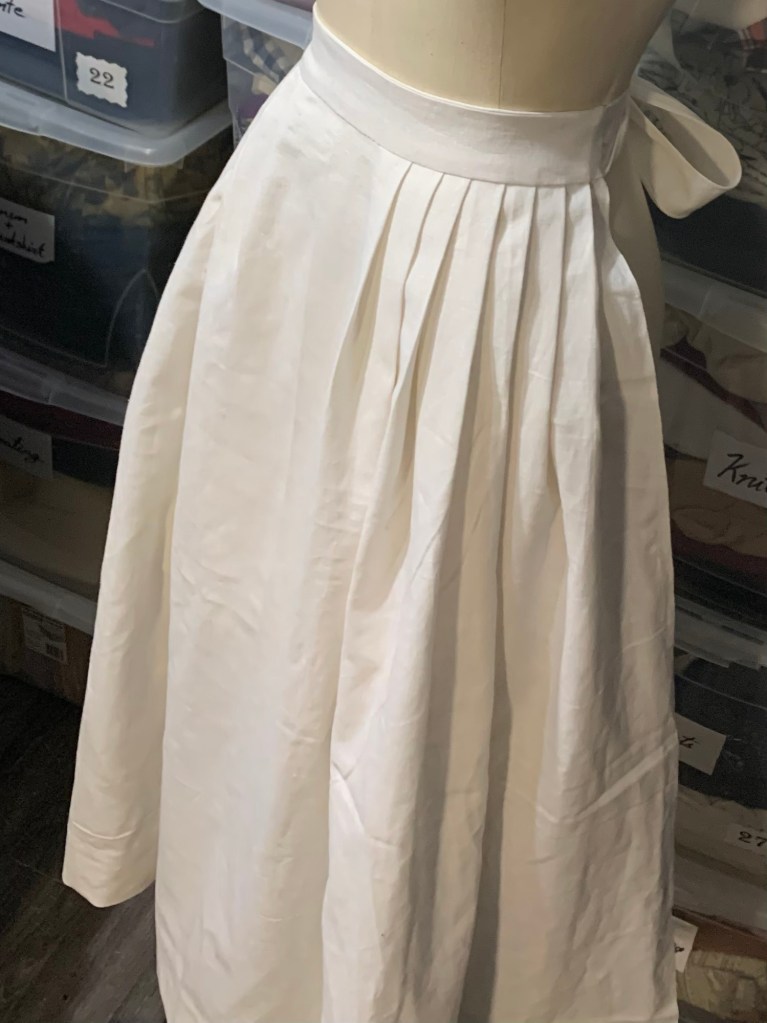
A year ago last September, I started a little linen apron project. Very simple. I took a length of handkerchief weight linen, terribly carefully drew threads to make some straight lines, double-folded the hem, and pulled more threads to make room for some lovely, delicate hem-stitching.
Hemstitching. I might die.
And hated every second of it. Mostly I find hand-sewing fairly meditative, but the hemstitching on slubby linen threads (tiny ones at that) was utterly maddening. I should’ve started with a coarser linen. I should’ve used a blunt needle. I should’ve… not done it.
As soon as I could distract myself with another project, I did, and while I’ve tried to return to the hemstitching a few times since, I’m barely past the halfway point.
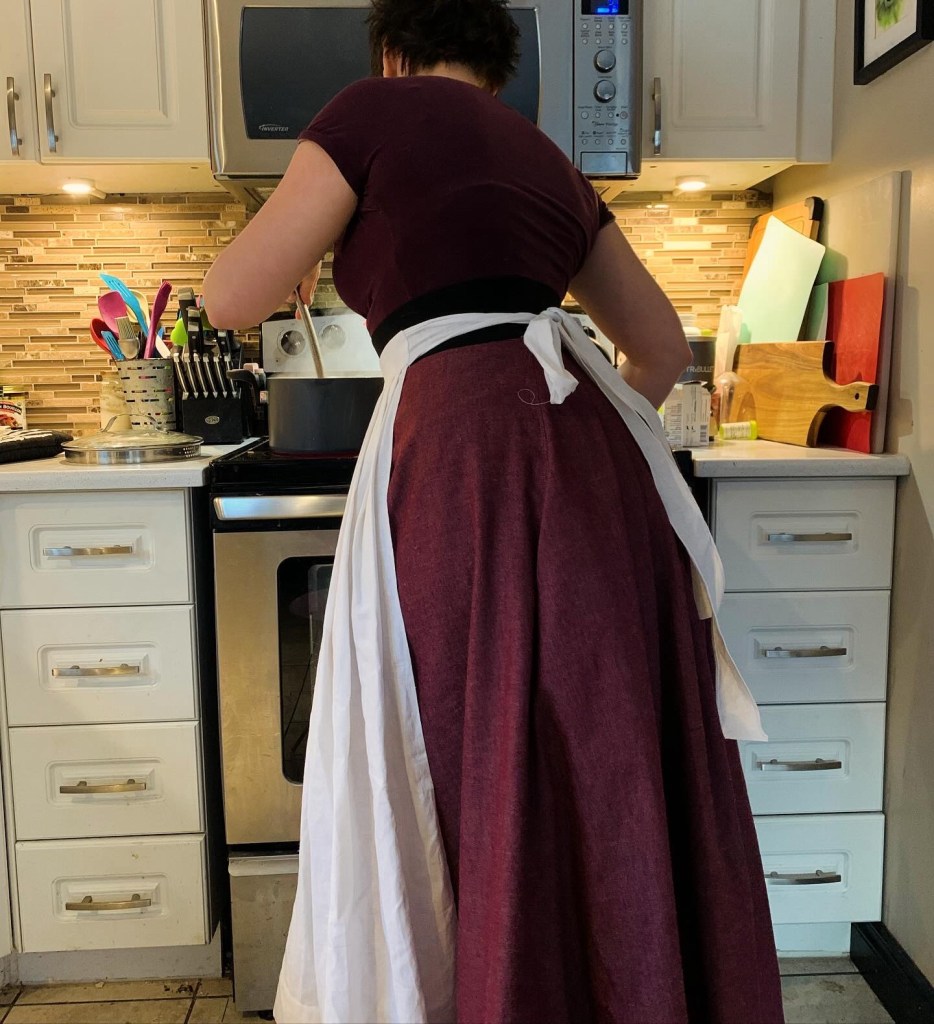
But, I still did kinda want an apron. A nice full one to wear while cooking (which, much as I try to avoid it, is still something I end up doing with distressing regularity.) and keep my fancy skirts or dresses clean… or just to make the tedium of domesticity a little bit less irksome.
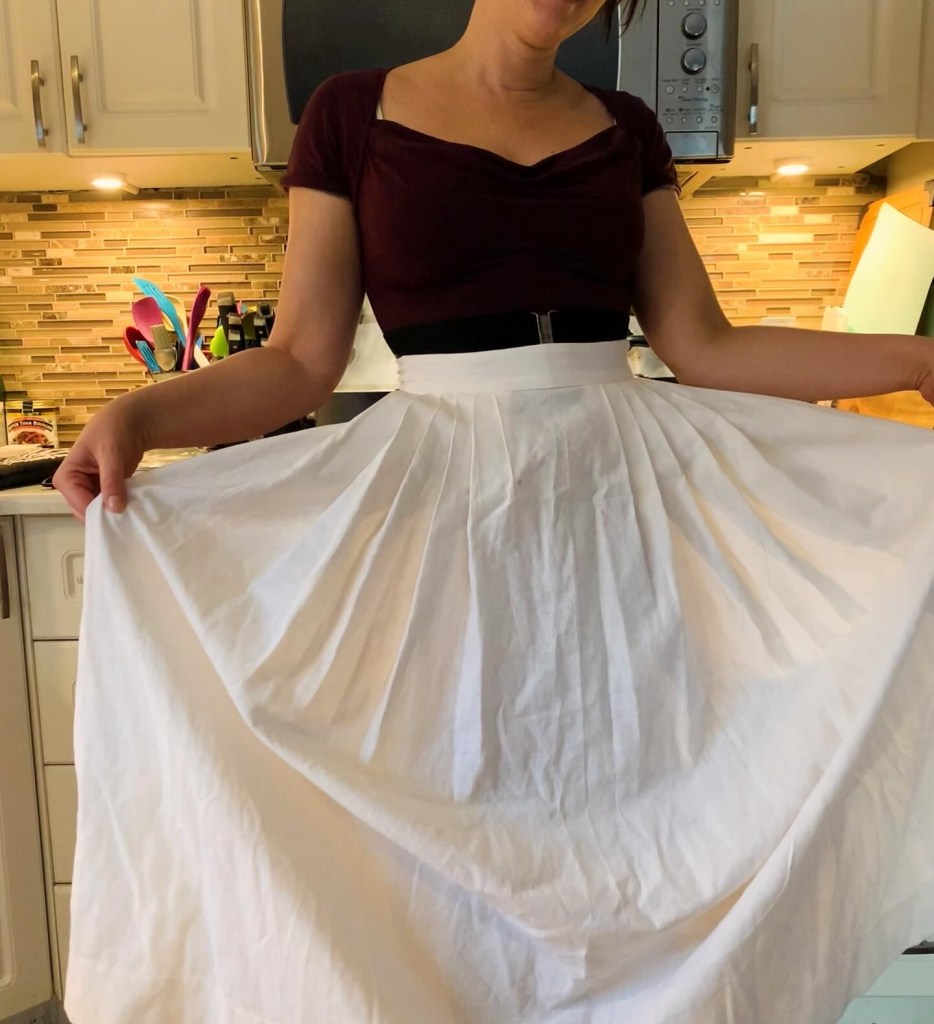
Fast forward to last Sunday, when my friend Diane was bestowing some pieces from her stash on the Victorian Sewing Circle. Being a glutton I took just about everything (oops), including a generous mètre of wide white slubby fabric… I’m guessing a linen/cotton blend. And, desperate to reduce what I was adding to my stash, I decided to transform this piece into a quick and dirty version of the long-coveted apron.
I started (again) by pulling a thread to square the one end (the other end was already neatly torn and I definitely could just have done that but somehow I feel the urge to be fancy with linen aprons?)
I tore two strips from the torn end, the width of the ties I wanted, give or take a seam allowance or two. I cut a piece from the end of each strip the width I wanted the pleated part of the apron to be (in hindsight a little bit longer would have been better, so the apron covered more of my sides. But anyway.) The plan was to have this front piece be double-layered to encase the pleats, while the ties themselves were single layered to conserve fabric.
I hemmed the edges of the long strips on the Rocketeer in my bedroom with my rolled hem foot, which should’ve been quite simple except that something was up with the tension and I had to turn it down to 2 and even then every so often it would birdsnest. It was working perfectly last time… I wonder sometimes if lifting it in and out of its table shakes things around. Anyway, I stubbornly persisted which means there are some parts that look like this:
Spot the stitching disaster.
Other than machine issues it was a quick project.
I wasn’t too precious about the pleating; I wanted a small flat space in the middle and then knife pleats pointing away on each side. They’re… roughly even.
I finished the inside of the waistband by hand, and also the big hem at the bottom, and it was so insanely fast compared to the hemstitching, and now it’s all done!
I was a bit boneheaded and sewed my waistband on the wrong way around, so that the rolled hems are pointing out when the ties are tied. But again, I’m not prepared to undo a bunch of stuff to redo it. It’ll work.
I haven’t had an apron before… I’m curious how I’ll like it. Is it too long? Will I wish it had pockets? Will I wish I finished the hem stitched one? Only time will tell…
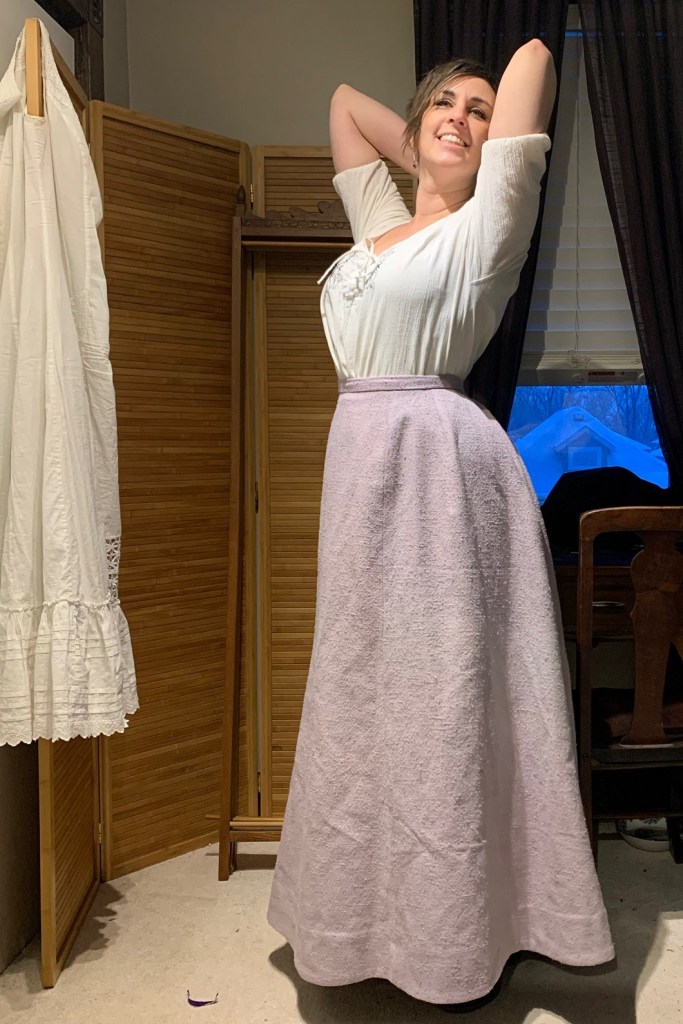
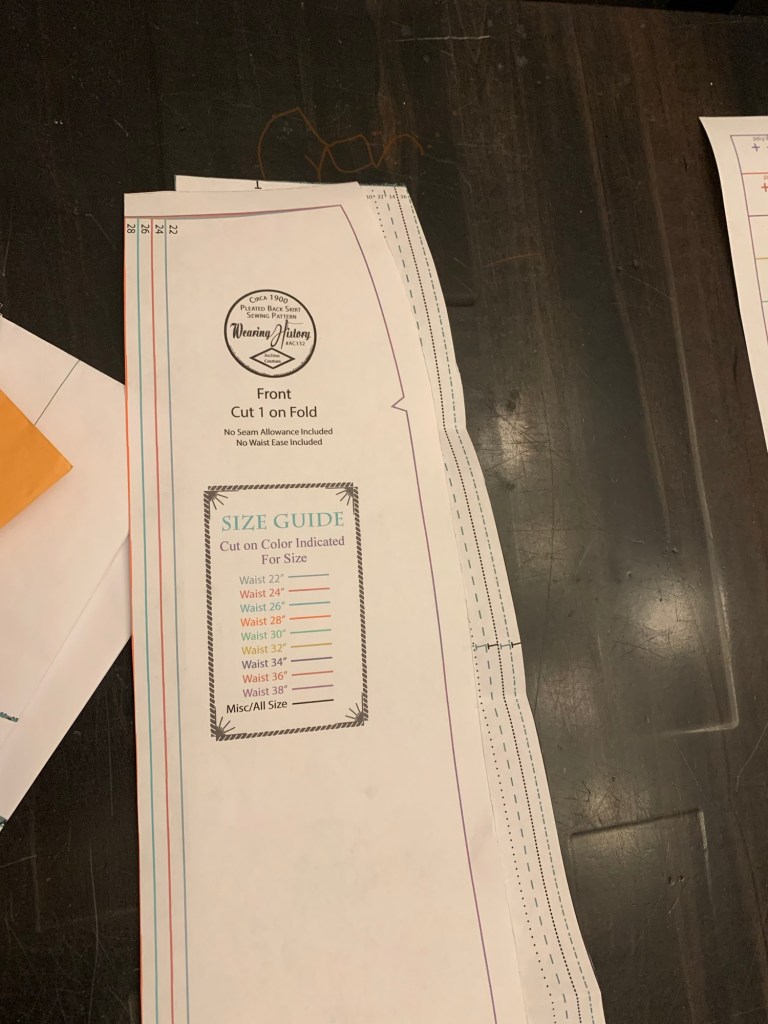
Not so very long ago Wearing History put out a new “Archive Collection” pattern based on a McCall’s original from around 1900. And, rather impulsively, I bought it.
Equally impulsively, I decided to get it printed in time for my little Christmas break. I didn’t get as much sewing done as I might have liked, after one of the twins brought home yet another virus just in time for Christmas, but I did eventually start on a tester version.
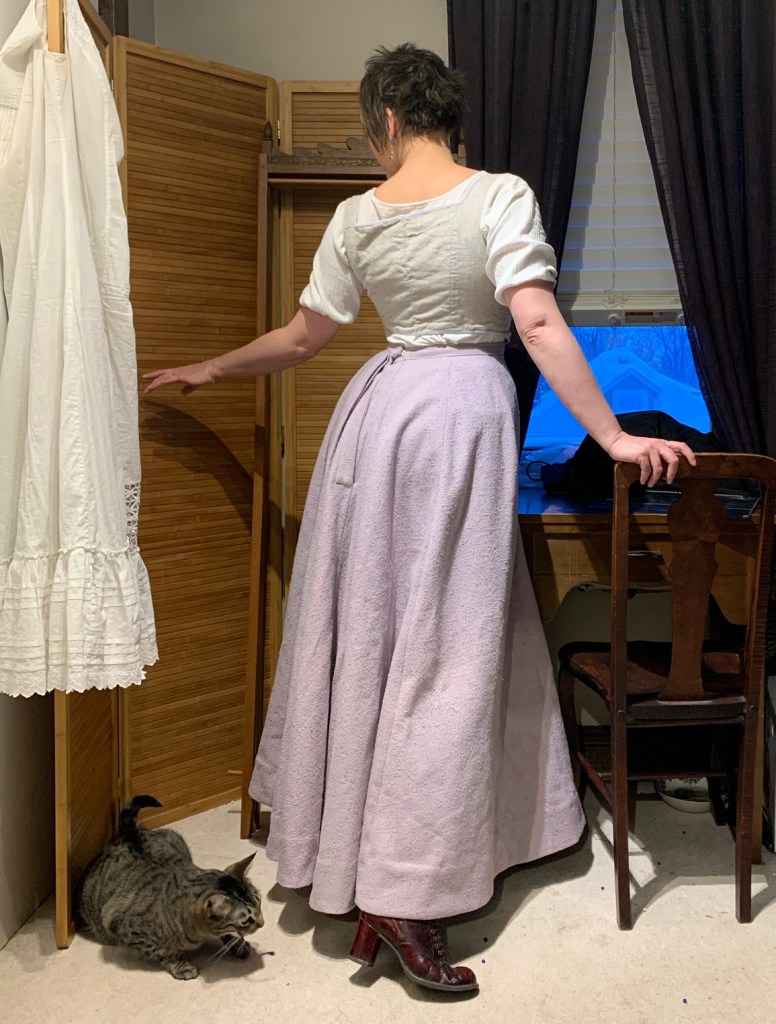
Now, this isn’t exactly a pattern I needed. In particular it’s very similar to the Scroop Fantail skirt I made in September. But I thought a detailed pattern comparison would be fun! So here goes.
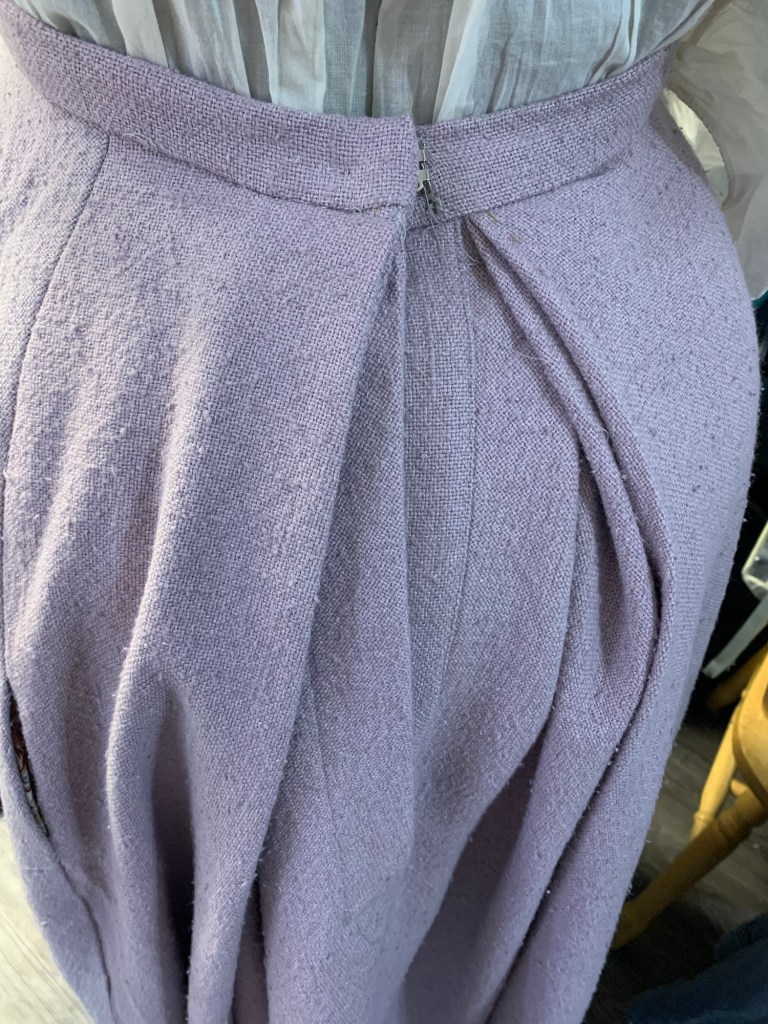
See the more intense waist shaping on the Wearing History pattern.
Both patterns are five-gore skirts with smooth fronts and added fullness in the back provided by pleats. Both have narrow straight waistbands and a centre back placket closure. The fullness in front and side panels is almost identical, although the Wearing History pattern is a little more full in the back panel, particularly towards the hem.
The Wearing History pattern differs mainly in three ways: the back placket is cut on, additional shaping for the waist comes from wide side darts, and the shaping of the flare, which is quite straight in the Fantail, and subtly fluted in the Wearing History pattern, narrower through the knees and then flaring slightly more below—though the difference is only a cm or two per pattern piece. There is a lot more shaping from waist to hip in the Wearing History skirt, something I had to increase in my Fantail by grading to a smaller size at the waist.
The grainlines of the patterns also differ, with the Fantail having a more modern style of grainline falling in the middle of the gore while the Wearing History original grainlines are the old fashioned type where they parallel one edge of the gore. However, the Fantail instructions also mention the variability of grainlines in the period, and when I made my version I used “old style” grainlines to get the pattern to fit on my limited yardage.
The side darts, incidentally, are features of my self-drafted 1880s skirts, based on period instructions. It’s neat to see the mix of older features and sharp new skirt shape in this pattern.
I’d rather the under placket didn’t show here, but that requires a larger waistband.
In my version of the Wearing History pattern, I decided to omit the cut on placket and do a sewn on one. This matches the directions I’ve usually read in period sewing manuals. And that whole back seam is on the bias so trying to keep a cut-on placket square just seemed like a nightmare. Instead I did the back placket basically exactly like the Fantail skirt, except for just making it rectangular instead of a fancy angle.
I tweaked the darts quite a bit to get a hip shape I liked, making them longer and a more sinuous shape. I also wound up making them deeper, at least partly because the waist was stretching out in my thick but weirdly soft fabric; I overshot a bit and currently it’s really too small so the back pleats aren’t lining up quite right. If I redo it, I might sub in a different fabric, like a thin cotton, for the waistband. This upholstery fabric is beefy and where all the pleats stack at the centre back my machine completely balked, although not before I had broken three or four needles trying.
Speaking of the fabric, I almost forgot to mention my favourite feature of the whole skirt. Since the pattern has no seam or hem allowances, you add your own. However, when I was laying my fabric out, I had distinctly less than needed for the skirt, and I wound up basically not being able to add hem allowance.
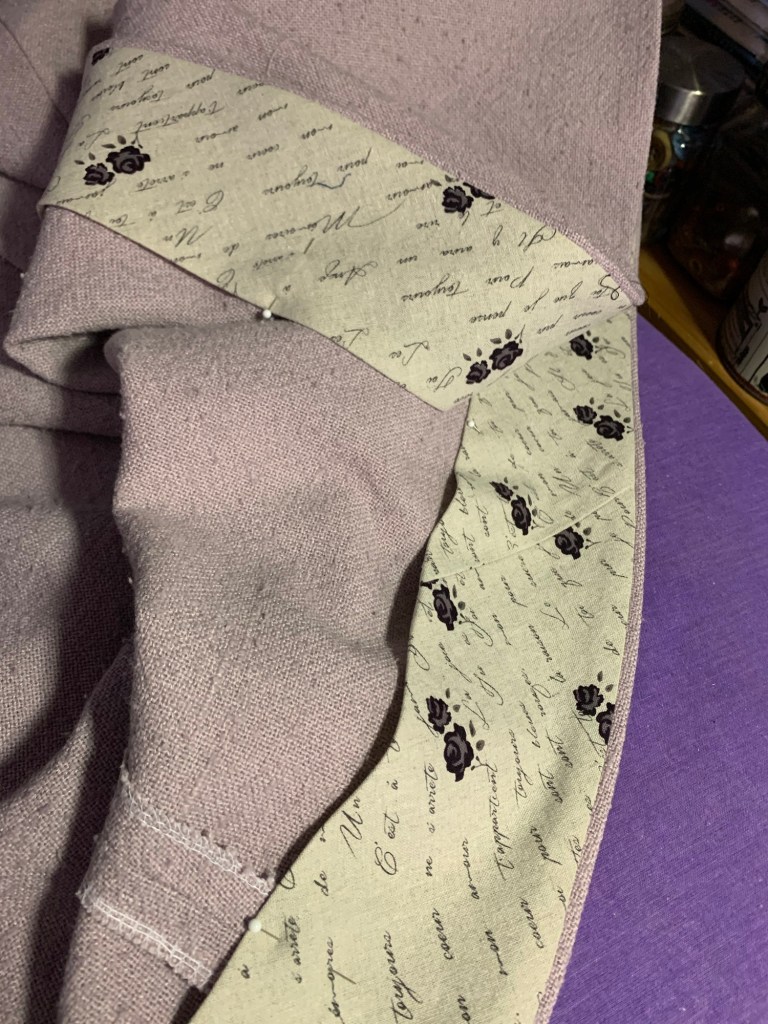
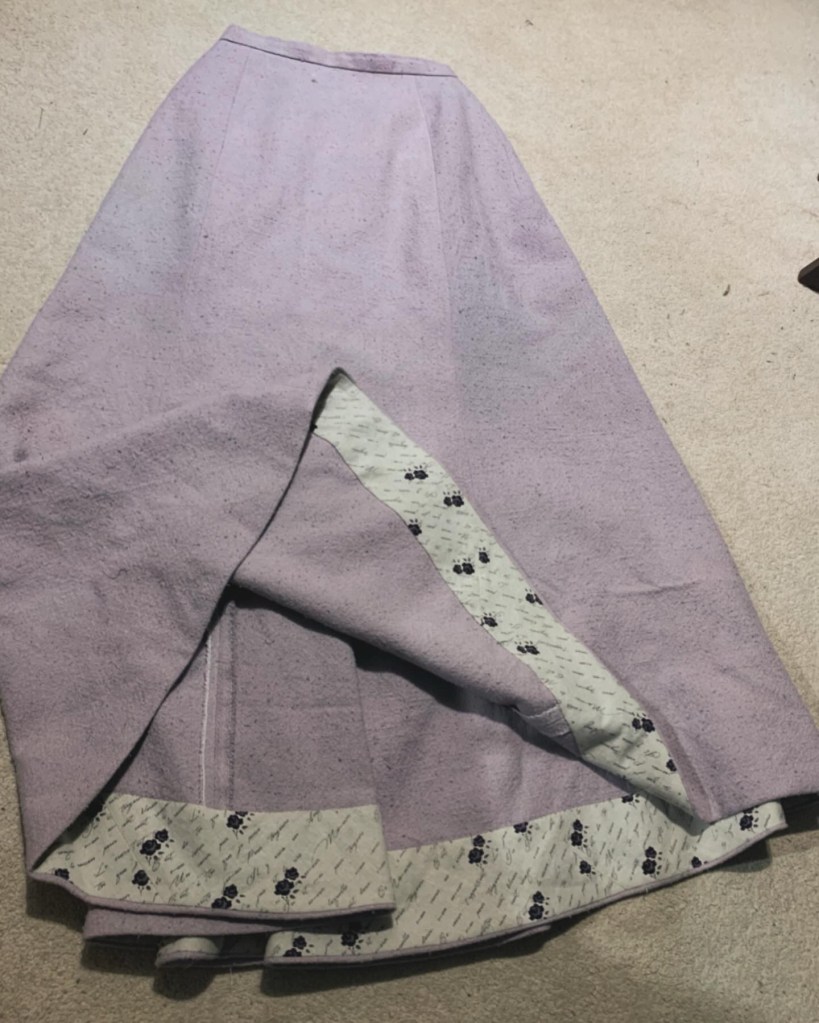
So, since I basically had no hem allowance, I decided to do a faced hem. This is a legit period way to do it, although mine is a pretty simple facing, and they often jazzed them up in period with additional layers of velveteen binding or stiffening or braid. I would have to double-check if bias was appropriate at this point in history; certainly a little earlier they were perfectly happy to cut their facings straight and just ease or pleat the top edge as necessary to have them fit. But I also serged all my seams here, I wasn’t in the mood to be too precious about historical accuracy.
I dove through scraps and eventually settled on the remnant from this dress (man that was a while ago!), a linen/cotton blend that is beefy but still a lot thinner than my main fabric. I evened my remnant into a nice rectangle, cut off the diagonal on one side and sewed it back on the other… then sewed it into the offset tube and cut a truly massive amount of 10-cm-wide continuous bias. So hopefully there’s another skirt worth of it. Probably it would’ve been faster to cut the strips flat with a rotary cutter and then sew them together, but anyway.
I’ll confess, I wasn’t super sure about the skirt when I first made it. The hefty fabric seemed too sculptural and stiff (despite actually being pretty soft). It sat on the dress form for weeks just waiting for that hem (probably a good idea since there was a lot of bias stretch to work out, but still). But this faced hem makes me love it! it’s such a nice finish. I love the facing fabric and how it makes the hem feel. I think a self-fabric hem in this fabric would just have been bulky.
Oh, and the skirt is drafted for a 41” front length (from the waist) which is pretty much perfect for me but probably a little long for many people. The pattern does actually include original instructions for lengthening or shortening at the hem, but if you want to maintain the fluted shape you should probably shorten by overlapping in two places, above and below the knee. In a perfect world, anyway.
I picked my size based on waist size, mainly out of curiosity as to whether I could make that crazy waist-hip variation work, even if it took padding. And I’m not sad I did, although a more rational way to fit the skirt would be to pick the size by your hip size and just adjust the waist. Those side darts give an immense amount of room to play with the fit, four or five inches, at least, and you can always pick a wider seam allowance if you’re worried about having to let out the waist or adjust the shaping there.
All in all, it was a fun exercise! I wouldn’t mind trying it again in a more appropriate fabric. Though I should really get back to the blouses for this kind of period…







































 Tanit-Isis Sews